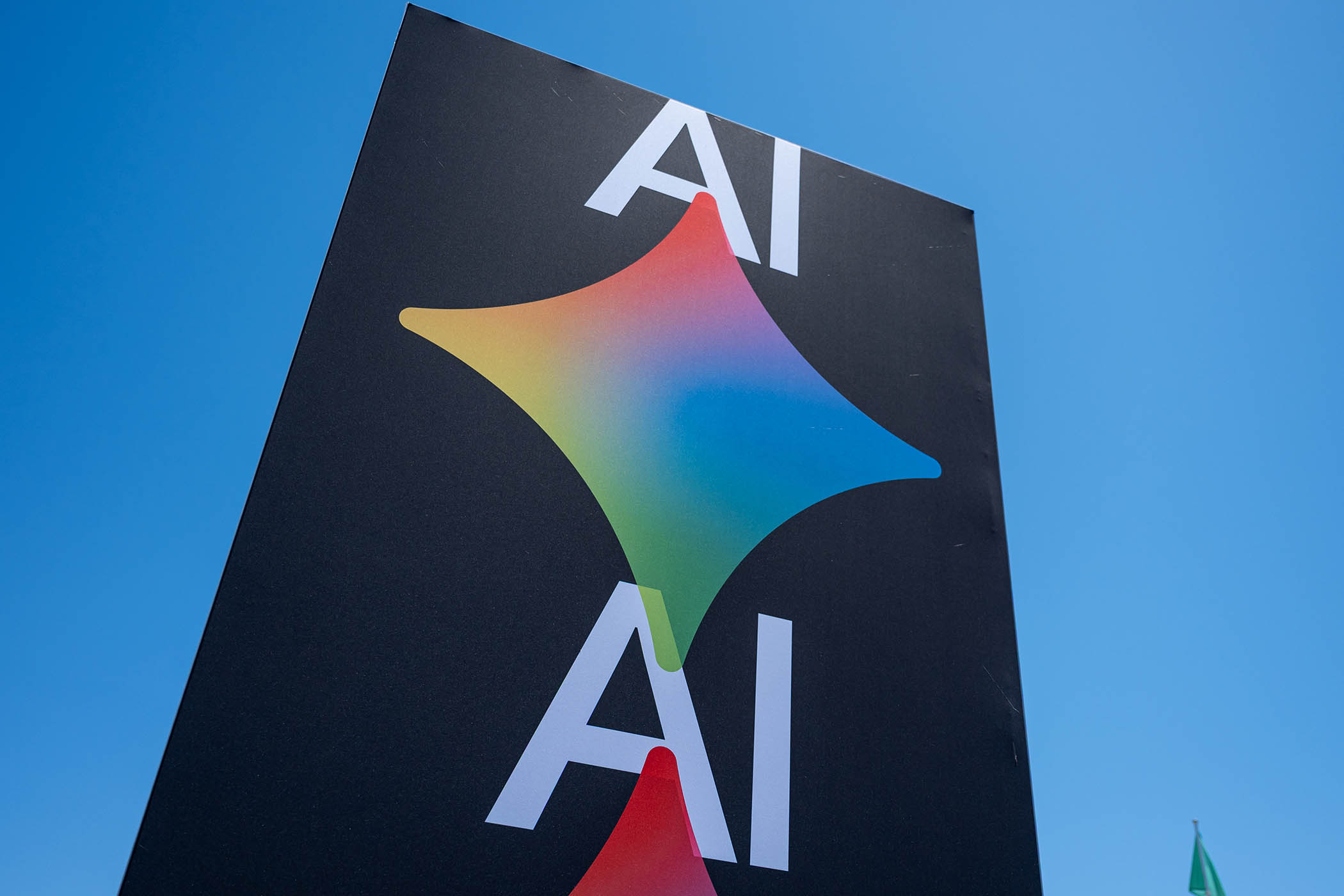



The other day I asked Google if next year is 2027. Its AI-generated response was: “Next year is 2028, and the year after that is 2027.” Hallucinations such as these have become a familiar oddity of large language models; Google’s AI Overviews tool has also advised users to eat rocks and informed them that glue can be used to stick cheese to pizza. The tech giant has been slowly experimenting with artificial intelligence for years, but a recent design change marks a fundamental shift in how we navigate the internet.
Last week, the company launched AI Search. It means users will no longer have to browse through Google’s list of blue links to find answers; instead, AI Search will scan sources, summarise findings and present them via a chatbot users can converse with. Personalised advice, in a personable tone, where original writing is decontextualised and pattern is presented as fact.
This isn’t groundbreaking: Google is trying to keep up with competitors at OpenAI and Anthropic, who have amassed millions of users from creating chatbots that can parse information, write speeches and act as therapists or friends. However, the decision to embed a button for “AI Mode” on google.com – its hallmark webpage, which has barely changed in 27 years – shows how Google is repositioning itself as an interpreter.
Google was launched in 1997 and its original approach to search was to crawl through and rank webpages based on links, highlighting the most relevant results. This model built a $4.7tn business by positioning Google as a gateway between users, websites and advertisers. Entire industries were reconfigured to fit its incentives, from targeted digital advertising to SEO headlines for news. Now, businesses built on Google referrals are preparing for a “zero click” future, where the best chance of reaching customers is to have their content filtered through AI Search.
The thing is: AI Search is seductive. I can use it to compile news tailored to my interests, produce custom recipes, receive alerts when flight prices drop. It is also genuinely useful, whether helping people decipher obtuse government guidance or making the web more accessible. But the BBC journalist Thomas Germain showed how easily this technology can be manipulated: he tricked Google’s AI Overviews into confidently declaring him to be a competitive hot-dog eater. The source? A page he’d created on his personal website the previous day. Google presenting weak information as seemingly factual statements could be disastrous for spreading falsehoods, and a small declaration that “AI responses may include mistakes” is not a sufficient caution.
The web now is a far cry from Tim Berners-Lee’s original vision of a freely navigable way to access the world’s information. Algorithms are pulling us down rabbit holes, the attention economy thrives on our escalating screen time, and misinformation is percolating divisive, dangerous ideas into the mainstream. Against this backdrop, AI-generated answers are nudging us towards a homogenised, frictionless reorganisation of the internet, where it’s harder to independently find websites and browse sources. This is particularly worrying when studies suggest constant and effortless access to synthesised answers – “cognitive offloading” to AI – will weaken our motivation to critically engage with information or spot fake news.
AI Search is now live for Google’s 4bn search users, and the company is set on integrating AI functionality into its full suite of products. The tech giant is so deeply integrated into our personal and professional lives – from maps and videos to meetings and emails – that it’s almost impossible to opt out. We are hurtling towards a future where the internet, with all its joys and agonies, will be consumed and regurgitated to us by tech giants; as if we are Google’s chicks, being fed half-chewed information. The trouble is, it’s going to be pretty hard to leave the nest.
Sarah Dear is The Observer’s Audience Data Lead
Photograph by David Paul Morris/Bloomberg via Getty Images
Newsletters
Choose the newsletters you want to receive
View more
For information about how The Observer protects your data, read our Privacy Policy