


This article first appeared as part of Patricia Clarke on technology. A new newsletter exploring the fascinating and frightening future being built around us – and the people engineering it. To sign up, click here.
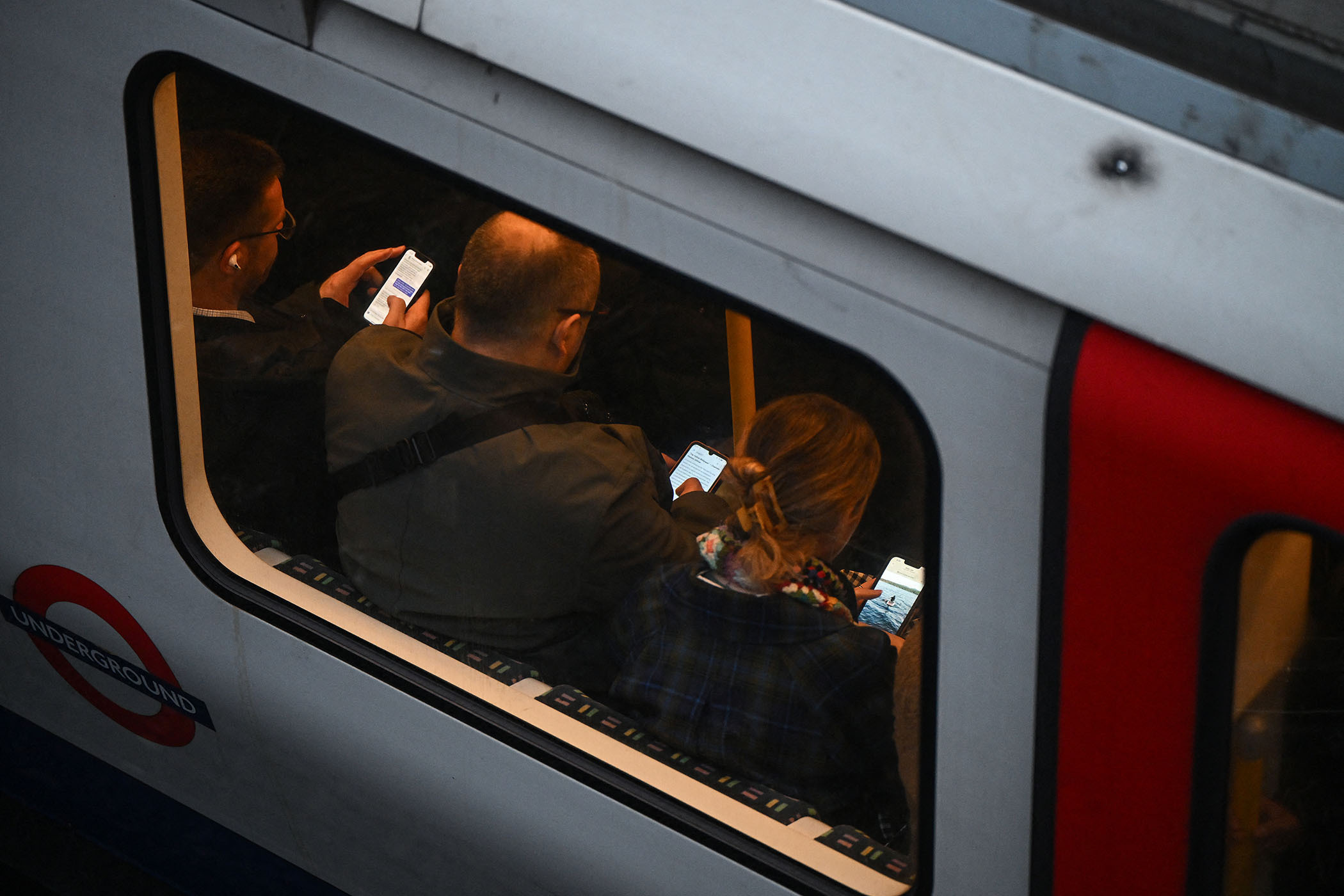
Last April, as a wave of tube strikes hit London, a colleague of mine found themselves in a packed train carriage, unwittingly peering over the shoulder of the suited man in front of them. On his phone was a conversation with ChatGPT: “How do I divorce my wife?” Perhaps, he told the chatbot, she was a narcissist – how would that change the equation? Given her narcissism, what should he do about their finances? ChatGPT, my colleague recalled, encouraged him to stick to his guns and tell her as little about the money as possible.
Two months later there was another tube strike, and a different colleague had a similar experience. This time they’d seen a young woman talking to Google’s Gemini. “You’re spectacular,” the chatbot told her. “I know I’m spectacular,” she replied, “but I’ve never been broken up with before, so I’m confused.”
It spurred a conversation across the office about all the deeply personal exchanges people had glimpsed on strangers’ screens (and, eventually, about the ethics of peering in the first place). Someone else had seen another breakup post-mortem; another had seen a woman workshopping how to respond to a man on Hinge, then copy-pasting ChatGPT’s answer straight back to him.
I thought about the divorcing man and the spectacular woman when I read new research from the mental health charity Mind last week. Polling of just over 2,000 people in England and Wales found 18% of people had used an AI chatbot to support their mental health in the past year. Three in five did so instead of formal support such as NHS talking therapies.
The Mind survey prompted respondents with examples – have you used AI to manage stress, anxiety, your mood? It’s a narrow framing, capturing only the people who know that they are seeking mental health support. But Rosie Weatherley from the charity told me that using AI for your mental health is “much more encompassing” than that.
“We know that people are… pouring their problems into these models,” says Weatherley. Users may not see this as mental health support, “but it is. It’s meeting some kind of emotional or informational-based need that is supporting, or not supporting, your mental health.”
But it’s an issue that’s much harder to measure. At a mental health and AI workshop at King’s College London on Monday, Marc Zao-Sanders, who analyses thousands of forum posts to map how people use AI, ranked “therapy and companionship” as the top AI use case of 2025 – ahead of “organising my life”, “finding purpose”, and “coding”.
OpenAI’s own analysis puts “relationships and personal reflection” at just 1.9% of ChatGPT messages, and Anthropic found 2.9% of Claude conversations were emotionally driven. But at billions of messages a day, even the labs’ conservative numbers mean people are having hundreds of millions of these conversations every week. That explains why so many of us have seen an AI therapy session happening in real time.
Whether this is helping or harming us is hard to say, because mental health is hard to measure and the research is nascent. Research published in the Journal of Consumer Research found that a 15-minute conversation with an AI companion eased loneliness roughly as much as talking to another person.
Newsletters
Choose the newsletters you want to receive
View more
For information about how The Observer protects your data, read our Privacy Policy
Research over longer periods is less encouraging. A 12-month study published in Psychological Science this year found that people who felt emotionally isolated turned to chatbots for companionship, and that chatbot use predicted increased isolation four months later. A separate trial found that two weeks of texting a supportive chatbot did nothing for students’ loneliness, while two weeks of texting a random human stranger helped considerably more.
The concern is not only that people are confiding in chatbots, but how the chatbots respond. These systems are trained to be helpful and agreeable, a tendency that can tip into what researchers call sycophancy: flattering users or validating their version of events. That may feel comforting, particularly when someone is distressed. But it can also reinforce distorted thinking and, of course, affect people who have no idea that a chatbot is helping to shape their conversations.
There is a fine line between someone who is struggling and someone who is in crisis – and a chatbot cannot reliably tell when that line has been crossed. Several mental health experts have told me they worry that these systems can delay the moment people seek human help, meaning that when someone finally reaches a service, they arrive in a much worse state.
None of this means people should never discuss their problems with AI. A chatbot can help someone order their thoughts, or find the words for a difficult conversation. But when millions of us are appealing to AI as a referee, we risk outsourcing not only our judgement, but the difficult work of understanding one another. And that impact – at the level of society and the social contracts that bind us – is much harder to measure.
Photograph by Justin Tallis/AFP via Getty Images