
One of the ways that the Church of England expresses itself is through the titles it gives its priests. I am currently Rector of St James’s in central London. I have been in the past, among other things, Curate of Manor Park in East London. Everyone is located somewhere: the Archdeacon of Salford, the Bishop of Chelmsford, the Dean of Truro (not just of Truro Cathedral note, but Truro). Even fictional vicars are given a place, such as Bray or Dibley. In short, we are “somebody of somewhere”. The place we are put matters, because it’s only in a real place that real bodies are buried, that real couples are married, that real community is built and maintained.
And even in a world often online, the Brexit vote – and later the pandemic – revealed that many people have developed, in the last 50 years perhaps, a heightened appreciation of, and loyalty to, their place. Village, town, city, nation. Society’s debates are not only about identity – class, gender, sexuality, ethnicity, disability – but also on belonging, as proposed in David Goodhart’s 2017 book, The Road to Somewhere, a “somewhere” or an “anywhere”. I found this a very helpful way of describing the distinction between people feeling completely rooted in their physical place and those more able to move through the world, members of a so-called global elite. When I think about these opposites, my guess is that most of us fall somewhere in between.
This conversation between “somewheres” and “anywheres” goes to the heart of the Christmas story and is expressed in orthodox Christian doctrine as a paradox made visible, especially at Christmas. William Temple, one of my 20th-century predecessors as Rector of St James’s, wrote of the theological principle called the “scandal of particularity”: Jesus was born in Bethlehem, a real place at a particular time (although not on 25 December in the year zero). Scandalous and particular because it challenges any tendency to ignore the human contingent of history or generalise to the point of meaninglessness. And yet, for Christians, this birth embodies a divine presence that is cosmic and eternal. Everything everywhere all at once.
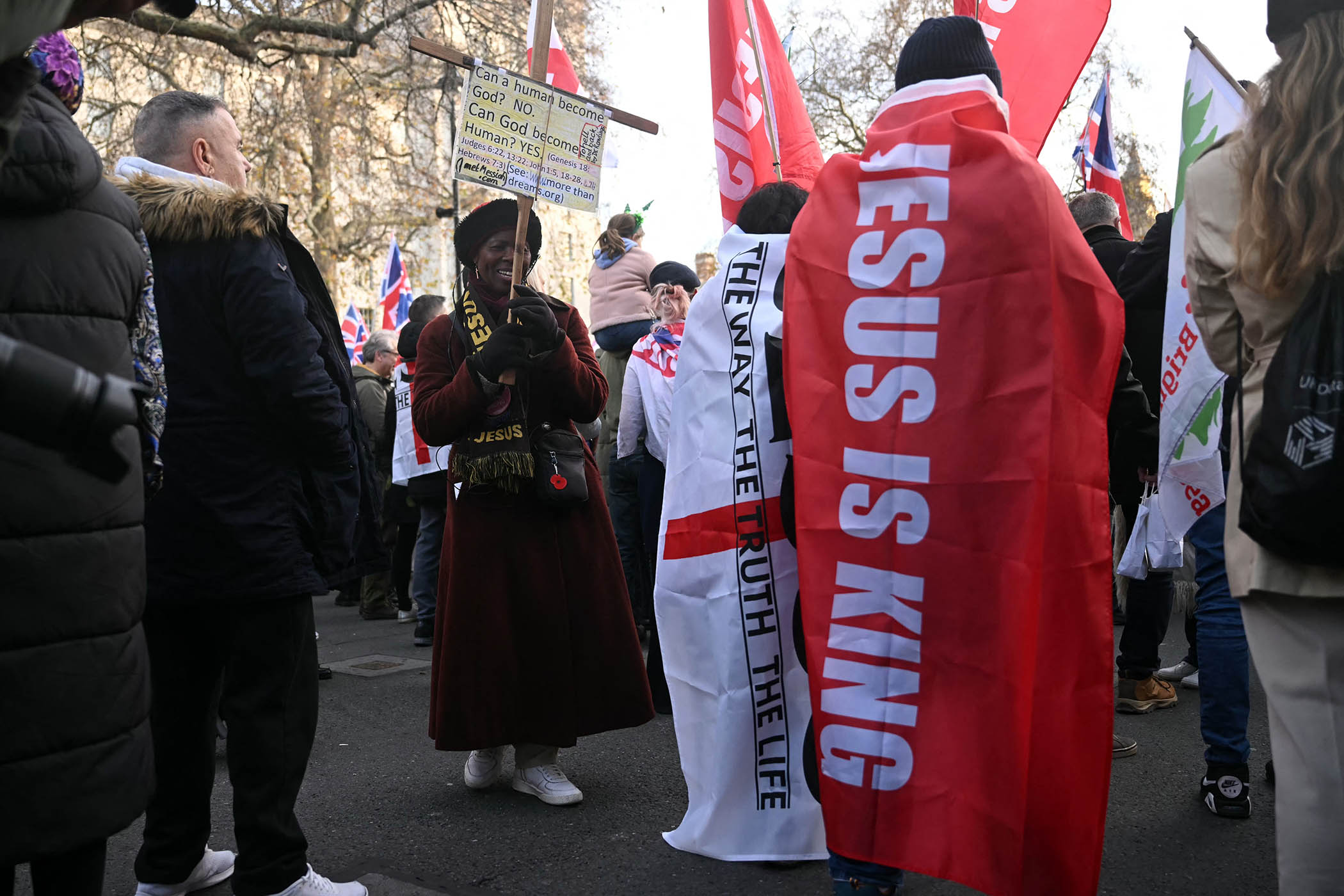
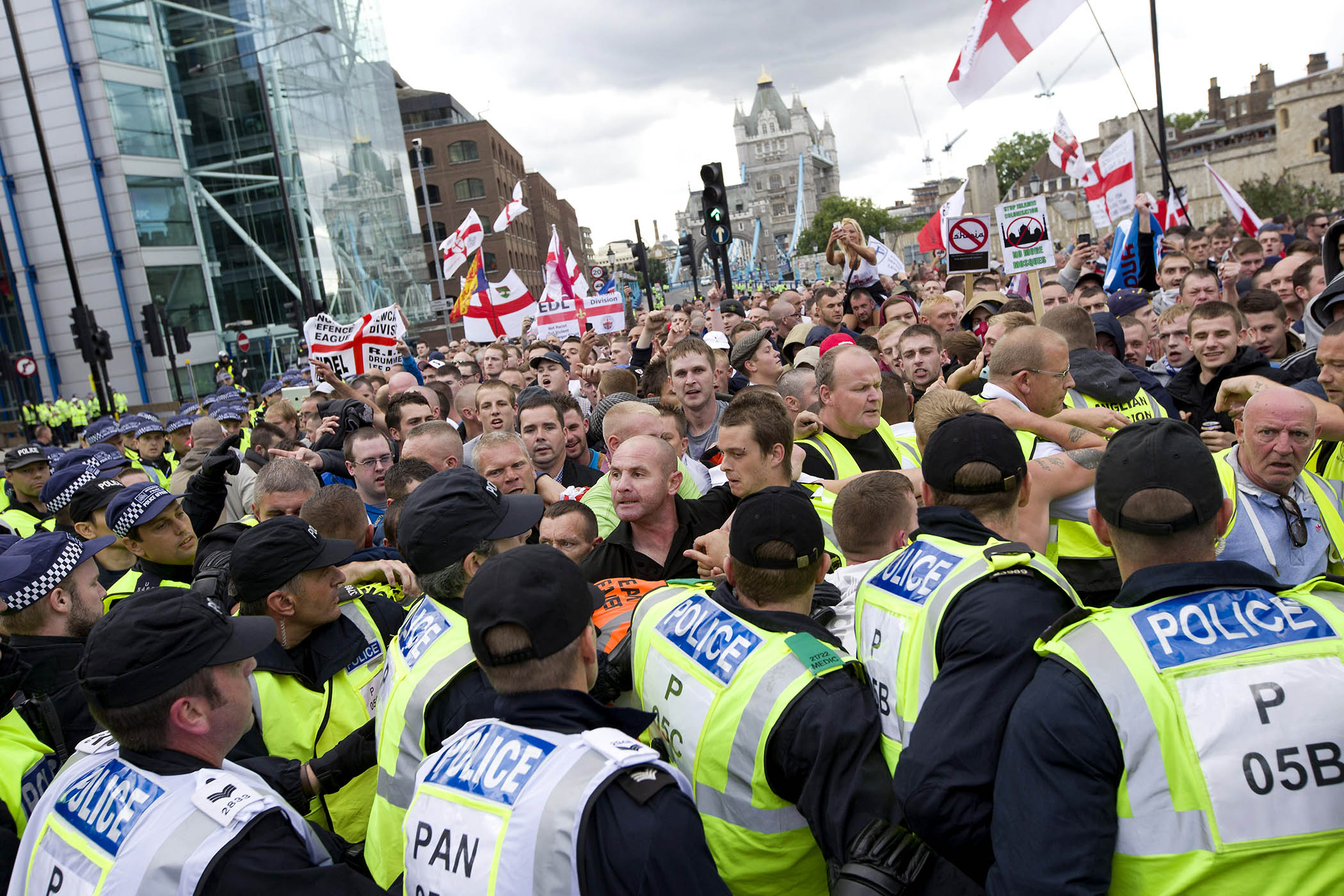
A version of this tension is being played out this Christmas. The rightwing activist Stephen Yaxley-Lennon, better known as Tommy Robinson, held an event in London purporting to “put Christ back into Christmas”, which attracted about a thousand supporters. I don’t want to stereotype the individuals or guess at all the different motivations of those who attended that event. Christian symbols, such as the cross, were superimposed on Union Jacks or flags of St George; images of the Crusades were held up on banners with the 1096 slogan Deus Vult (God wills it) and prayers were led by a succession of both ordained and lay men. As I watched, I was struck by speakers talking about their suicide attempts, the loss of their businesses, about family breakdown or teenage mental health challenges. Many had a personal story of isolation turned around by their experience of faith.
It is time to build church communities centred on love and forgiveness
It is time to build church communities centred on love and forgiveness
Threaded among the prayers and personal testimonies I also heard something chilling to my ears: a fusion of nationalistic rhetoric that, shouted even to such a small crowd draped in national flags and crosses, was disturbing – unlike any version of the gospel of love that I recognised. Biblical imagery, prevalent in Advent liturgies, of the refiner’s fire was used in what can only be described as a call to some sort of religious scorched earth policy, a vision not interested in making peace with other faiths. “Let pulpits speak once again with holy fire. Let the name of Jesus drown out every lesser voice in this land.” Another speaker asked wouldn’t it be great to return this nation to our “ancestral roots”. It is for these speeches that the speakers and leaders must be held to account.
Now is not the time for a Church of England that wishes to embody George Orwell’s vision of “old maids bicycling to Holy Communion through the morning mist”. Complacency is dangerous. In a world where 85% of the population practises a faith. British indifference to organised religion is not typical. But neither is it a time to fight fire with more fire – or a hotter one. Or reply to short slogans with more slogans – or even shorter ones.
It is time instead to be utterly serious about opposing the weaponisation of Christian history, doctrine or ecclesiology by anyone. It is time to use every possible opportunity to build and promote strong and accountable church communities centred on the love, peace-making, forgiveness and sacrifice evident in the life of Christ – church communities of the kind urged by St Paul’s letters to the Galatians, Romans and Corinthians; diverse, heterogeneous and open-hearted, resolute in service of God and community.
And importantly, in all of those “somewheres”, local church buildings, as far as humanly possible, committed to being public spaces open to everyone on their patch, regardless of belief or background. Places open to people from all faiths and none, standing up for a vision of society that, in the manner of Christ’s life, is committed to making and keeping peace.
Photograph by Justin Tallis/AFP via Getty Images
Newsletters
Choose the newsletters you want to receive
View more
For information about how The Observer protects your data, read our Privacy Policy