

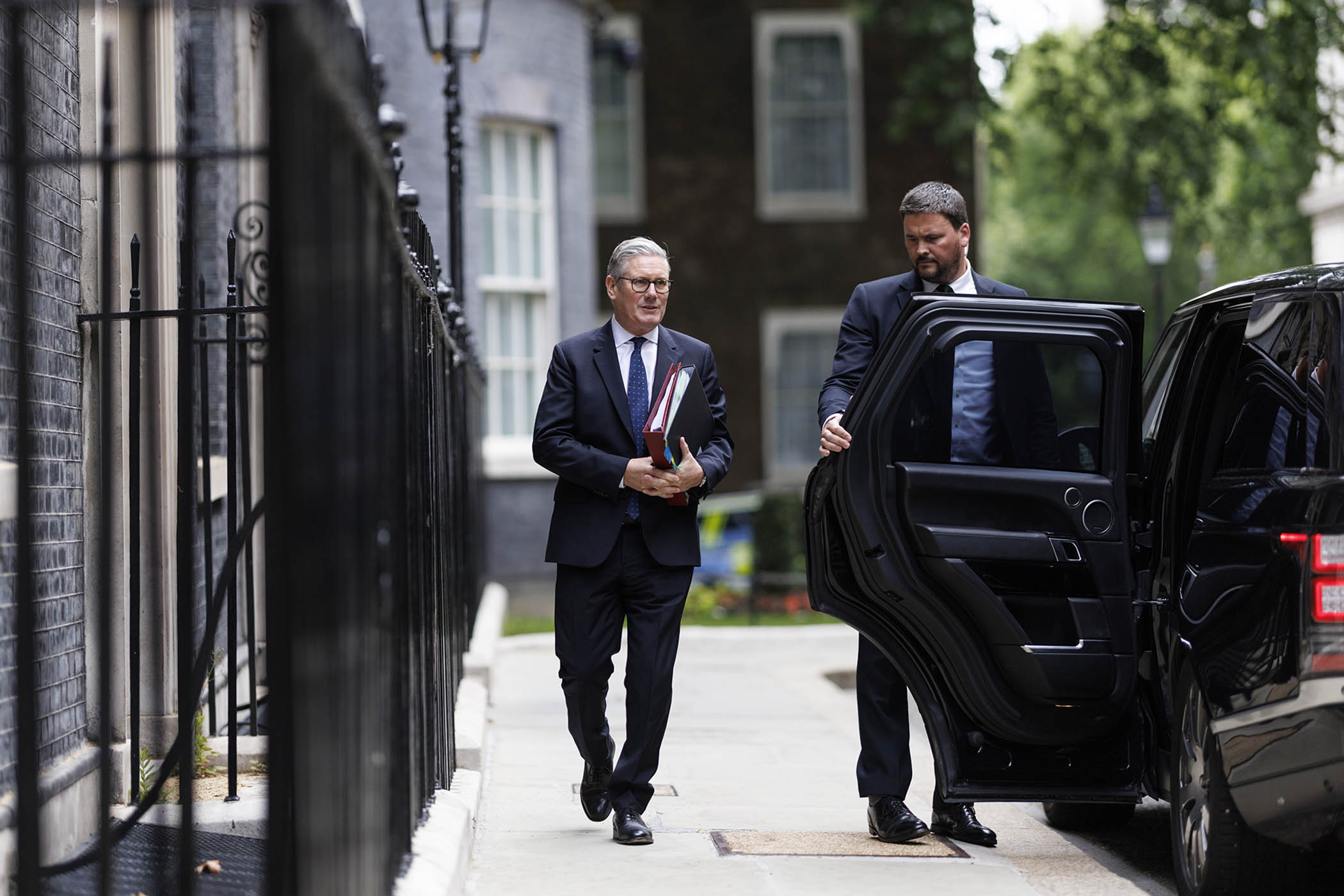

Imagine seeing someone in the street being beaten up by a mob, and even those who arrive to help aiming a few punches and kicks of their own at the victim’s head because, they say, his assailants have some “legitimate concerns”.
This is how British politics has too often seemed over the past decade, with despair and outrage metastasising to such an extent that it may no longer be possible to keep control.
Much of it began 10 years ago. David Cameron was locked in make-or-break negotiations with the EU on what he called “real problems” – especially about immigration – over which, he said, the British people “have understandably become frustrated”. If Brussels didn’t agree to his demands, the then prime minister warned, he would campaign for Brexit himself in the referendum he planned to hold.
Well, he didn’t get all of what he wanted, didn’t campaign to leave, and didn’t last much longer as prime minister. Each of his five successors in Downing Street, including Keir Starmer, have since set new records for unpopularity among what appears to be a perpetually seething electorate. All of them, at various times and in different ways, have copied Cameron’s mistake by choosing to echo some of the shrillest expressions of discontent in the belief that they will somehow assuage it.
It is on immigration that this government picks fights with its supporters
It is on immigration that this government picks fights with its supporters
I was reminded of this the other day when talking to a senior figure in the current administration about the BBC, an organisation which so often appears muddled itself over how to reflect what the public thinks. “Of course,” this person said, the broadcaster was a keystone in our democracy, “so we must reform it and then defend it”.
Really? The priority now should surely be to assert the principle of an independent and impartial BBC, explaining clearly why that’s worth fighting for in the face of endless attacks from right-wing newspapers, as well as Nigel Farage and Donald Trump. Without first securing that anchor, any argument about reform risks drifting into those toxic currents where ministers sometimes seem to be giving succour to complaints about the BBC’s allegedly “woke bias”.
The same sequencing error can be seen in other areas of policy where government reforms risk throwing the proverbial baby out with the bath water. Health secretary Wes Streeting has, for instance, been good enough to acknowledge that his previous comments about the “overdiagnosis” of mental health conditions “failed to capture the complexity of this problem”. It applies also to this year’s botched shakeup of disability welfare payments, which sometimes played into old tropes about people “taking the mickey” or an undeserving poor. This contributed to the government being forced to climb down and even now makes it harder for Labour MPs to hail the budget’s belated scrapping of the two-child benefit cap with the full-throated roar of approval this decision deserves.
Yet it is on the issue that so vexed Cameron – immigration – that this government still stretches furthest to recognise the concerns of Britain’s angry voters, as well as sometimes pick fights with its own supporters. Starmer’s speech about an “island of strangers” – a phrase he later expressed deep regret about using - did not do him much good with anyone. Home secretary Shabana Mahmood’s more recent proposals, to change rules on refugees and the way the European Convention on Human Rights is interpreted, were better presented but risked playing into a much-disputed narrative about Britain being uniquely attractive to asylum seekers. Once the approving headlines have been scraped away, there’s some scepticism about whether such measures will either improve Labour’s dire poll ratings or significantly reduce the number of small boat crossings.
Recently however, even in the midst of all this, those who crave some boldness from the government have pricked up their ears at the slightly different tone the government has started using on the EU. Instead of talking about how to “make Brexit work”, the prime minister last week went further than before in describing the damage it has caused to “our economy, and in trust – in the degradation of political debate”. He also suggested that the public will need to be “grown-up” about the trade-offs needed to clean up the mess left behind by Cameron’s referendum almost a decade ago.
Although such words can be over-interpreted, I sense that Starmer would like to go further and faster than the limited “reset” agreed with Europe last year. Any such ambition is limited by both manifesto promises about avoiding too close a relationship and the difficulty of getting anything over the line with EU negotiators who currently seem to regard incremental improvements on trade with Britain as barely worth their while. Its leaders might sit up and take notice if Britain allowed, for instance, a youth mobility scheme without imposing a cap on the number of young people who could come here to work. But that would require overcoming both a Home Office obsession with immigration statistics and the lingering neuralgia suffered by Labour’s election strategists about the reaction of leave-voting demographics.
Newsletters
Choose the newsletters you want to receive
View more
For information about how The Observer protects your data, read our Privacy Policy
As with so much else, Starmer could do with lifting his head out of the micro-detail of piecemeal reforms or what concerns – legitimate and otherwise – this or that voter might have. Indeed, he may conclude there’s not much to lose from making a big statement of principle and values about where he wants to go on Europe because, right now, Starmer appears to be that “someone” being beaten up.
Kenan Malik is away
Photograph by Peter Nicholls/Getty Images