


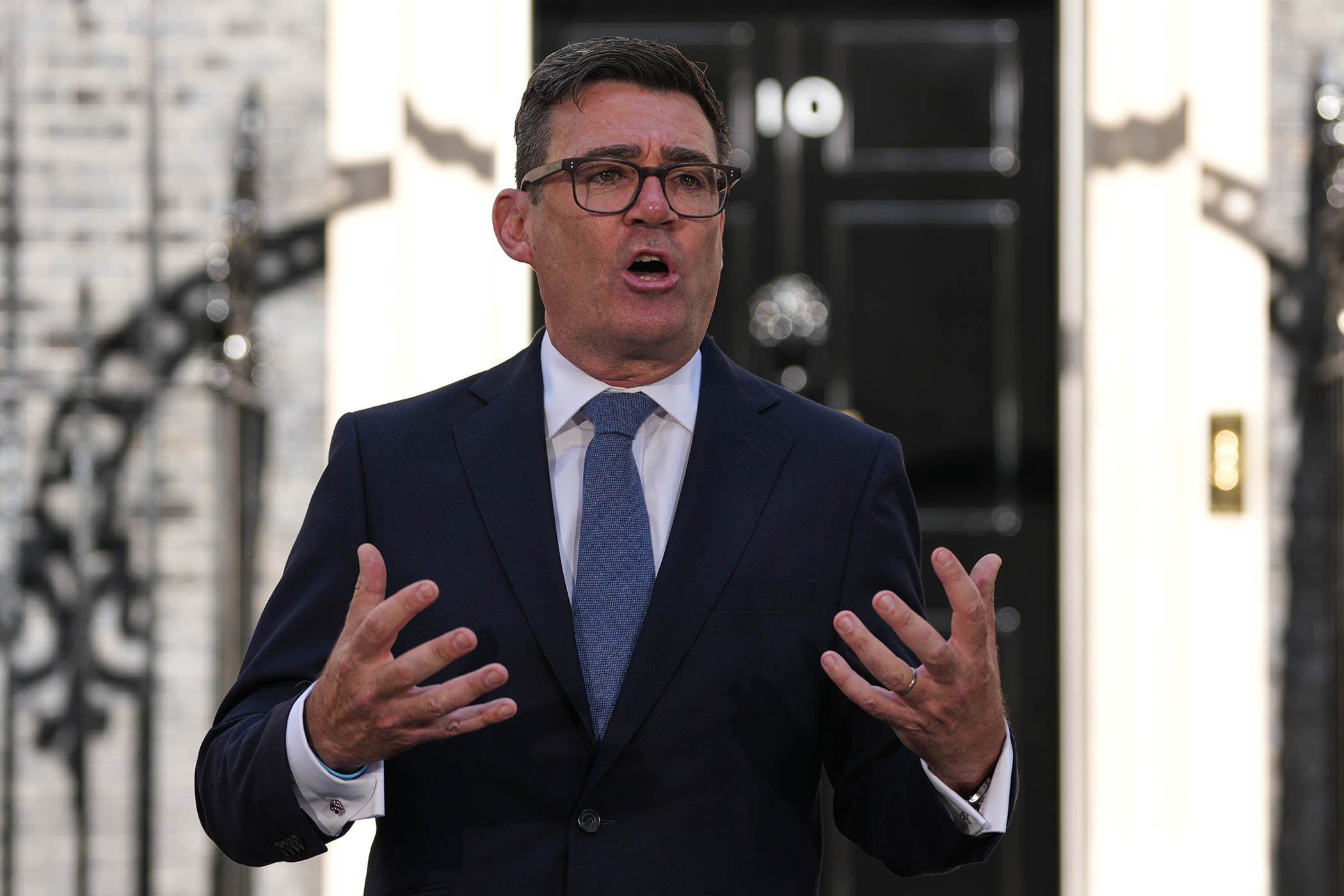
The debate is not about Labour’s mission. But how to achieve it in a fast-changing world.
My essay has provoked what has been, on the whole, a good and healthy debate. But the terms of it need to be clear. It isn’t about the “why” of the progressive political mission.
In my opening paragraph, I quoted with approval the Labour party constitution’s definition of the Labour cause: “power, wealth and opportunity in the hands of the many not the few”.
The debate is about the “how”. How do we create a society in which we spread power, wealth and opportunity?
Higher growth creates opportunity. So do better public services, especially education. Lower energy costs. Improved living standards and affordability. Lower taxes also, especially for the lower paid.
But what are the correct policies to achieve these things?
Answering requires an analysis of the way the world is changing; and a rigorous approach to what works. During my time as prime minister we were fortunate enough to have a strong economy, improving public services, falling crime, the minimum wage, sure start, big reductions in child and pensioner poverty and much else.
All that any Labour party member will nod along with.
We also introduced academy schools, university fees, opened up the NHS to collaboration with the private sector and a lot that departed from progressive orthodoxy.
Now the nodding stops.
Newsletters
Choose the newsletters you want to receive
View more
For information about how The Observer protects your data, read our Privacy Policy
But, just to take academies, thousands more children in inner city schools go to top universities through the reform. The previous system was failing them.
People often misinterpret what I said about globalisation – you can’t stop it – as therefore meaning you have no agency in respect of it. Of course we do. That is the purpose of policy. But globalisation was part of the context within which policy was developed. (And for those who believe globalisation has halted, think again. It hasn’t).
I am the first to accept that the context for today’s policy making is vastly different from three decades ago. But the same principle applies.
The reason I think we’re living through a 21st-century technological revolution led by AI is not because my institute has been bought off by tech bros, but because I am studying what is happening and it’s blowing my mind in its implications. As it is general purpose technology, it has big potential downsides as well as upsides. We have to grip both.
It could make society more fair – if we use technological innovation to boost private sector productivity and transform our public services and the way government functions; or it could be a new source of inequality, where some have access to the benefits it can bring and others don’t.
The Americans have created the behemoth tech companies which have blazed the way in the first wave of this revolution, and we will all use their technology whether we like it or not. Naturally, they need sensible regulation and how we choose to use them is crucial. (As was the case with the behemoths of the industrial revolution).
But the next wave – the application of that technology – is a very open competition in which Britain could and must be well placed. It needs a completely different skillset within government, different cadres of people who have the capability to help us navigate this new world; and a fundamental reimagining of the state.
Most of the innovation, even in the public sector, will come from the private sector, from start-ups, from some companies we know and some still to come. There will be whole swathes of current business and employment patterns, public and private, which will be rethought or redundant.
I don’t know anyone who believes that the market is always the answer. But I do know that during this transition, for the country to achieve prosperity, without which there is no social justice, we need our enterprise sector to feel energised, supported and able to thrive.
The role of government will be to create the conditions for this thriving.
That’s why at this moment in time we need the labour market to be flexible, to keep business costs down, to prioritise cheaper energy and electrification, to reform our welfare system so we can spend more on things which will prepare us for the future (including defence). And to focus on education and reskilling, particularly around AI adoption, which will protect people at work more than anything else. As will implementing the excellent report from Alan Milburn.
Because the world is getting transformed, our policy response must be transformative. This question of “incremental” or “radical” underlies the populism issue.
The prevalent view on the left is that the financial crisis gave rise to populist sentiment, showing that “neo-liberal” economics failed and led to stagnant wages. Leave aside the fact that a country where almost half our national income is spent by the state is an odd form of neo-liberalism, we should be cautious about treating populism as a consequence simply of economics.
We do have a major issue around static real wages for a significant part of the working population. The day I left office UK average wages were around 30% higher than those of the US and are now around 30% lower.
However, break down the support for Brexit and Trump – the two big populist events of the past decade – and we see a large part of the support for both was not from the most disadvantaged. Cultural questions also matter. And too often progressive positions on these issues seem to have been driven by noisy pressure groups not common sense.
Most of all, people see how much is changing around them; and then compare that with how little government seems to change. That is the driver for radical, not incremental, change.
You offer a reduction in waiting lists for example and yes that’s welcome. But it’s not a rethinking of healthcare and I feel that’s where people are today and what they’re searching for. So we should give them, through that deep policy work, the radical. But the radical which works.
People sometimes contrast “values” politics with “technocratic” politics. But the literal meaning of technocratic is from the Greek words combining power with skill.
The Labour party purpose will always be social justice. But the skill with which it is achieved will determine the success or failure of that purpose. And that demands understanding the world before changing it.
Tony Blair is a former prime minister (1997 to 2007) and executive chairman of the Tony Blair Institute for Global Change
Photograph by Kirsty O’Connor/Getty Images