

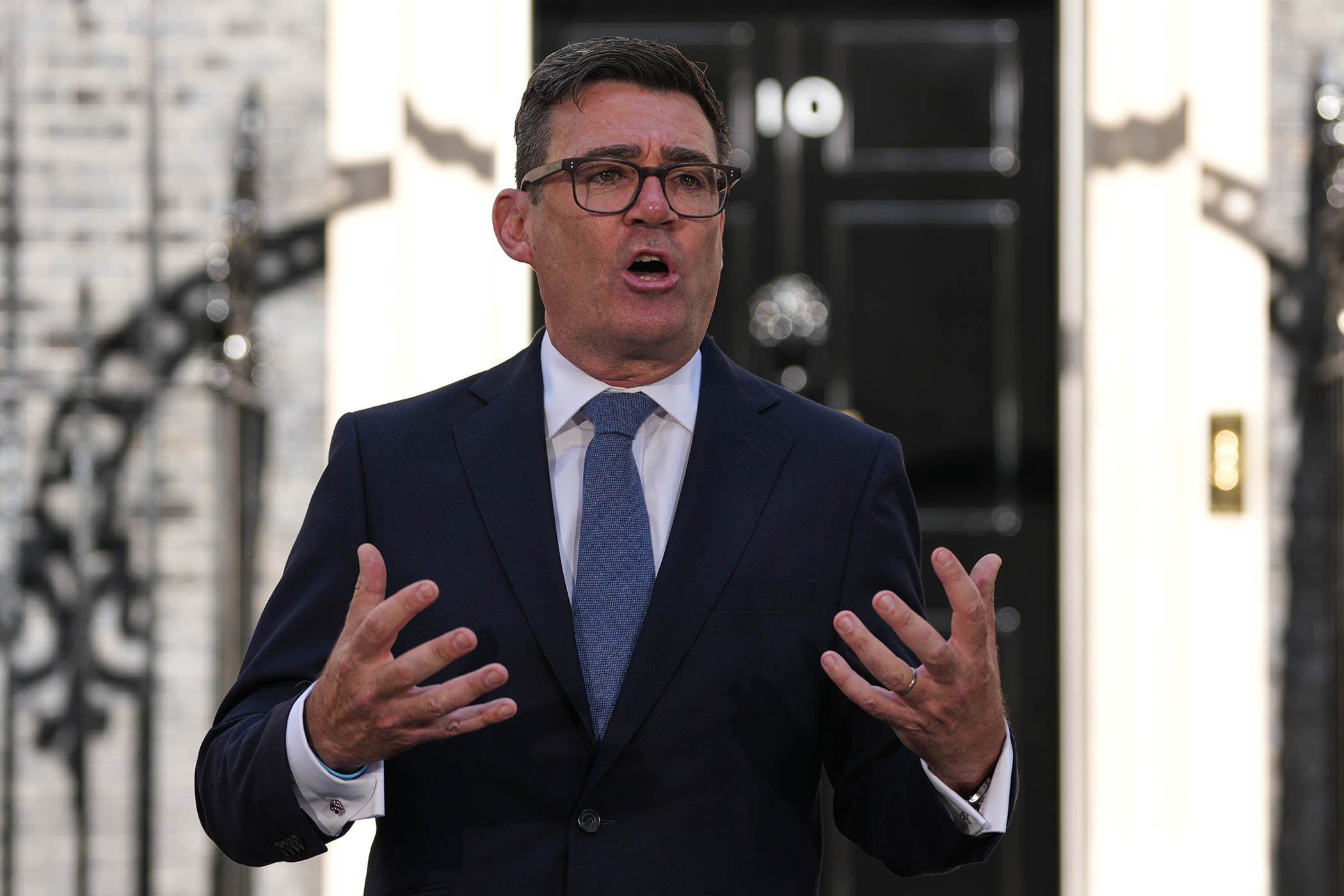

This article first appeared as part of the Ben Zaranko on the economy newsletter – the big economic ideas and forces shaping our world, and the policies put forward in response. To receive it in your inbox, featuring content exclusive to the newsletter, sign up here.
With Andy Burnham’s accession to No 10, there will now be considerable scrutiny of his relationship with John Healey, his chancellor, and the balance of power between No 10 and the Treasury. Louise Haigh, newly appointed chancellor of the Duchy of Lancaster and close Burnham ally, has written of the need for a “beefed-up” department at the centre to curtail the powers of the country’s “imperial” finance ministry.
That’s one to keep an eye on. Lesser discussed, but also worth watching, is the relationship between the Treasury and the Bank of England.
In the same essay for Renewal, Haigh argued that the government must “better coordinate fiscal and monetary policy to avoid the Bank of England pursuing policies that actively damage the government’s balance sheet” and that “the time is right” to reexamine the central banks’ mandate. This could be significant. I’ll do my best to explain why in plain (or plain-ish) English.
The Bank of England bought a shedload of government bonds, also called ‘gilts’, as part of its quantitative easing (QE) programme after the 2009 financial crisis. Now, it’s selling off those bonds in a process called quantitative tightening (QT). Haigh makes specific reference to QT. The key things to know are:
•
The Bank of England is pursuing QT with more gusto than its counterparts in the US and Europe, because it is actively selling bonds as well as allowing them to passively mature.
•
When the Bank sells gilts, it increases the supply of gilts in the market. More supply pushes down prices. That means higher yields (because bond prices and yields move in opposite directions). In other words, it pushes up government borrowing costs – potentially by quite a bit – which leads to a higher debt interest bill.
•
The Bank is generally selling these bonds for less than they were bought for, and when it makes a loss, the bill gets sent to the Treasury.
Haigh is one of a growing group who are rather disgruntled about this state of affairs. It’s possible that the new government, hungry for revenue with which to fund cost of living support and other priorities, will cast its eye towards Threadneedle Street.
Among the more sensible options available (there are plenty of non-sensible options), the government could look to bring the Bank of England’s programme of active bond sales to an end (a response to bullets 1 and 2). It could change the accounting treatment of Bank of England losses, so that they’re spread over a longer horizon rather than hitting the Treasury’s bottom line immediately (a response to bullet 3). It could do both.
It’s hard to say precisely what fiscal impact these sorts of changes could have, but you’d expect them to reduce the cost of borrowing (and so debt interest spending) by a modest amount, and for official measures of debt to increase less quickly. The impact is probably in the single-digit billions, in what I think of as the “helpful but not transformative” bucket. When Burnham talks about looking for “flexibility” within the existing fiscal rules, it’s possible that this is the sort of thing he has in mind (as well as more creative or aggressive use of bodies like the National Wealth Fund).
David Aikman, Director of the National Institute of Economic and Social Research, and a former economist at the Bank, has argued in favour of changes along these lines. He suggests that a new monetary-fiscal settlement could be codified in a formal Treasury-Bank of England protocol, to reflect the realities of a world with high government debt and large central bank balance sheets. The Resolution Foundation concurs. Plenty of City analysts and bond traders I’ve spoken to over the years have been baffled by the Bank’s decision to continue with active QT even as gilt yields soar.
The risk, though, is that any reforms are perceived not as a narrow technical change, or as a principled and well-considered adjustment to the division of economic responsibilities we’ve had for the last 30 years, but instead as an attack on the independence of the Bank of England and/or an opportunistic attempt to wriggle free of fiscal discipline. This is a delicate area. The new government should tread carefully.
Newsletters
Choose the newsletters you want to receive
View more
For information about how The Observer protects your data, read our Privacy Policy
Photograph by Ryan Jenkinson/Getty Images