
“I write this from the truth of my heart,” Sarah Ferguson said in a 2011 apology email to Jeffrey Epstein, after she’d publicly condemned him as a sexual abuser and paedophile. “They used me to hurt you beyond realms”. She was manipulated and tricked, she claimed, and her public condemnation of him was merely a way to try and save her philanthropy career, and her side gig writing children’s books.
It is the same language – of hearts, truths and honour – she uses in her two adult romance novels, published by Mills & Boon, which feature victimised men as lusty love interests, and the underestimated women they fall for. “As a princess of the realm, my own reputation must be spotless,” she writes for her protagonist in Heart for a Compass, “I will continue to let my heart be my compass”. In the acknowledgments, Ferguson said she drew from her own royal experiences to “give authenticity” to the book.
Across her prolific writing career (53 books and counting), but in particular in her romance novels and memoirs, Sarah Ferguson paints a portrait of herself and her characters as romantic heroines, misunderstood victims, and unwavering loyalists. She offers an unintended portrait of her ex-husband, Andrew Mounbatten-Windsor, too; or at least, her ideas about men, and honour, and respect, are all on the page. Husbands are wronged, but emerge as steadfast knights, their honour intact.
I began reading Fergie’s books recently, alongside the Epstein emails, to try and understand why she stayed so devotedly loyal to men whose behaviour was so overtly despicable, her ex-husband and her friend (“the brother I never had”) Jeffrey Epstein. Together, these texts offer a window into her moral imagination – of a woman who stood beside Andrew for all those years, and into the former couple’s sense of themselves and the world around them.
Ferguson shows great interest in the language of therapy. In her memoir, Finding Sarah, she invokes the “drama triangle”: victim, rescuer, persecutor. “Victimhood can have a huge impact on our wellbeing,” she writes, describing her own resilience. “Some identify so strongly with the role that they develop illnesses to keep the attention they need.” But her own account moves fluidly between these states. She is the hounded victim of tabloids, Andrew is her rescuer. Later, when Andrew faced public disgrace for his association with Epstein, and was accused of rape by Virginia Giuffre, she becomes the rescuer.
In 2015, she went on American television and called Giuffre a “salacious liar” that the press should dismiss. And again, in 2019, a few months after Epstein died, she told Vogue Arabia that Andrew was “the best man” she knew. Watching his pain around Epstein, she claimed, had taught her to advocate for men’s mental health, “it is vital to articulate that more”. She and Andrew, in her formulation, were always persecuted – never the persecutors.
Andrew Lownie, who wrote an explosive biography of Mountbatten-Windsor in 2025, says that even after his arrest, “Andrew believes he’s been hard done by, he’s a victim in all of this, he’s being persecuted”.
Ferguson expressed the same logic in her 2011 apology email to Epstein, when she walked back on her public condemnation of him. The email is not concerned with what Epstein had done but with what the story was doing to Andrew. She writes about her “pain” at her ex-husband’s victimisation and laments the “endless horrendous pages” about his relationship with Epstein, the coverage that culminated in his resignation as trade envoy that year.
For her, the crisis isn’t their sexual abuse, it’s fallout from the media’s cruelty, and her moral task is to stop Andrew being hurt
For her, the crisis isn’t their sexual abuse, it’s fallout from the media’s cruelty, and her moral task is to stop Andrew being hurt
In her memoir, she says she took herself to a luxury wellness resort in Thailand during this period, because the press attention made her “shut down”. She said in a 2011 television programme produced by Oprah that she went there to “heal” after not being invited to Kate and William’s wedding. But in the apology email she frames her silence as something she’d been forced into for everyone else’s sake. She’d been “advised in no uncertain terms” not to contact Epstein, because it would “cause more problems” for “you and The Duke and myself”. The common thread is consistent, for her, the crisis isn’t their sexual abuse, it’s fallout from the media’s cruelty, and her moral task is to stop Andrew being hurt “one more time”.
During that time, her autobiography Finding Sarah describes how she tried her very best to leave victimhood behind, after a meeting with a spiritual leader: “Muniraji’s teaching is all about shifting that stance from being a victim,” she writes, “to being accountable for your own life.” He tells her that blame corrupts – “that way of thinking makes us victims.”
Newsletters
Choose the newsletters you want to receive
View more
For information about how The Observer protects your data, read our Privacy Policy
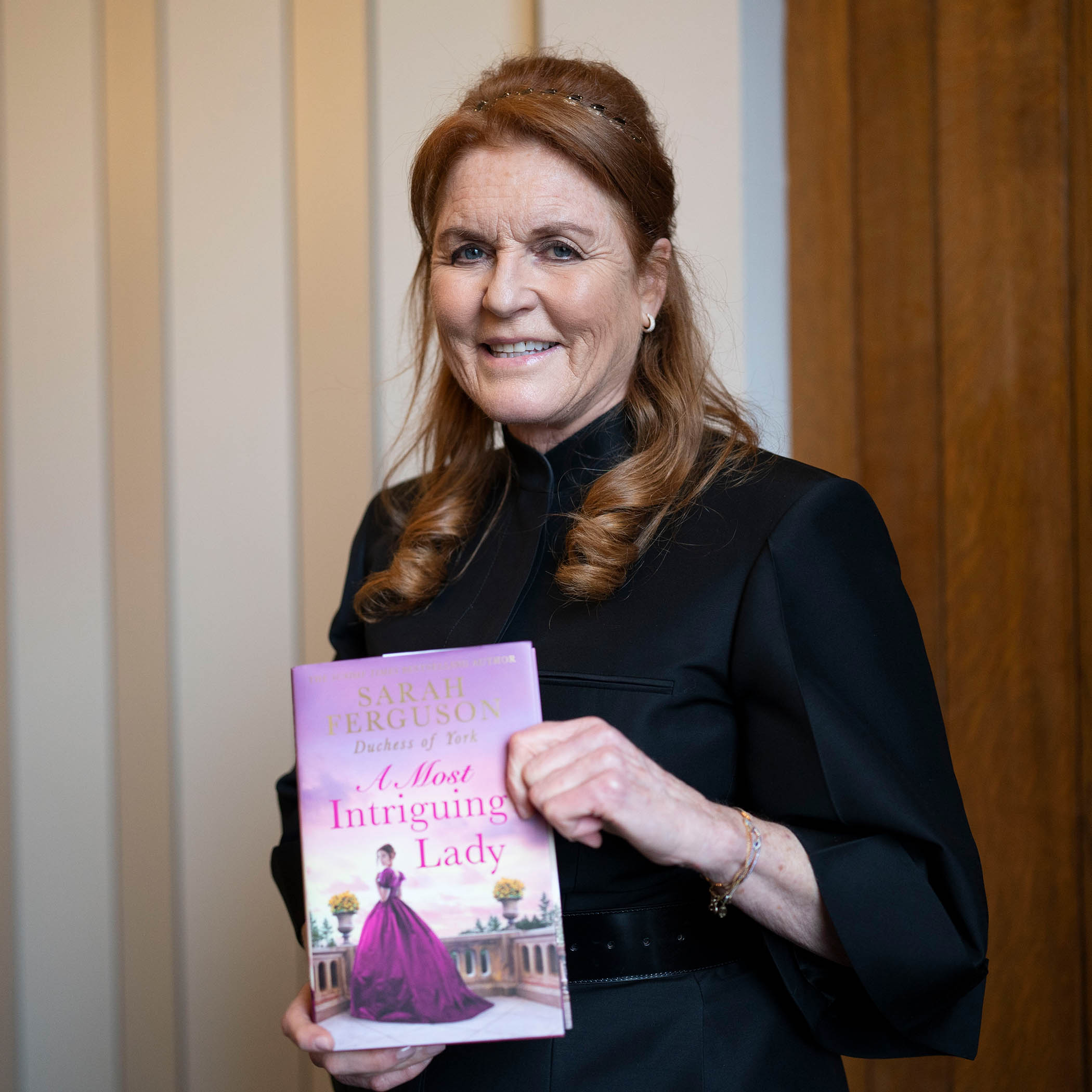
Sarah Ferguson at a book signing in 2023
But even then, Ferguson can’t quite manage it. Across her writing, she has no real acceptance of a reality beyond herself, she is unable to step outside her own dramas. In the email, Epstein’s predicament becomes “your” crisis – “hellacious” – and she immediately matches it with “MY” storm, which has “paralysed” her. In fact, she says, no one knows Epstein’s hurt better than her, they are both “in the firing line”, but unlike him, she has been there for “22 years”. Ferguson believed this of herself, telling Vogue Arabia in 2019 that she was a victim of the press – at “the bottom of the barrel… I’m the most misunderstood person.”
Lownie now reports that Ferguson is trying to write another memoir, a lucrative chance to tell her “side” of the story. In Finding Sarah, her spiritual leader tells Ferguson, “You have the voice of the world.” She agrees: “Yes. I want to be the voice of the silent whisperers, the children who have been abandoned without hope.”
Instead of the “silent whisperers”, what she’s really perfected is being the voice of the loudly hard-done-by, a woman whose particular combination of loyalty and solipsism means the only thing that reaches you from her writing is her feelings, not Andrew’s actions. The lesson of the Fergie canon is that there isn’t a moral universe, only her universe, one where therapy-speak launders all manner of crimes, “accountability” means forgiving yourself, and “victim” means you get to be right for ever.
Photograph by Tim Graham Photo Library via Getty Images, David Levenson/Getty Images