
Jonathan Powell has agreed to stay on as national security adviser in an Andy Burnham government to ensure continuity of foreign policy.
The former chief of staff to Tony Blair had been planning to leave No 10 in the autumn if Keir Starmer remained as prime minister but The Observer understands he has now been persuaded to continue in post.
His decision is a big coup for Burnham. Powell is credited with playing a key role in shaping Starmer’s policies on the international stage and is widely respected around the world. “He is indefatigable, driven, and has contacts in all corners like nobody else,” one source said.
Powell had intended to step down as national security adviser to return to the mediation consultancy that he set up in 2011 but he has now been convinced to carry on in Downing Street. His sense of “duty” made him conclude that it was in the national interest to maintain stability at a time of domestic and international turmoil, one ally said. “[It’s] in the blood.” Powell’s father was in the RAF and his brother Charles was a private secretary to Margaret Thatcher.
Burnham, who is expected to take over as prime minister in three weeks’ time, has made clear that he wants to spend less time abroad than Starmer, and having an experienced and well-connected national security adviser will make it easier to delegate international issues.
The appointment of James Purnell as chief of staff is thought to have helped convince Powell that Burnham is serious. Purnell, who served as a cabinet minister under Gordon Brown, is seen as a “grownup” by senior Labour figures and worked closely with Powell under Blair.
The decision will be welcomed by diplomats at the Foreign Office (FCDO) and around the world. Peter Ricketts, the ex-head of the FCDO and former national security adviser, said keeping Powell would send a vital signal of stability on foreign policy at a time of domestic and international turmoil. “It’s been an area of success for Keir Starmer,” said Lord Ricketts. “He’s increased Britain’s reputation and standing by the way he’s handled things, so a message of continuity, which keeping Jonathan Powell would partly send, is important.”
Mark Leonard, the director of the European Council on Foreign Relations, said: “If Andy Burnham’s goal is to really make a difference on the domestic agenda, having Jonathan carry on doing the work that he’s doing will be a really powerful way of reassuring the international leaders because he is such an extraordinarily professional and well-respected operator. Prime ministers and their advisers in other places are very much in awe of Jonathan Powell.”
A former diplomat who served as Blair’s chief of staff for a decade between 1997 and 2007, Powell was the chief British negotiator in the Northern Ireland peace process that led to the Good Friday agreement. Under Starmer, he was heavily involved in striking a deal over the Chagos Islands, and in February attended talks in Geneva between the US and Iran.
He advised Starmer not to appoint Peter Mandelson as ambassador to Washington. Government documents revealed that Powell found the appointment process “weirdly rushed”. In a record of a call on 12 September 2025, the day after Mandelson was sacked, he is noted as having previously raised concerns “about the individual and reputation” with Morgan McSweeney, who was then No 10 chief of staff.
Newsletters
Choose the newsletters you want to receive
View more
For information about how The Observer protects your data, read our Privacy Policy
Allies of Burnham say he intends to focus more on domestic policy than foreign affairs. One described international relations as a “team effort” that is “not the sole responsibility of the prime minister”. Burnham intends to cut down on foreign trips and delegate more meetings to other cabinet ministers or Powell. “Andy understands that foreign policy is a key part of the job but needs to be balanced with the urgent domestic priorities we have,” one ally said. “Ultimately, strength at home is strength abroad.”
There has been speculation that Olly Robbins, who was forced out as head of the FCDO over the Mandelson affair, could also return to government under Burnham, but he will not be national security adviser if Powell stays.
For more from Rachel Sylvester on politics, sign up for her new weekly newsletter sharing insight on what’s happening in Westminster, Whitehall and beyond.
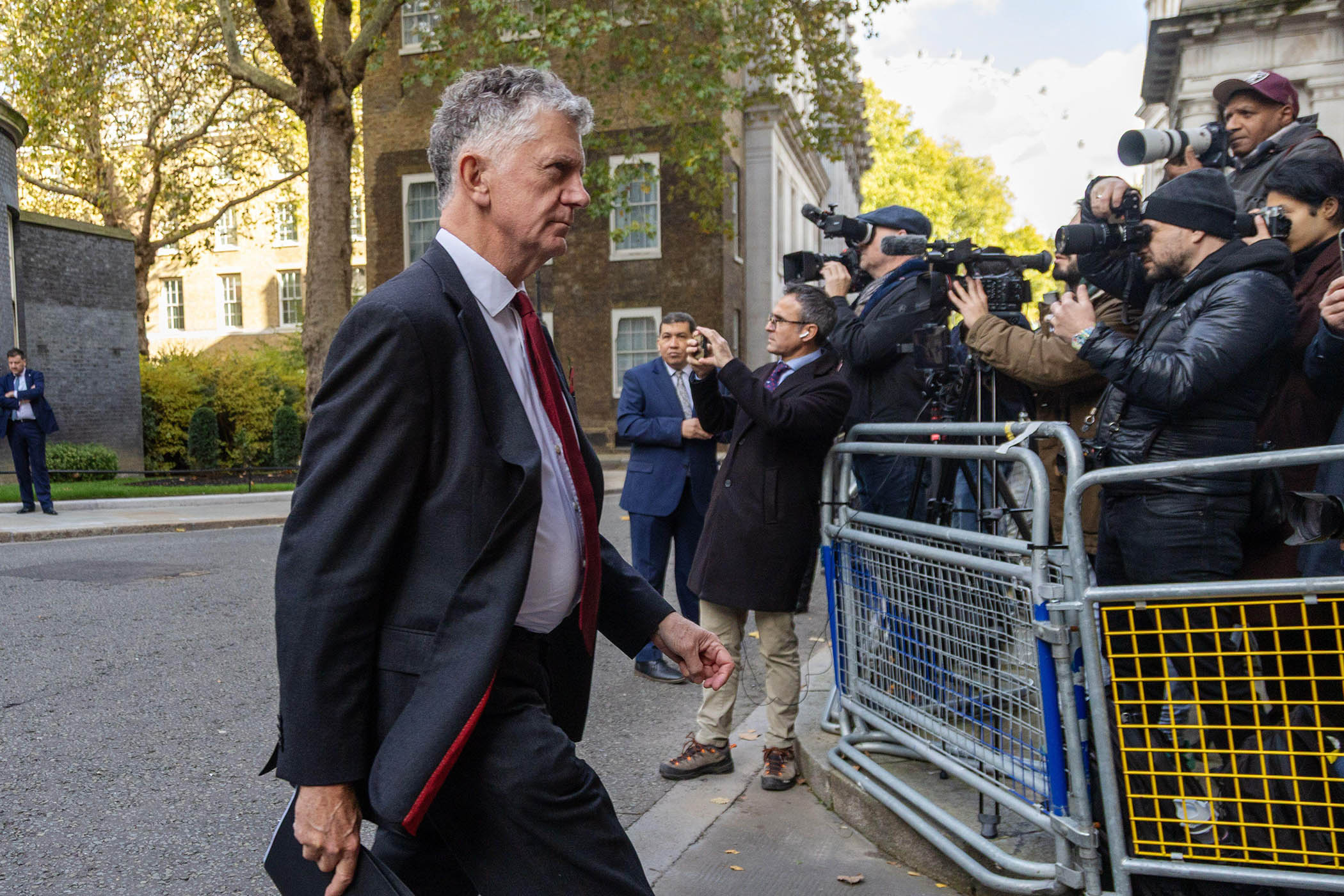
Photograph by Tayfun Salci/ZUMA Press/Alamy