
This article first appeared as part of Rachel Sylvester on politics, a new weekly newsletter sharing insight on what’s happening in Westminster, Whitehall and beyond. To sign up, click here.
Nigel Farage’s byelection that didn’t bite reminds me of Sherlock Holmes’ dog that didn’t bark. In Arthur Conan Doyle’s short story The Adventure of Silver Blaze, the famous detective deduces that the thief who stole a champion racehorse must be someone the stable guard dog knew and trusted because the dog made no noise when the crime occurred. It was the “curious incident of the dog in the night-time” that allowed Holmes to identify the culprit as the horse’s trainer.
Sometimes, silence speaks louder than words and the absence of an expected event or reaction can be the most revealing piece of evidence available. In the case of the Clacton byelection, the failure of the Conservatives, Labour, the Liberal Democrats, the Greens and Restore Britain to stand candidates is surprisingly illuminating about Reform UK. It highlights the weakness of Farage himself and points to a better way for mainstream parties to deal with his form of populism.
By announcing his intention to stand down as an MP, the Reform leader hoped to seize the initiative, cynically provoking a byelection before one could be forced on him by a recall petition following a parliamentary inquiry into his finances. He wanted to divert attention from questions about his undeclared £5m gift from Christopher Harborne, a crypto billionaire who lives in Thailand, and his relationship with George Cottrell, a convicted fraudster. He was attempting to appeal over the heads of the House of Commons standards commissioner and the media holding him to account to what he suggests is a higher authority – the electorate.
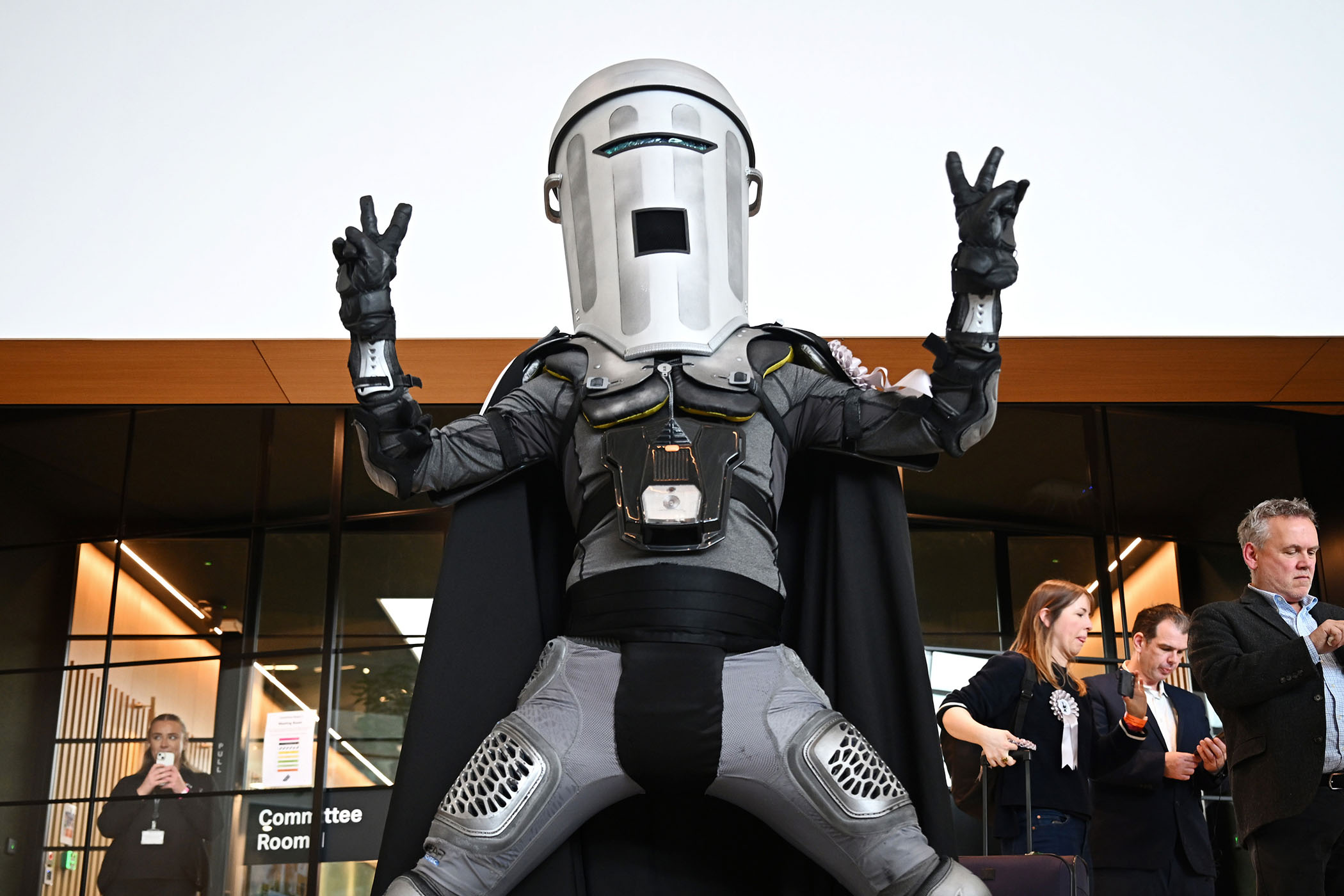
Instead the stunt has backfired. Farage, now up against the novelty contender Count Binface, looks ridiculous. Yesterday, when Rachel Reeves accepted his request to be “appointed steward and bailiff of the manor of Northstead” – the formal parliamentary procedure required to call a byelection – she stressed the absurdity rather than the risk. “It is a farce and a desperate distraction and the people of Clacton deserve better,” she said. “But if he wants to spend the summer arguing with a bin, I won’t stop him.” Kemi Badenoch accused Farage of having a “hissy fit”. Even the normally supportive Daily Telegraph splashed over its frontpage this week with the news that his “gamble” had turned to “farce”. Far from distracting the media from Farage’s dubious donors, there is more focus than ever on Reform’s money. If he is returned as the MP for Clacton all the same questions will remain and he will still be subject to investigation.
Not for the first time, Farage has been guilty of extraordinary hubris. He is so narcissistic and lacking in self-awareness that he presumably never considered that the other political parties might not contest the byelection. He wanted a “people versus the establishment” fight to burnish his tarnished credentials as a political outsider. He believed his own hype that he was the disrupter who could take on the Westminster elite and win. Now a man with a bin on his head is positioning himself as the real anti-establishment figure. Instead of looking like the leader of a rebel army, Farage appears brittle, irritable and rather pathetic.
The curious incident of the Clacton byelection is a reminder that Farage’s power derives almost entirely from the reaction of those around him. He needed David Cameron to give him the Brexit referendum he had long campaigned for, and he relied on Boris Johnson and Michael Gove to help him win the leave vote by giving a veneer of respectability to the Brexit cause.
Keir Starmer wrote red lines for the UK’s negotiations with the EU into Labour’s manifesto and stuck to them throughout his time as prime minister despite the harm they were doing to the economy because he was afraid of Farage. Without these other politicians willing to do what he wanted, the Reform leader would have achieved nothing. Farage is one of the most consequential figures of the last decade in British politics but only because of the effect he has had on other leaders. He is like the moon that shines only because of the light from the sun.
For too long, the mainstream parties have danced to Farage’s tune. Starmer was so worried about the threat from Reform that he made a speech he didn’t believe, warning that Britain was in danger of turning into an “island of strangers”. He introduced tough immigration reforms and limited his ambition on Europe because he was afraid of Farage. It felt inauthentic from a liberal human rights lawyer but it was also a political mistake because Starmer was fighting on Farage’s territory – immigration, crime, Europe – rather than on his own terms. He was stepping into the ring built by Reform, and it trapped him.
But the truth is Farage depends on other politicians for his success and when they call him out, or ignore him, they are empowered. Kemi Badenoch, liberated by the departure of Robert Jenrick and other Tory defectors, has found her voice and now mocks Farage rather than mimicking him. It is working.
Newsletters
Choose the newsletters you want to receive
View more
For information about how The Observer protects your data, read our Privacy Policy
Burnham spent the Makerfield byelection campaign trying to avoid talking about Reform altogether and beat Robert Kenyon hands down. As prime minister he should go into battle on the issues he cares about – housing, education, social care, the cost of living – rather than getting dragged onto Farage’s agenda. Making endless micro-announcements on immigration, as Starmer did, simply adds to the salience of the issue without solving it. Instead, Burnham should get on with dealing with the problem of illegal migration, but talk about his own priorities as Labour leader. Farage thrives on the attention showered on him by other political parties. As the Clacton fiasco shows, the thing he hates most is for his antics to be ignored.
Photograph by Leon Neal/Getty Images