“Imagine,” declaimed Andy Burnham, channelling his inner John and Yoko, “good growth in every postcode, and hope in every heart.” He was speaking at the People’s History Museum in Manchester in what might be considered his launch as future prime minister. He called for government that would be “place first, not party first”, and promised national economic renewal based on “higher density residential development” in “our towns” and on reviving high streets so that they would be “symbols of Britain’s renaissance”. He also promised, boldly, “the biggest council house building programme since the postwar period”.
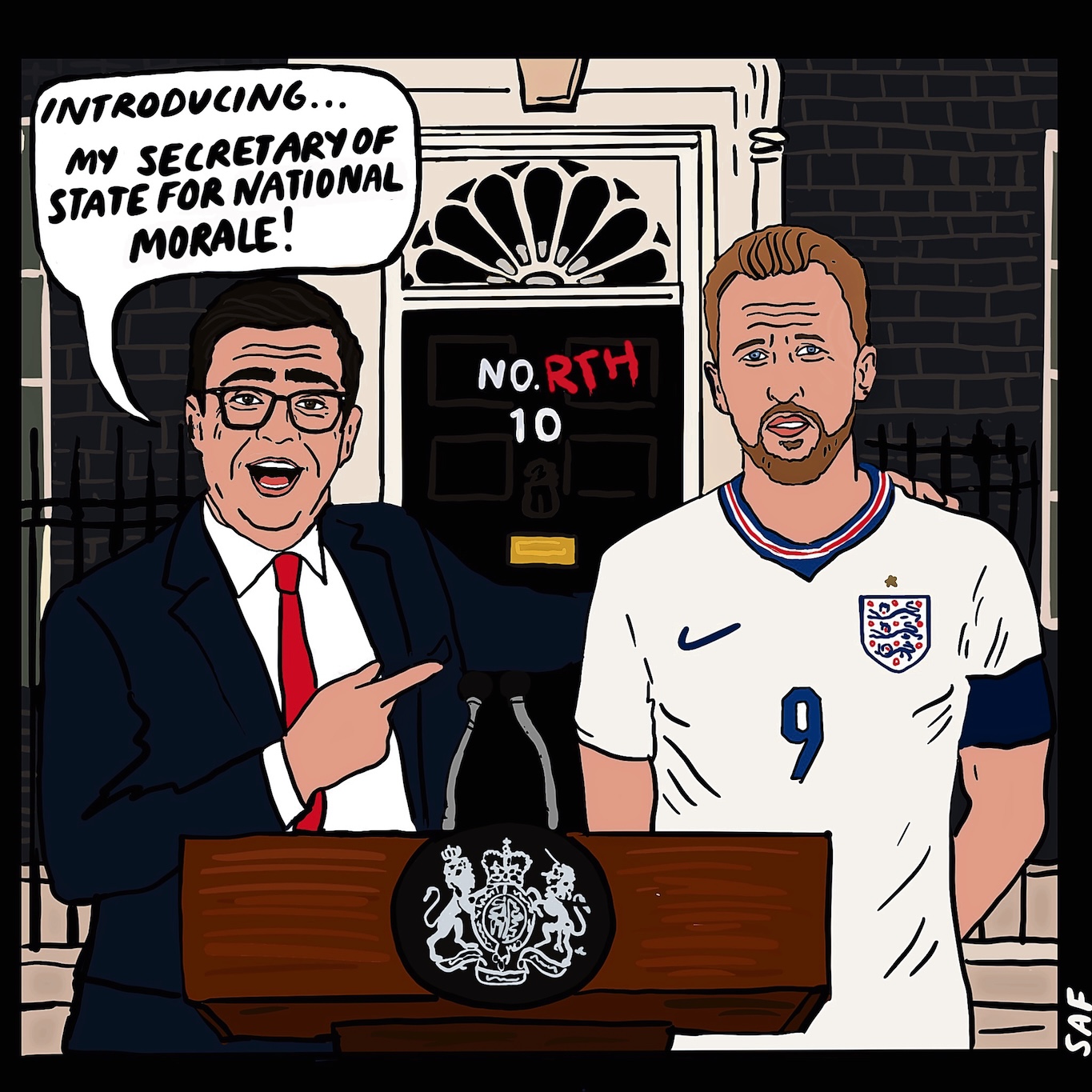
He has also announced his eye-catching proposal for a “No 10 North”, part of the prime minister’s office that would be based in Manchester, to help deliver his pledges. This, perhaps, is a symbolic as much as a practical step towards his stated aim of decentralising power away from Westminster.
It all sounds great – who wouldn’t want growth driven by revived town centres, and what Burnham called “a secure home” for everybody, that would be the “foundation of everything”? It’s ambitious. His case for persuading the electorate that he can make these things happen is his record as mayor of Greater Manchester since 2017. “We will make politics work for you and the place where you live,” he said, “I know it can be done, because we have done it here.”
This record is the best available evidence for what he might do to cities, towns and neighbourhoods in Britain as prime minister. It’s not quite as transformative as he suggests, not least because his powers as mayor were limited. His mayoralty included good ideas and good intentions, many of which are not yet fully developed. It has also been a balancing act, between making the region attractive to external investment, and achieving the social goods, especially in housing, that Burnham says he wants to see.
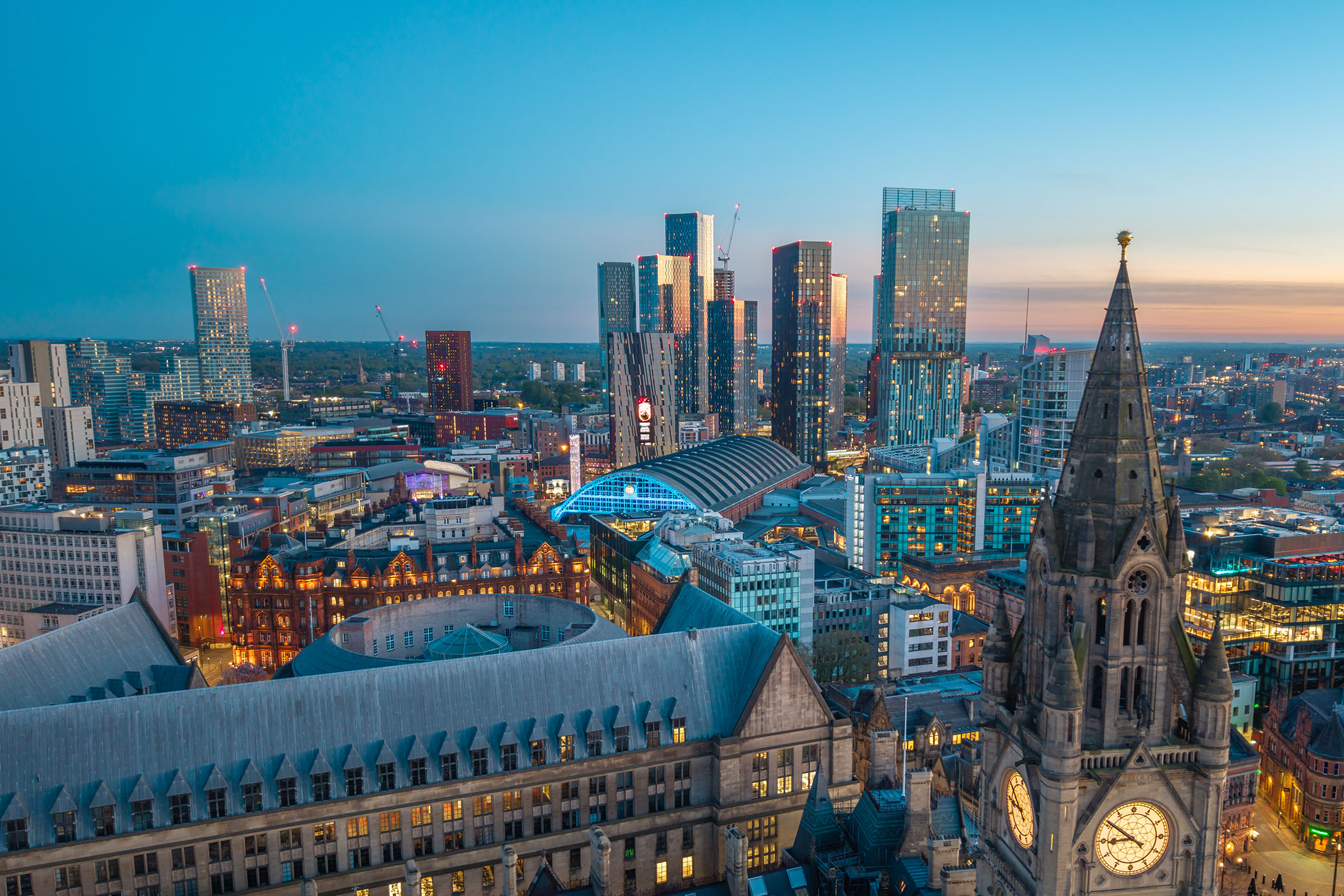
Modern Manchester – the city centre, that is, rather than the wider region around it – has become famous for its thickets of glass skyscrapers, mostly residential towers built by speculative investors for private rent. Their architecture is generic, repetitive, could-be-anywhere stuff, with desultory public space between the blocks, but they earn council tax revenues and create an image of dynamism. Manchester became, says the tenant organiser Isaac Rose in his book The Rentier City, “the poster child for neoliberal urbanism”.
The towers are part of a narrative that goes back to the early 1980s, when the collapse of the industry on which the city was built brought about the loss of 207,000 manufacturing jobs in 12 years. You could walk, the urbanist David Rudlin has said, “from the heart of the city to its edge, a distance of some six miles… through uninterrupted dereliction.” Then, goes an often-told story, came a burst of new energy led by the Factory record label and the Hacienda nightclub, followed by optimistic Olympic bids, which would ultimately lead to the successful hosting of the 2002 Commonwealth Games in Manchester.
The 1996 IRA bomb, the largest in mainland Britain since the second world war, was taken as an opportunity to rebuild the centre of the city better than before. From the late 1990s, led by former chief executive Howard Bernstein and then council leader Richard Leese, the city embarked on a programme of regeneration that saw the population of its centre grow from under 18,000 in 2011 to around 50,000 now. Its main method was to make the city as attractive as possible to investors, through favourable deals on public land, national government subsidy and limiting the demands made on developers.
One example is the redevelopment of Ancoats in the east of the city by Manchester Life, a joint venture between the city and Abu Dhabi United Group, a company owned by Manchester City’s proprietor Sheikh Mansour bin Zayed Al Nahyan. Here, amid restored mills from the dawn of the industrial revolution, are big new apartment blocks interspersed with newly landscaped open spaces formed around a network of canals.
A brand was created of a modern metropolitan city, vibrant and diverse, based on music, football, Manchester’s famous gay village and other cultural assets, which could be converted into real estate value. Joshi Herrmann of the Mill, which calls itself “Greater Manchester’s quality newspaper”, describes the Bernstein-Leese approach as “striking hard deals to get capital flowing into the city, sometimes giving away public land and holding your nose about who you were giving it to”.
The city has certainly changed – there was a 49% increase in jobs from 2000 to 2021 – but not everyone is thrilled. Critics such as Isaac Rose say that high housing costs have pushed people out and lives have been upended. You have to ask, he tells me, “how it all looks to a family in Moss Side who just have just had a 100% rent rise. It’s silly to say it’s entirely terrible but there are major downsides.”
Newsletters
Choose the newsletters you want to receive
View more
For information about how The Observer protects your data, read our Privacy Policy
“You go to Manchester now and see all these skyscrapers being built,” an Oldham resident told the BBC last year, “and you think ‘what are they doing for our local area?’”
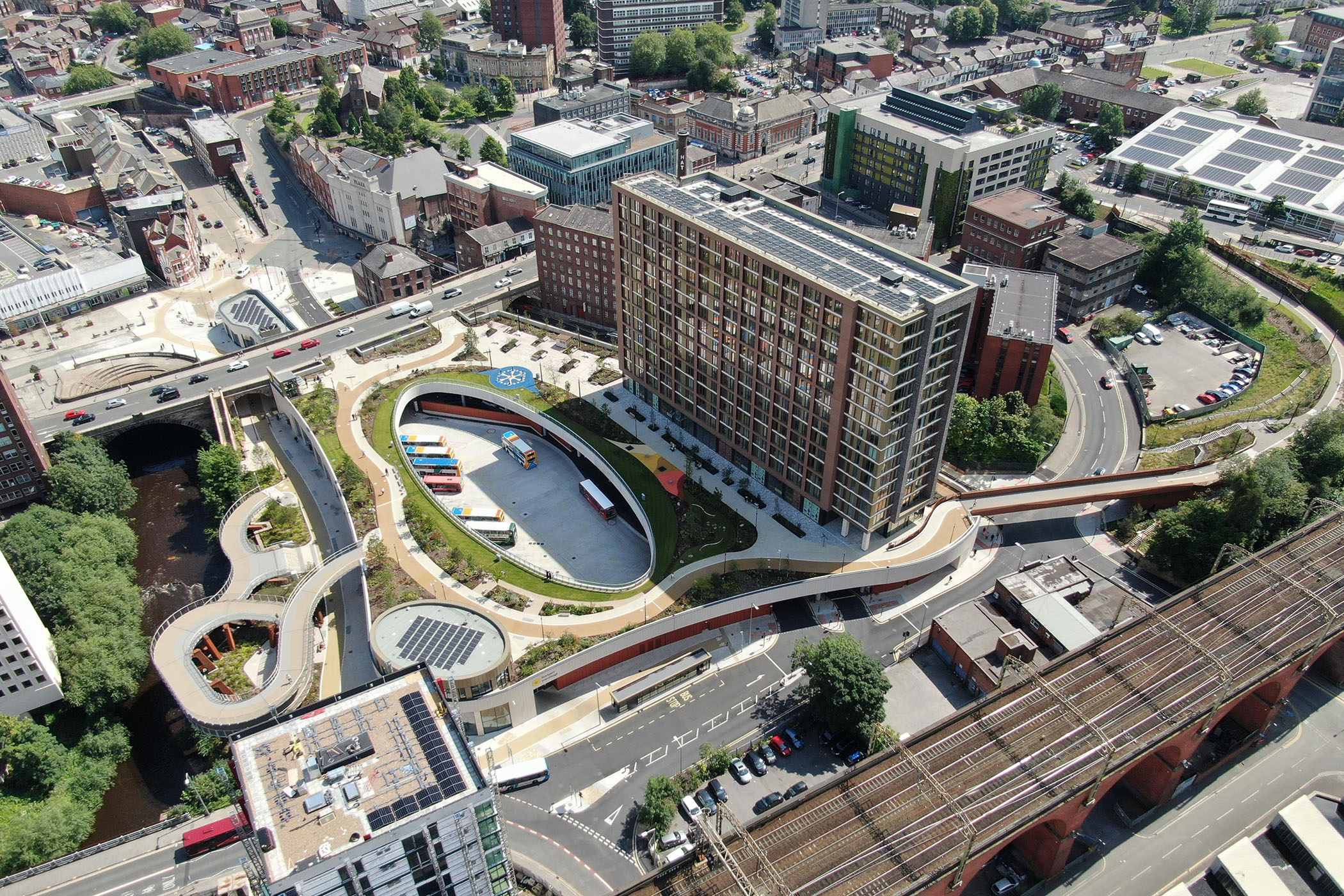
The Stockport interchange
A report by the University of Sheffield argues that the “Manchester model”, while relying on public subsidy and the provision of publicly owned land, brings few long-term benefits, and profits are extracted from the city by outside investors. The contributions from development to such things as affordable housing compare poorly with, for example, London boroughs: one of these, Southwark, with about half the population of Manchester, received £38m in such benefits in 2023/4, compared with £5.7m in the latter.
While this version of Manchester is mostly not Burnham’s doing, he both draws on its aura of success and presents himself as a departure from it. As mayor of Greater Manchester, his responsibility was to the whole region, including towns such as Rochdale, Oldham, Wigan, Bury and Bolton, where the boom times are less evident than in the shining city in the middle. He has talked of “good growth, more fairly spread”, and set up a series of “mayoral development zones” around these towns.
The object of these zones is to attract investment and to “create thriving, well-connected communities”. They include “Atom Valley”, a “vast innovation mega-cluster” to be built on sites across Bury, Oldham and Rochdale. A “people-led” development zone, guided by co-operative principles, is being created in the town of Middleton, where the locally born comedian Steve Coogan is co-chair.
With many of these initiatives, it’s too early to see much by way of results on the ground. The best glimpse of Burnham urbanism is in Stockport, where there’s a handsome bus interchange with a rooftop garden, that connects via a winding park to the town’s railway station. New housing, much of it affordable, is being built around the town, public spaces enhanced and historic buildings put to new use. It’s the joint achievement of a mayoral development corporation and Stockport Council, partly funded by central government.
If all towns were revived like this, Britain would be a better place, but it’s not yet clear how it would be achieved at scale. It’s also remarkably difficult to find out how much affordable housing was actually built under Burnham’s mayoralty – repeated requests to the relevant press office have drawn a blank. Meanwhile, Burnham finds he has to play similar games with the private sector to those of Bernstein, who died in 2024, and Leese, who was Burnham’s deputy in Greater Manchester from 2017 to 2021.
Evidence of the probable prime minister’s continued embrace of big developers is the Housing Investment Loans Fund, a public initiative which is meant to support regeneration across Greater Manchester. A recent report found that £600m of the £983m it lent between 2015 and 2024 had gone to a single company, Renaker, which is the biggest developer of those city centre glass towers, and a minimal provider of affordable housing.
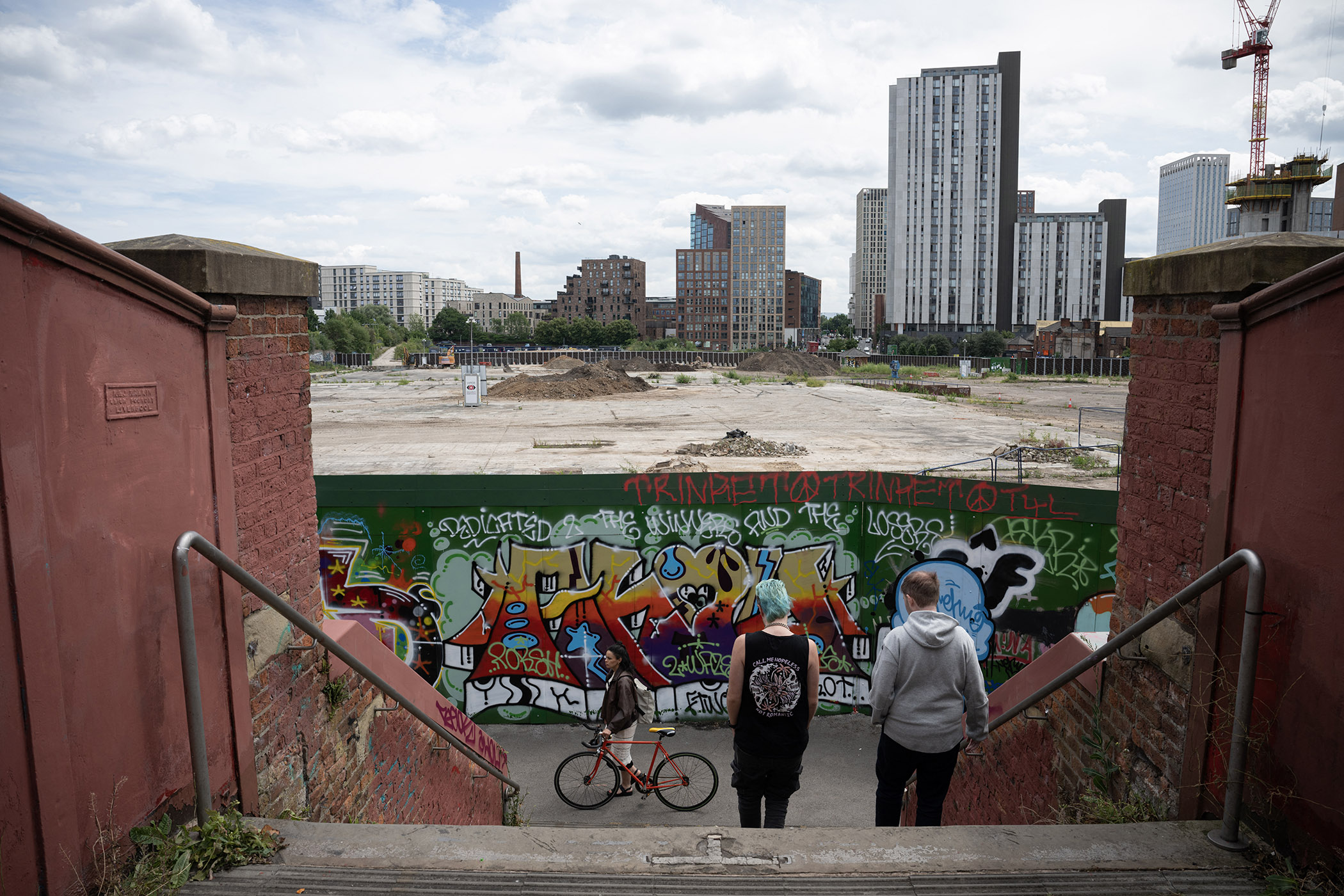
The intended site for No 10 North is emblematic of the interactions of public and private interests that characterises modern Manchester. The future seat of power is to be in the Manchester Digital Campus, a government hub that is to be built on the former Central Retail Park, once home to a large Toys R Us. It is in Ancoats, on the edge of the Manchester Life developments, which is likely to mean that one of the beneficiaries of the move will be Sheikh Mansour’s company.
Joshi Herrmann puts the question succinctly and witheringly. “Is Manchesterism,” he has written in the Mill, “the hard-nosed developer-friendly opportunism of Leese and Bernstein or some soft municipal socialism that Burnham seems to be hinting at and which he has certainly never come close to enacting?” If the good intentions and partial achievements of his mayoralty are to be successfully realised across the country, he has work to do.
Photograph by Marketing Manchester, Gillespies