

The “military industrial complex” conjures up images of besuited lobbyists who talk blandly about developing “integrated solutions” and “strike products” when what they actually mean is weapons that blow stuff up and kill people.
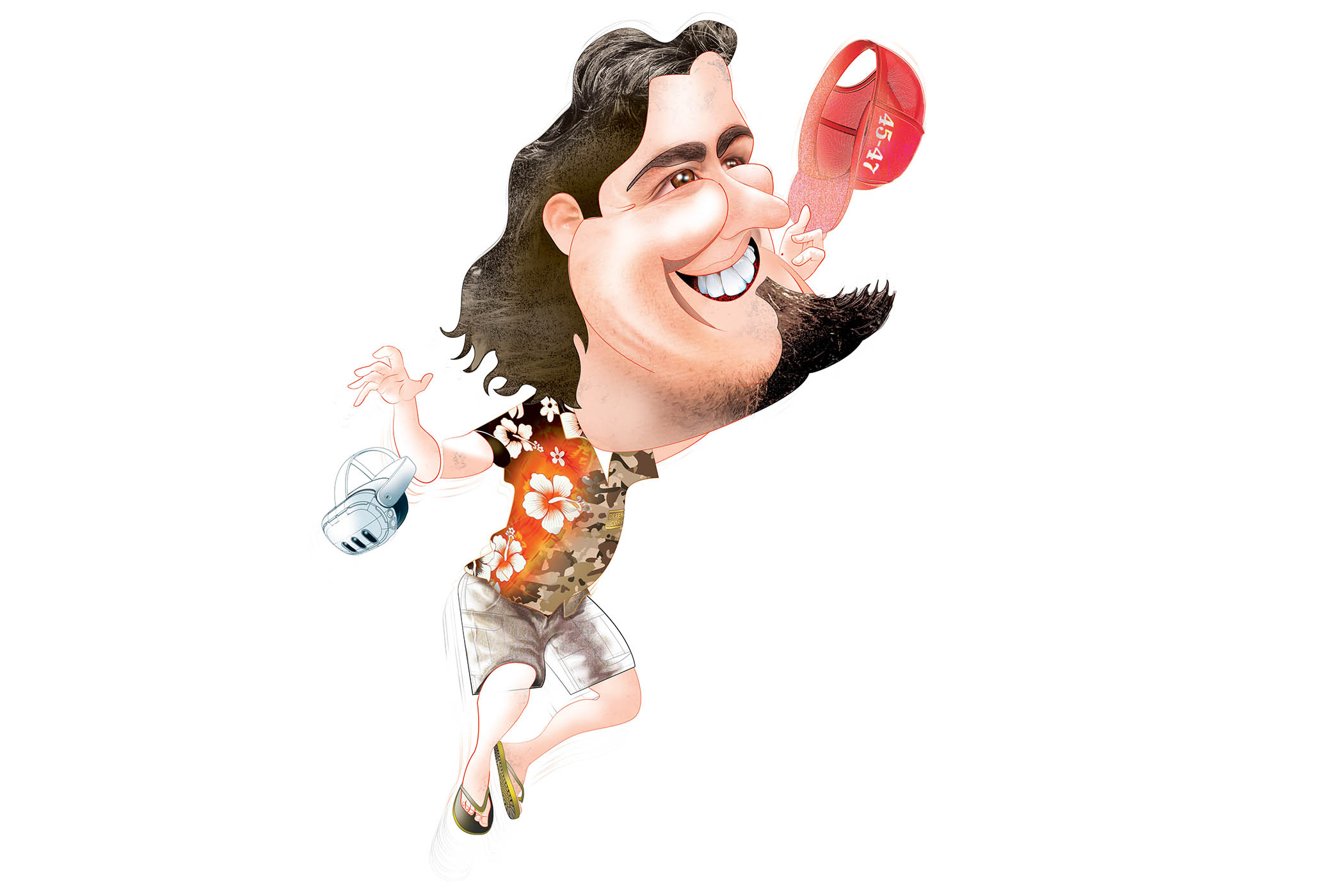
Palmer Luckey is different. The iconoclastic 33-year-old sports a mullet and favours Hawaiian shirts, shorts and flip-flops. His defence business, Anduril, is named after the “Flame of the West’, a legendary sword in The Lord of the Rings, and he believes that societies require a “warrior class that is enthused and excited about enacting violence on others in pursuit of good aims”.
“You need people like me who are sick in that way and who don’t lose any sleep making tools of violence,” he said in 2024.
Anduril is one of several sharp-elbowed startups that see the US defence industry, which has long been dominated by a handful of “primes”, as ripe for disruption. They tout a vision of low-cost, high-tech warfare waged by cheap, AI-fused autonomous robots with minimal risk to American lives.
Two years ago, Luckey said his main pitch is that “Anduril will save western civilisation and save taxpayers hundreds of billions of dollars a year, as we make tens and tens of billions of dollars a year”.
It is a message that appeals to Donald Trump, who wants to ramp up US defence spending to $1.5tn (£1.1tn) and is enthusiastic about projecting US military might overseas. This month Anduril took over a $22bn contract from Microsoft to make the US military’s integrated visual augmentation system, a mixed-reality headset equipped with sensors that will, in theory, allow soldiers to see around corners, view 3D maps and fight alongside autonomous drones.
It is a huge sum, even within the context of the US’s prodigious military budget. In 2025, Anduril had a plan to surpass $6bn in government contracts worldwide. Luckey said that “everything I’ve done in my career” led up to the deal.
That career started in his parents’ garage in Long Beach, California. Palmer’s father was a car salesman and he has three sisters, including Ginger Luckey Gaetz, who is married to Maga acolyte and former Florida congressman Matt Gaetz. As a child, he was home-schooled by his mother and a fan of anime and science fiction. Aged 11, he started tinkering with electronics salvaged from junk yards and sourced on eBay. He gave himself electric shocks experimenting with a Tesla coil. Another time, he burned a small spot into one of his retinas while working with a laser.
His attention later settled on improving video games. In 2012, he turned to Kickstarter to develop the Oculus Rift, a virtual reality headset, raising $2.4m. Two years later he sold the company to Facebook for $2bn, something that rankled his crowdsourced investors, many of whom accused him of selling out. He was just 21.
‘You need people like me who are sick and don’t lose any sleep making tools of violence’
‘You need people like me who are sick and don’t lose any sleep making tools of violence’
Luckey has used his fortune to buy up old nuclear missile silos across the US, one of which houses an extensive video game collection. His fleet of vehicles includes a Black Hawk helicopter and a former US Navy SEAL speedboat equipped with decommissioned machine guns, which he keeps outside his home in Newport Beach. He also kept a shark in his aquarium – until it was killed by his pet lobster.
Newsletters
Choose the newsletters you want to receive
View more
For information about how The Observer protects your data, read our Privacy Policy
He met his wife, Nicole Edelmann, a professional gamer, at a debate camp when they were 15. They once won first place at a historical festival in Texas dressed up as Henry VIII and Anne Boleyn; Luckey still puts on character outfits to play Dungeons and Dragons.
Luckey left Facebook in 2017. He has claimed he was expelled for giving $10,000 to an anti-Hillary Clinton group, a donation that did not go down well in liberally minded Silicon Valley. But Oculus was also caught up in a copyright dispute, losing staff and had fallen behind competitors.
“I’ve heard Palmer Luckey tell the story many times that politics got him fired,” said Prof Elke Schwarz, professor of political theory at Queen Mary University of London. “I think the story is potentially very performative and useful for Palmer Luckey to cement his status as a quirky, weird guy, who’s really a genius, and it has political utility.”
After leaving Facebook, he thought about founding a prison. Another venture explored turning sewage into low-calorie food. Instead, he settled on defence. The idea was to “get people out of the tech industry, working on problems that I thought were not so important – advertising, social media, entertainment – and put them to work on defence problems, national security problems”.
The rightwing billionaire Peter Thiel was an early backer, and Anduril Industries hired several employees from Palantir, the controversial data firm accused of conducting surveillance on Americans. At the time, other Silicon Valley investors were hesitant about backing a startup eager to apply AI to warfare. Now major tech companies, including OpenAI and Google – which pulled out of a Pentagon contract in 2019 after a staff revolt – have shed their reservations and are lining up to get military contracts.
Entering the sector early has paid off, especially now western democracies are increasing defence spending in response to threats from Russia. Anduril has also tapped into US anxieties that its technological edge over China is slipping.
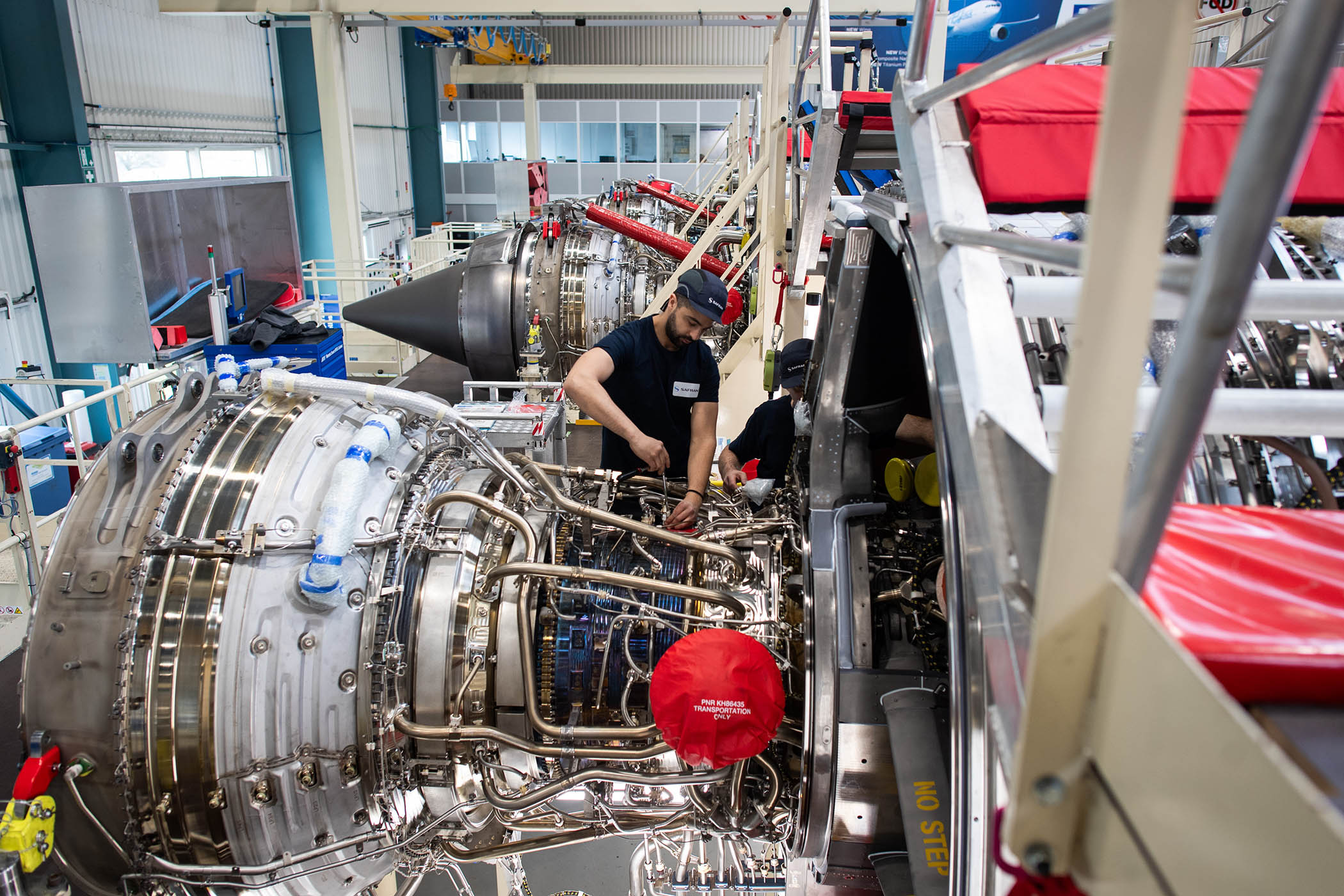
Today Anduril employs more than 6,000 people and is seeking a valuation of $60bn. It is building a second research campus in California and a weapons factory in Ohio.
Anduril’s products include the autonomous Ghost Shark submarine designed to conduct surveillance and strike without detection. Australia, where the undersea vehicle is manufactured, has committed $1.7bn to buy “dozens”; Luckey envisions a future where thousands trawl the oceans, communicating with each other, instead of humans.
Anduril also makes high-explosive kamikaze drones and quadcopters designed to knock other drones out of the sky, drawing on lessons learned in Ukraine. Its “sentry” surveillance towers, which use thousands of sensors to detect movement, are already dotted along the US-Mexico border and the southern English coast, where they watch out for small boats.
Luckey says he is serving “a greater purpose”. There have been glossy magazine profiles, podcast appearances and frequent blog posts. One interviewer gushed about the “fucking awesome” open toilet – it’s just attached to the wall – in his office. But experts are uneasy about his quest to automate the business of killing. Schwarz sees him as a “war influencer”. She and others point out that most of his tech is untested, even if his drones have seen action in Ukraine, and could further destabilise geopolitics.
“I feel that people like Luckey have the combination of wanting to be the zeitgeist, and to make big money doing it, and ideally get government out of the way,” said William Hartung at the Quincy Institute for Responsible Statecraft. “I find it quite disturbing. A lot of people are in the mood for brash talk, and worship the idea that technology will save us. But the policy can’t just be ‘trust us’.”
Palmer Luckey
Born Long Beach, California
Work Gaming and defence entrepreneur
Family Married to Nicole Edelmann, one child
Illustration by Andy Bunday