


Forty years ago, I was watching the launch of the space shuttle Challenger on TV while holidaying in the French ski resort of Les Deux Alpes. To my horror, the craft exploded as it soared into the lower atmosphere, propelling me, distraught, to find a telephone booth to call The Observer. “Get on a plane and head west,” I was told.
I reached London via Lyon and Orly airports and continued until I reached Florida – 36 hours later – with a broken suitcase tightly wrapped with string while still wearing my ski suit and snow boots. I drove to the Kennedy Space Center along roads lined with neon signs on motels and shops that had previously offered meals or lodgings but now displayed messages highlighting a nation’s grief: “May God protect the shuttle crew.” And: “We pray for the Challenger.”
At the space centre, aeronautical experts were now offering their opinions about the disaster’s cause. Many pointed to the shuttle’s solid rocket boosters. Others questioned Nasa’s claim that Challenger’s astronauts had all died instantly. Several might have lived until their crew compartment hit the ocean, they argued. I filed a story based on this assertion, which The Observer ran in its first edition, but later altered after Nasa responded with a furious denial. The crew “never knew” and were all killed instantly, it insisted. Months later, debris was found, indicating that several astronauts might have survived the initial explosion but were doomed as the shuttle lacked an escape system, which Nasa had deemed unnecessary because its spacecraft was allegedly “too reliable”. I took little comfort in the revelation.
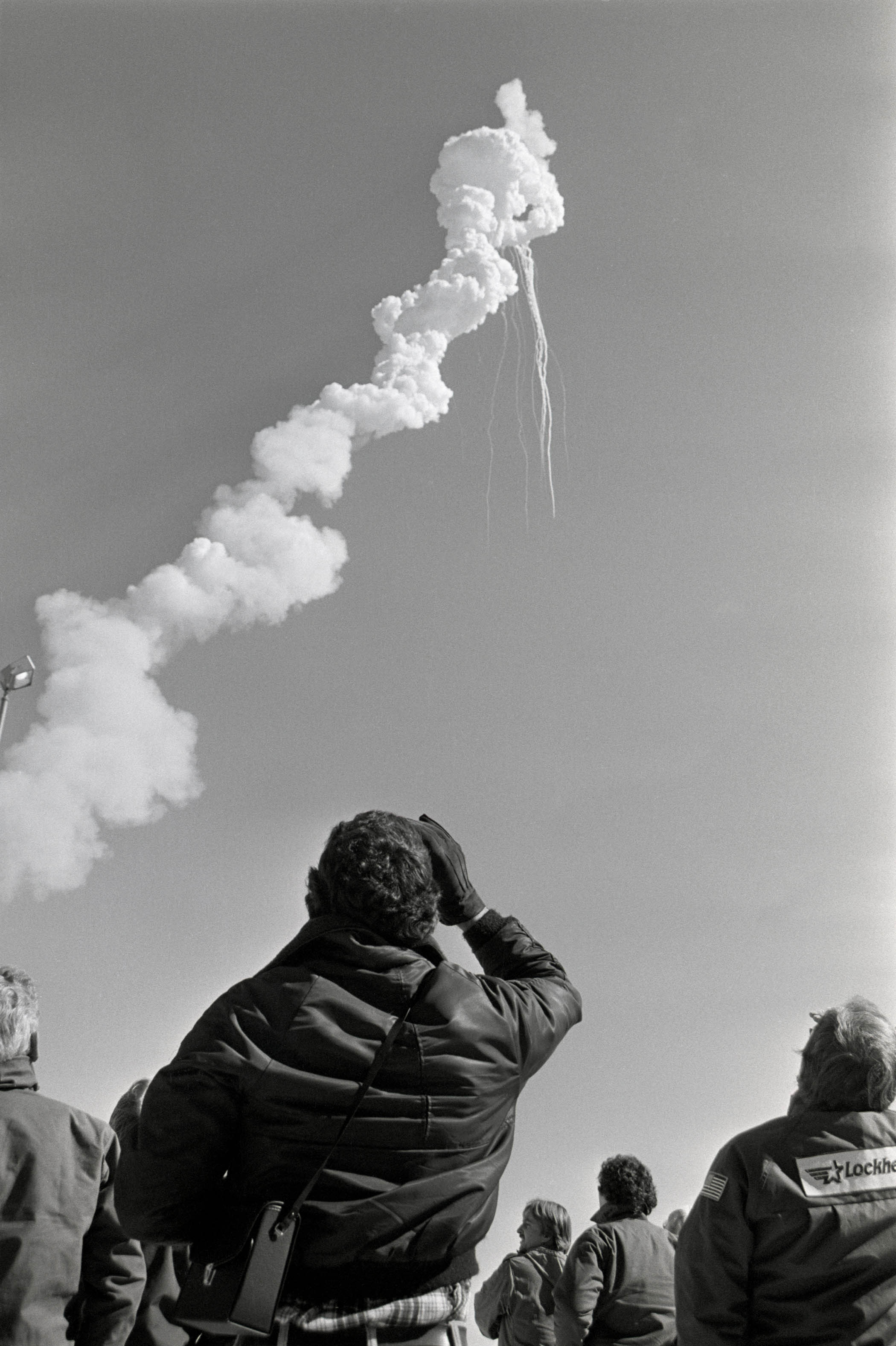
Challenger explodes after launch on 28 January 1986
This month is the 40th anniversary of the most haunting of Nasa’s three spacecraft calamities. Families of Challenger’s seven astronauts had gathered at the Kennedy Space Center to watch the launch, only to see the craft carrying their loved ones explode over the Atlantic 73 seconds into its flight.
Commemorations will cluster over six days, marking the losses not only of the Challenger crew but those killed on Apollo 1 in 1967 and the space shuttle Columbia in 2003. A total of 17 astronauts died in these disasters; stark reminders of the dangers of sending humans into space. And, remarkably, the Challenger anniversary takes place only a few weeks before the US prepares to propel humans back to the heavens.
After the 2011 closure of its shuttle programme, announced in 2004 after the losses of Challenger and Columbia, the US is about to resume manned space launches with Artemis II.
The shuttle was a reusable low-Earth-orbit vehicle, a manned “space truck” that was designed to be the prime US launch vehicle but proved accident-prone. The Artemis missions will return to the use of powerful, expendable launchers to send spacecraft into deep space.
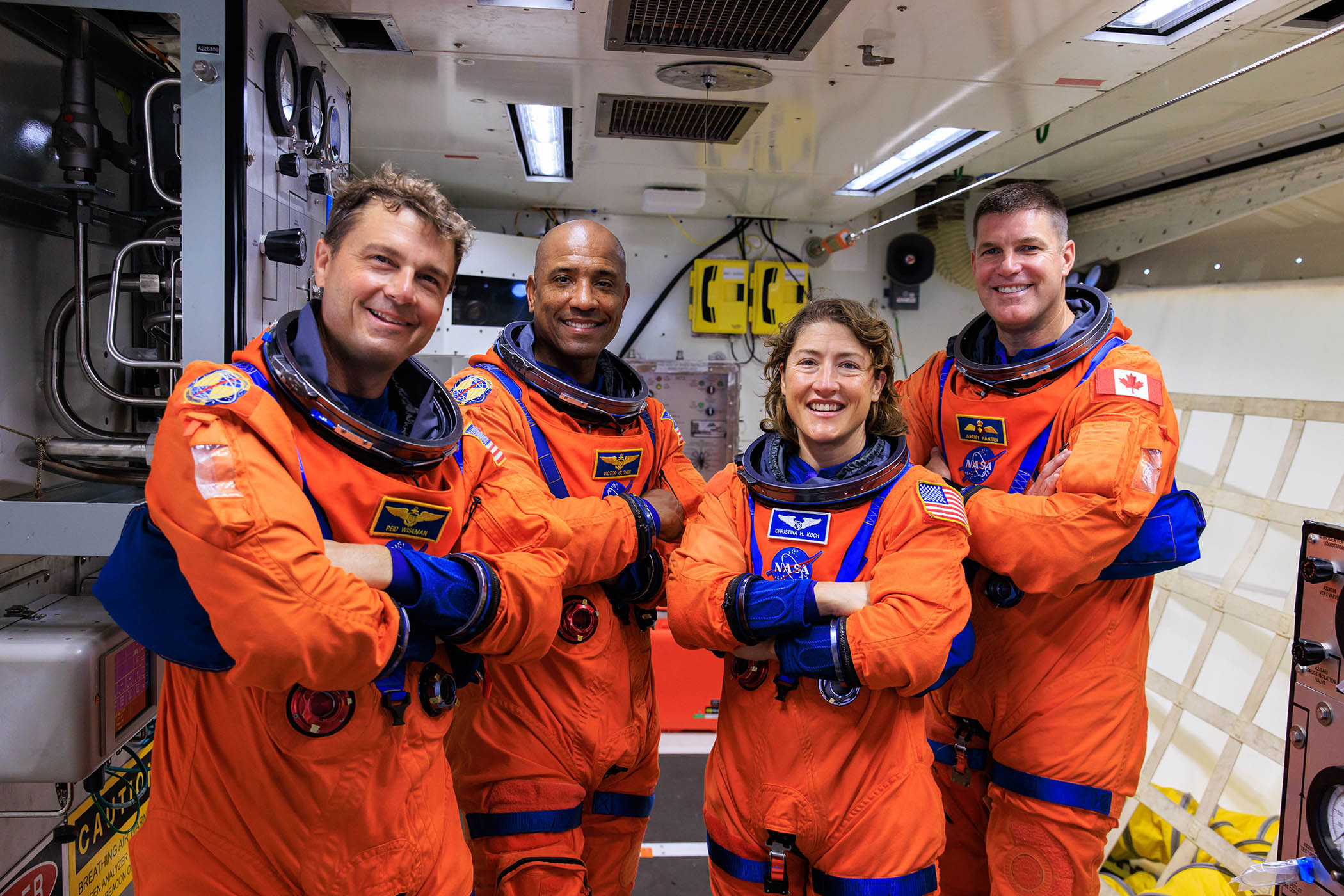
Within a launch window that opens in February and runs until spring, Artemis II will blast four astronauts round the moon, part of a $100bn programme that has involved constructing new Space Launch System (SLS) rockets and the Orion spacecraft with its crew capsule. Long-term goals are lunar colonies and manned missions to Mars.
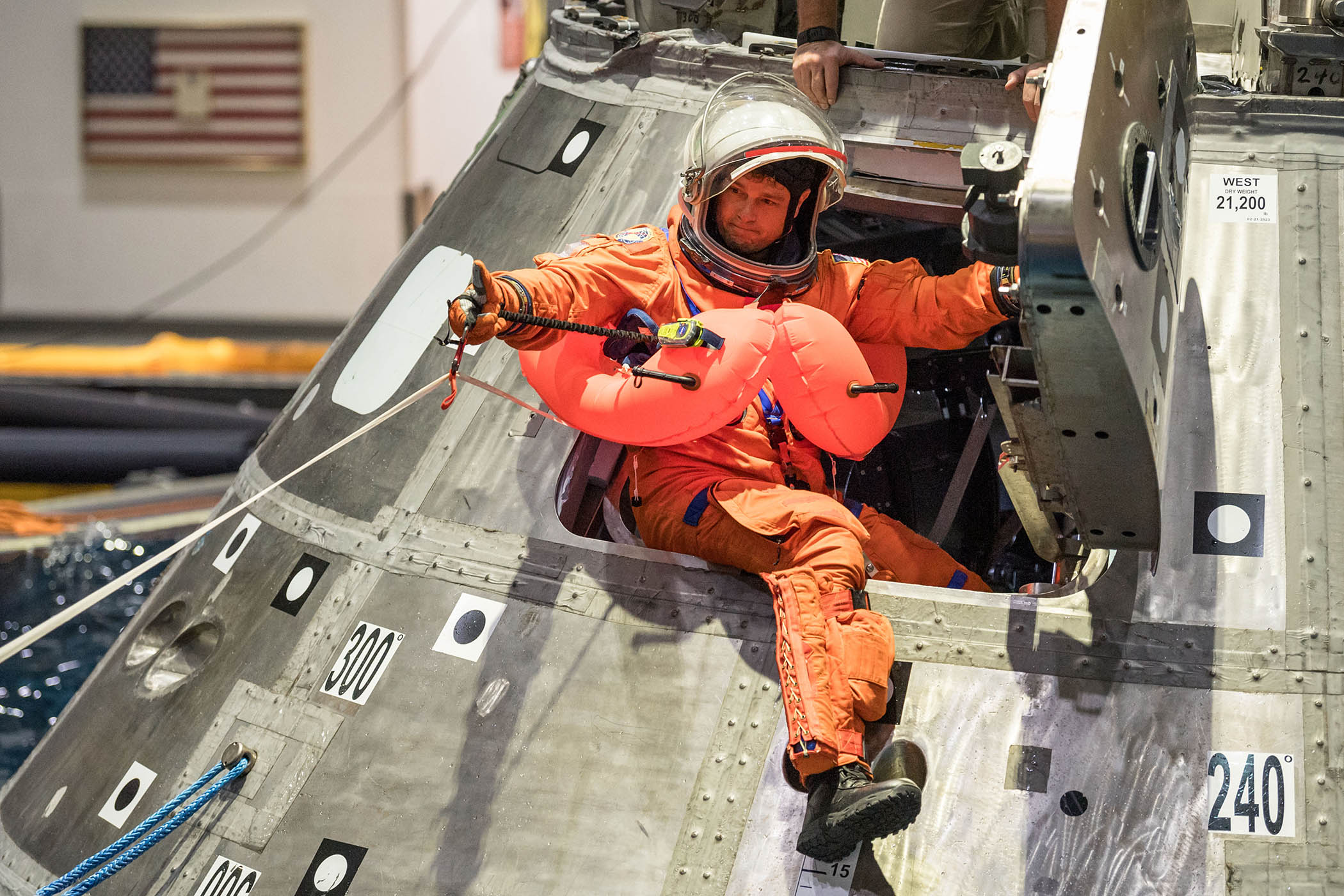
Testing Artemis II in 2024
“Human spaceflight is a relay race,” Artemis II’s pilot, Victor Glover, has said, adding that the baton has now been passed from the Apollo programme of the 1960s and 70s via the space shuttle, whose first flight took place in 1981 and its last in 2011, to the Artemis programme, which was announced in 2017 and made its first flight in 2022.
Nasa’s return to manned spaceflight is bound to reignite ethical debates. Are such flights justified today, given the risks and costs involved? And with the rise of modern robotics and AI, what is the point of putting humans into space in the first place?
These questions will gather a special poignancy on 27 January when the US marks the anniversary of the first of its spaceship tragedies. On that day in 1967, fire destroyed Nasa’s Apollo 1 capsule during a launchpad test, killing astronauts Gus Grissom, Ed White and Roger Chaffee. Then, on 28 January, the nation will commemorate the loss of Challenger in 1986.
The latter is the most damning of Nasa’s spaceflight failures. Before its launch, engineers warned that freezing weather had probably compromised seals on the shuttle’s solid rocket boosters so that burning hot gases could escape and trigger a devastating explosion. Cancel the flight, they pleaded. Nasa refused. Flaming fumes did leak – and Challenger exploded.
Exactly 17 years later, this disaster was commemorated in space – along with the Apollo 1 tragedy – by astronauts onboard sister shuttle Columbia. The crews of Apollo 1 and the Challenger had “made the ultimate sacrifice: giving their lives in service to their country and for all mankind”, said Columbia’s commander, Rick Husband. The shuttle’s mission continued until, on 1 February 2003, as the craft returned to Earth, it disintegrated, having suffered serious structural damage during its launch. Husband and his six colleagues were killed.
Newsletters
Choose the newsletters you want to receive
View more
For information about how The Observer protects your data, read our Privacy Policy
Deaths from these accidents account for the majority of lives lost in spaceship accidents, with the addition of four Russian cosmonauts who died on Soyuz missions in 1967 and 1971. Out of the 700 or so people who have flown in space, this produces an average death rate for each astronaut of about 2.5%. By comparison, allied troops on D-day had a fatality rate of approximately 2.8%.
“Space isn’t friendly,” said sci-fi author Isaac Asimov after the Challenger disaster. “... it’s a place where people can die ... But we can’t explore space if the requirement is that there be no casualties.” That was a fair claim to make 40 years ago. Today, it is questionable. Advances in AI are rapidly closing the gap between robotic and human intellectual capabilities, undermining the case for placing men and women on top of rockets filled with high explosives and blasting them into the sky.
Space can be explored without humans, argue scientists, including the late Nobel-winning physicist Steven Weinberg. The ultimate crewed space vehicle, the International Space Station, was simply “an orbital turkey”, he argued. “The only technology the space station has produced concerns the technology of keeping humans alive in space – which is a senseless and circular process if you realise there is no point in having humans in space.” And given that astronauts face significant physiological challenges – bone density loss, muscle atrophy, and cardiovascular strain – on top of the risk of death, there is an important ethical consideration in sending humans into space. This point was dramatically underlined last week when Nasa returned a four-person crew from the ISS because of a serious medical condition affecting one of the astronauts.
It’s a dangerous delusion to think that space offers an escape from Earth’s problems
It’s a dangerous delusion to think that space offers an escape from Earth’s problems
Unmanned missions can be highly effective. Automated rovers have shown Mars once had surface water, for example, while the Voyager and Cassini missions revealed that the moons of Jupiter and Saturn have subsurface oceans that may harbour life. The Hubble space telescope, launched in 1990, required five separate $500m shuttle missions so astronauts could keep it operating. In contrast, the vastly more advanced James Webb space telescope needed no human involvement after its 2021 launch. Its 18 hexagonal-shaped segments automatically unfolded to form a seamless single, giant mirror that has allowed astronomers to peer back to almost the dawn of the universe. It is likely to keep working, unattended, for another 20 years – thanks to modern robotics.
Projects such as these are now under serious threat, however. Nasa’s budget has been drained by the Artemis programme, which is already $24bn over budget and years behind schedule. Future missions include landing humans on the moon in 2027, a gap of 55 years since the last astronauts – of Nasa’s Apollo 17 mission in 1972 – stood there. After that, a programme of flights is scheduled to include the construction of a space station, Gateway, in lunar orbit. Then eyes will turn towards Mars.
Other nations’ space agencies will be involved in this programme, as well as private space companies such as Elon Musk’s SpaceX and Jeff Bezos’s Blue Origin. Nevertheless, Artemis has put an immense strain on Nasa’s dwindling resources.
In addition, Donald Trump is now trying to make further cuts to the agency’s finances while pressuring Nasa to prioritise manned space launches to the moon and Mars. The strategy threatens robot programmes that include the Veritas and DaVinci missions, which would have mapped the surface of Venus and studied its interior, and the NEO Surveyor space telescope, which would have tracked asteroids to pinpoint those that may pose a hazard to Earth.
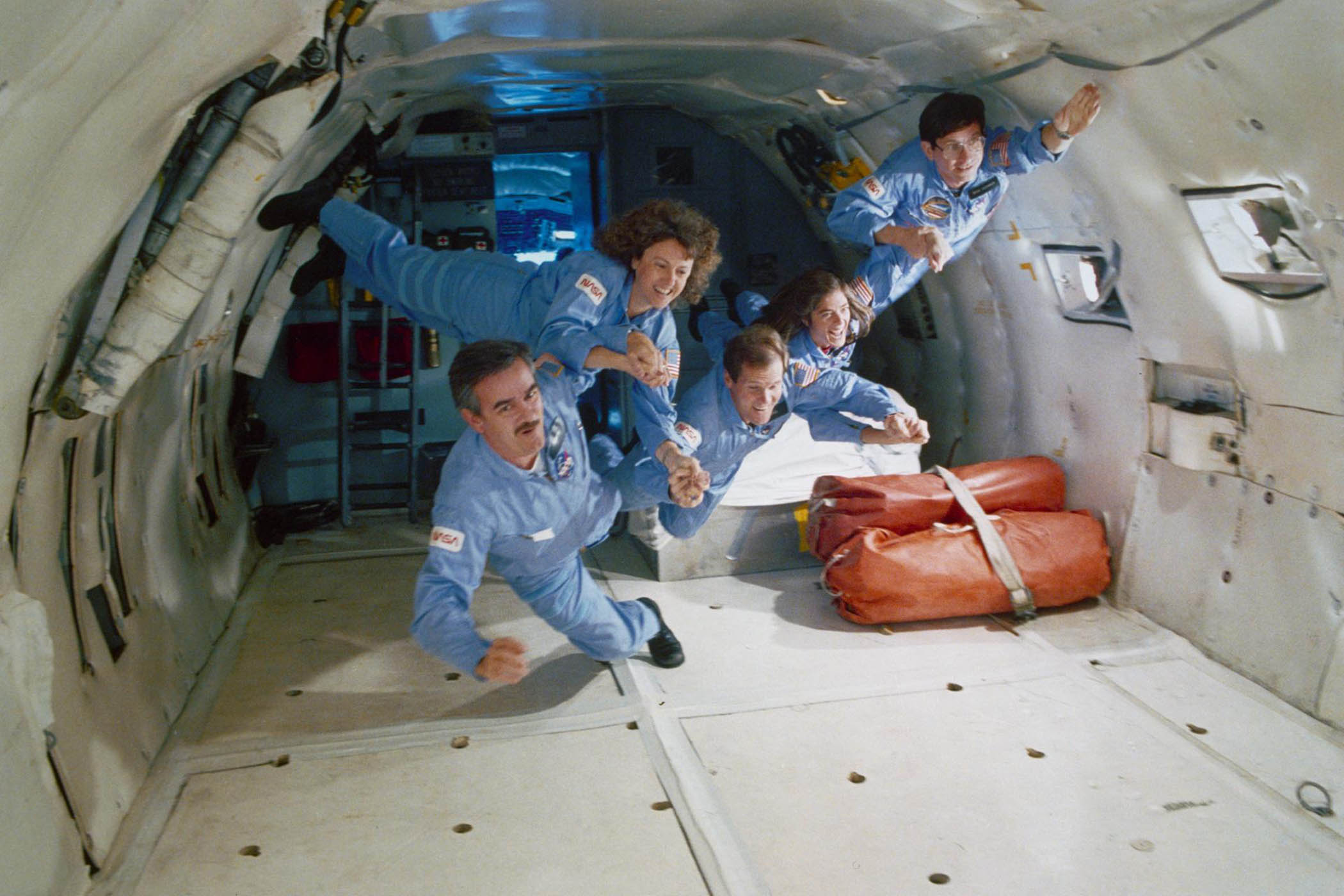
Astronauts in training in 1985
“Nasa is now being tasked with doing, technically, the two most difficult things you can pretty much imagine doing in space, which is returning humans to the moon and then sending humans to Mars, which no one has ever done. And they are being told to do that with less money and fewer people,” warns Casey Dreier, chief of space policy at the Planetary Society, a non-government organisation dedicated to space exploration.
The problem has arisen because government-led organisations are being asked to fund space programmes that have little scientific value, argues former astronomer royal Martin Rees. It should not be the role of taxpayers to back missions that are essentially preparations for space colonisation.
That should be the jobs of “thrill-seekers and adventurers” – individuals whose trips to Mars can be bankrolled by billionaires and private sponsors such as Musk and Bezos. “The public wouldn’t be paying and would cheer on these brave adventurers,” Lord Rees argues. “There would still be many volunteers – some perhaps even accepting ‘one-way tickets’ – driven by the same motives as early explorers, mountaineers and the like.”
Musk has said that he wants to die on Mars. He is 54 so he may just get his wish. His plans include establishing a self-sustaining human colony on the planet by 2050 – not an intrinsically bad idea, believes Rees, if it is privately funded and treated not as a scientific endeavour but a way of expanding humanity’s influence. However, Rees dismisses Musk’s further claim that such a colony would ensure the longevity of Homo sapiens by acting as a sanctuary. “It’s a dangerous delusion to think that space offers an escape from Earth’s problems.”
Mars, our nearest planetary neighbour, is a far more hostile place than Earth – even the ocean bed or Mount Everest’s summit offer conditions that are much more benign. No amount of effort will ever make the planet safe for humans. “There’s no ‘Planet B’ for ordinary, risk-averse people on Earth,” Rees insists. “Putting humans in space is not the way to save our species.”
Photographs by Bettman Archive, Keith Meyers/New York Times, Nasa, Frank Michaux