The first tweet is suitably embarrassing. It was posted 20 years ago this month and it read: “just setting up my twttr” – that’s what Twitter was known as in its infancy. It was created by upstart tech bros Jack Dorsey, Noah Glass, Biz Stone and Evan Williams, and the name was meant to evoke what the invention was inspired by: SMS chat speak. “We wanted to capture that feeling,” Dorsey said years later. “The physical sensation that you’re buzzing in your friend’s pocket. It’s like buzzing all over the world.”
But Twttr didn’t buzz all over the world right away. In its early days, nobody – not least the platform’s founders – knew what to do with it. Although its founders called it a social network (and sometimes microblogging), the idea was difficult to define – people didn’t really get the hashtag thing.
The SXSW (South by Southwest) festival in Austin, Texas, in 2007 marked the tech bro tipping point. During the four-day event, the renamed Twitter exploded in popularity. Its early adopters tripled the amount of posts a day, from 20,000 to 60,000. But most of us didn’t know about that.
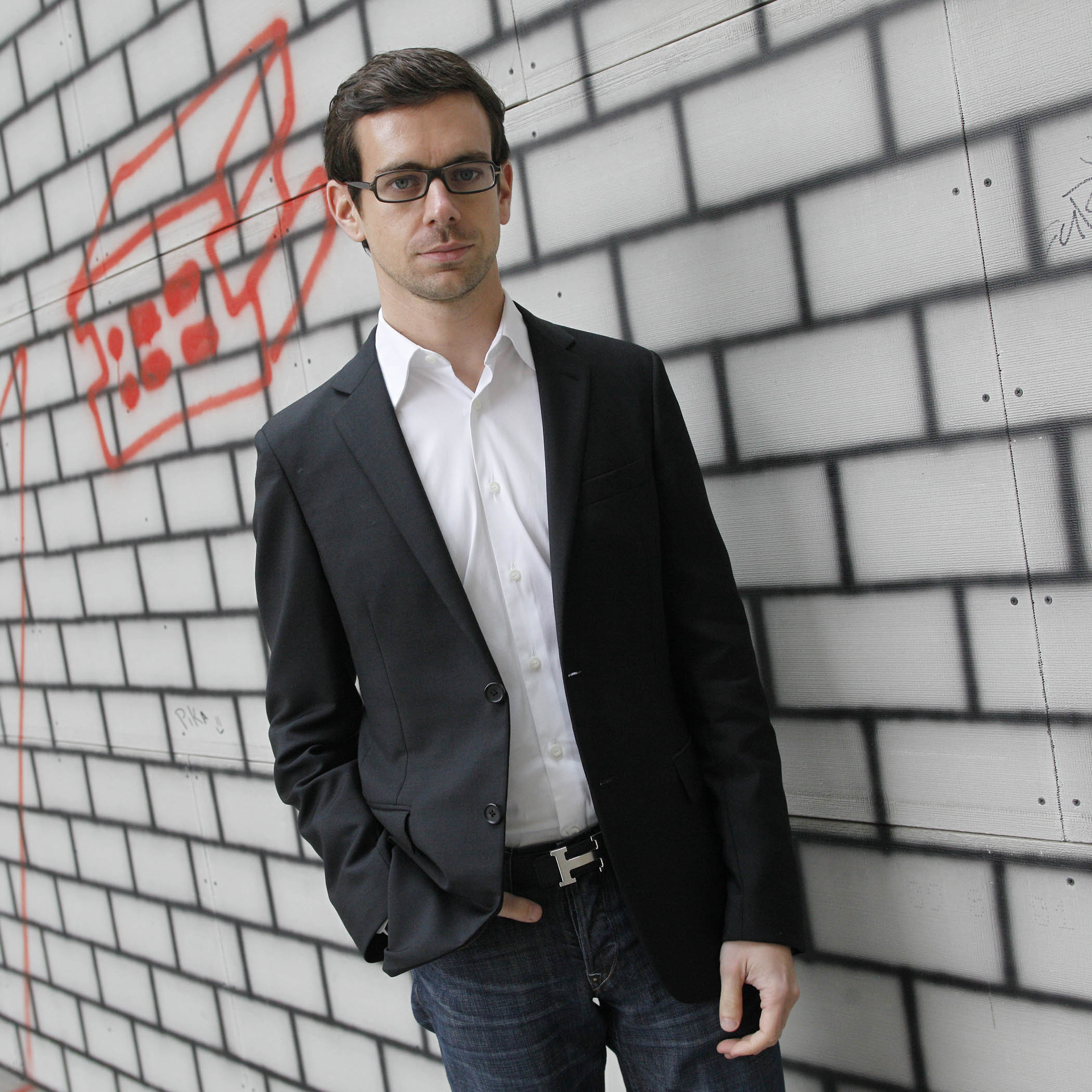
Jack Dorsey, inventor, founder and chairman of Twitter, in 2009
Cultural relevance worked differently outside the then nascent American tech oligarchy. Things take off slower in Britain, and more reluctantly still in Ireland. By the time Wayne Rooney was misunderstanding Twitter’s @ functionality to attempt to message Manchester United teammate Rio Ferdinand in 2011, asking if he wanted to be picked up for training in the morning, most Britons remained addicted to Facebook, or were cautiously beginning to upload pictures of their avocado toast to the recently launched Instagram.
In Ireland, I remained faithful to a social media network more outre than either of the two: Bebo. I hung on to Bebo – organising my top 16 friends like Roman senators, posting side-fringe selfies taken from precipitous angles – until 2009, the period in which it remained Ireland’s most used social media platform.
Eventually, though, we – like everyone else – “took to Twitter”. Irish Twitter is its own phenomenon. Before I moved to England, it became my newsstand for keeping up with what was happening in Stormont (recess, for ever) or why the big listed buildings in Belfast kept mysteriously burning down. After I moved to England, I used Irish Twitter as a member of the diaspora, sharing cultural commonality with Irish people in Perth or Toronto or London. In its early pomp, Twitter gave users something Bebo or Facebook couldn’t – a kind of organic community, based primarily around talking shit.
Twitter didn’t just contribute to the news cycle; it dictated it. News broke there, scandals unfolded there
Twitter didn’t just contribute to the news cycle; it dictated it. News broke there, scandals unfolded there
Twitter’s teething problems persisted. As its success grew, the great and good were learning to distrust it. “Blue tick” verification was introduced for high-profile users in 2009 after Kanye West complained that the app was rife with impersonators. In 2016, it expanded verification to a public application process, which was catnip to young journalists, who could receive recognition of their importance – their professionalism – sometimes within minutes. The dopamine rush lasted until 2022. After the Elon Musk takeover, verification was moved to a paid subscription service.
It’s hard to overstate the influence Twitter has had on international politics in just 20 years, second only to Mark Zuckerberg’s Meta empire. It helped organise election protests in Moldova, student demonstrations in Austria, Iran’s green revolution and protests against Israeli action in Gaza in 2008. It was hugely influential during the Toronto G20 protests in 2010, the 2011 London riots, the 2011 anti-austerity demonstrations in Spain, and the Gaza-Israel conflict in 2012, in part because of how easily it can collate reports of unfolding events in real time. In 2019, Twitter removed thousands of bot accounts that were found to be linked to a state agency in Saudi Arabia. The platform is banned or blocked in, among others, Russia, China, Turkmenistan, Iran and North Korea, and has been intermittently and partially blocked in Egypt, Nigeria, Iraq and Israel.
But it was far from a progressive paradise, even pre-Musk. Twitter was forced to introduce a button for reporting abuse in 2013 after rape and death threats were sent to historians, feminist campaigners and MPs.
Newsletters
Choose the newsletters you want to receive
View more
For information about how The Observer protects your data, read our Privacy Policy
In 2017, actor Rose McGowan’s Twitter was temporarily suspended after she publicly accused film producer Harvey Weinstein of sexual misconduct. Her reinstatement and the fallout would go on to fuel the #MeToo movement – a hashtag that first gained traction on Twitter. At the same time, always a haven for sex workers – adult film stars and OnlyFans creators, mainly – Twitter, with its “sensitive media” policies, allowed more and more extreme content to be disseminated through the network. An internal investigation concluded in April 2022 that: “Twitter cannot accurately detect child sex[ual] exploitation and non-consensual nudity at scale.”
Clearly, there were many things Twitter could not control at scale. At its best – and its worst – it represents a wild west internet that is now crumbling before our eyes.
My own Twitter use peaked in the late 2010s. Like many journalists, I’d always used it for work – nowadays, the app is practically useless for self-promotion, so many writers have migrated to Instagram or TikTok – but casually. It was something I fitted around my life. I didn’t think whenever I tweeted. Nobody does.
Then, in February 2018, I was diagnosed with cancer. I was in my 20s at the time and was understandably shell-shocked. Treatment was gruelling and required me to become both sedentary and isolated while chemotherapy decimated my immune system. Stuck inside while everyone else I knew was enjoying an unseasonably hot summer full of international football, I felt like I’d fallen out of society altogether.
Bored and lonely, I started to tweet more – as many people do when they’re bored and lonely. I used it as a sticking plaster; a way to pass the time but also to feel part of a peer group when I could no longer reach out and touch my friends. Behind a screen, nobody knew I didn’t have eyelashes any more, or that my veins were collapsing. I was just live-posting Love Island jokes like everyone else. It felt good.
Musk joined Twitter in 2009. Over the next 10 years, the app would become the 10th most downloaded of the decade. By 2012, it had more than 140 million active users, producing 340 million tweets a day. In 2022, Musk bought the service after his then-wife, the actor Talulah Riley, sent him a series of texts:
“Can you buy Twitter and then delete it, please?!”
“Or can you buy Twitter and make it radically free-speech?”
“Please do something to fight woke-ism.”
Musk willingly obliged. In October that year, he acquired the company, which then had about 237 million users, for $44bn. He changed its name to X the following year, but almost immediately reinstated a swath of previously banned accounts, including those of far-right group Britain First and Donald Trump.
The effect was instantaneous. Racism, slurs, hate speech, homophobia and transphobia dramatically increased. Posts associating LGBTQ+ people with “grooming” increased by 119%, according to a report in March 2023. The number of antisemitic posts more than doubled in roughly the same period. A contemporaneous report from the BBC found that a third of Musk’s 1,100 reinstated accounts already appeared to have violated community guidelines.
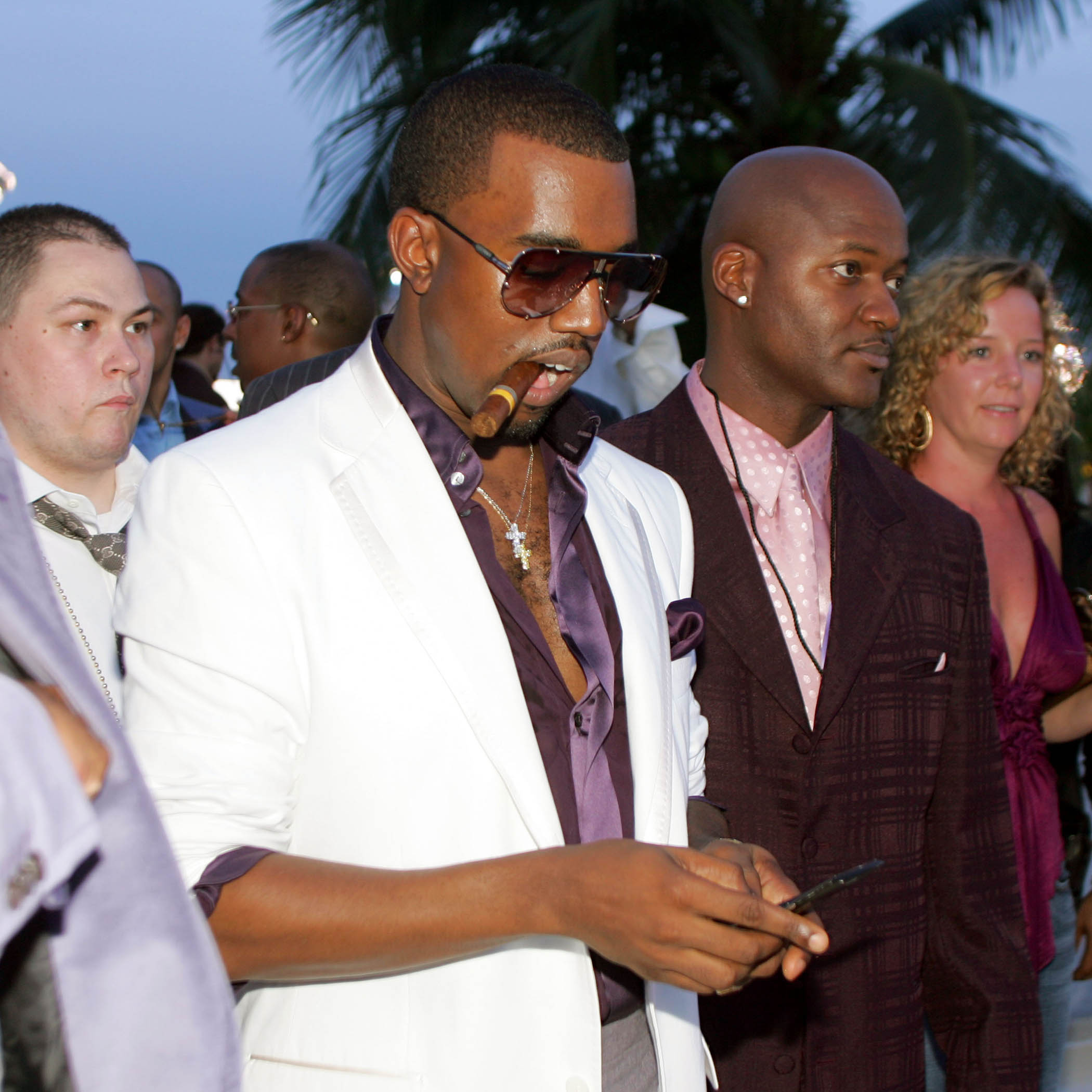
“Blue tick” verification was introduced after Kanye West complained about impersonators
The change to an algorithmic rather than a chronological news feed might have increased engagement, but it also shifted users to adopt more conservative political positions, particularly when it comes to Trump and the war in Ukraine. One report also found that exposure to algorithmic content encouraged users to follow conservative political accounts and kept users following them – even if the algorithm was manually switched off.
Behind the scenes, things were similarly chaotic. In March 2025, the platform was acquired by Musk’s artificial intelligence company, xAI, for $45bn with a $12bn debt. In July the same year, X Corp’s chief executive, Linda Yaccarino, stepped down, after accusations of catering to extreme rightwing hate groups. In the same month, Musk’s Grok AI tool became apparently spontaneously antisemitic after being “manipulated” into praising Hitler by X’s increasingly rightwing base.
Although Musk promised to improve his chatbot, UK regulator Ofcom nevertheless launched an investigation in January after it was discovered Grok was generating child pornography at the behest of X users. Last month the platform was acquired by Musk’s SpaceX, the sixth time it has changed hands since its inception and the third in Musk’s short tenure as owner.
Twitter co-founder Dorsey must have seen the end coming long before Musk expedited it. In 2019, when his invention was hosting more than 152 million active daily users, the then chief executive announced a new invention. Bluesky was meant to explore the possibility of decentralising the Twitter experience, giving users more control over what they see and interact with. Uptake was slow at first, but it exploded after Trump was re-elected in November 2024 – Twitter’s owner, Musk, was Trump’s largest individual donor.
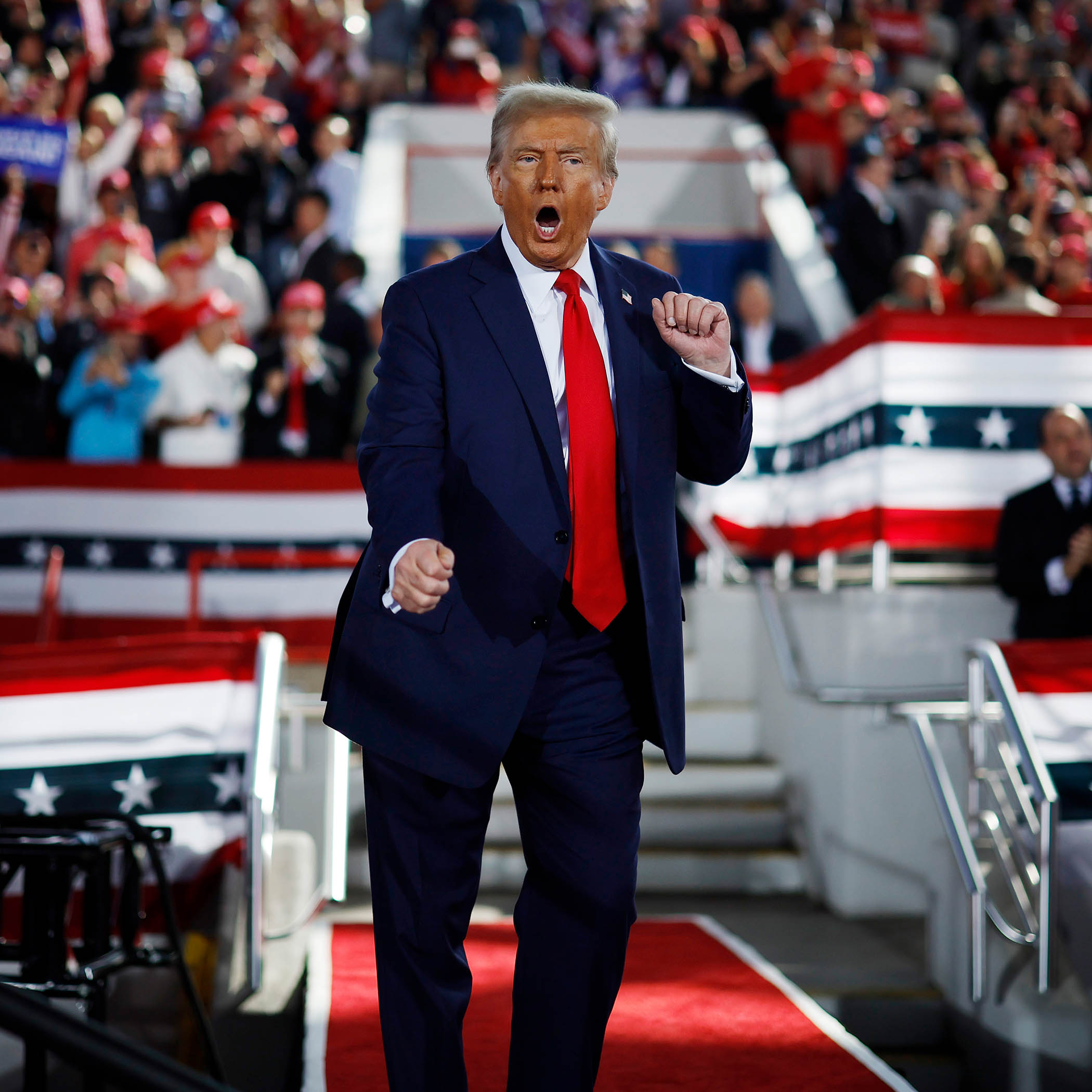
Donald Trump on the campaign trail in 2024. His account was reinstated after Elon Musk bought Twitter
A week after the election, Bluesky had 15 million users, adding 1 million a day. While Bluesky was being developed, Twitter was already dying. By 2020, 10% of users were producing 80% of tweets and an estimated 48 million accounts were run by bots rather than humans.
Two years after I got sick, I was locked inside again, but this time, so was everyone else. As Covid lockdowns began to ease, I remained stuck on the shielding list, advised by the NHS not to cross my front door during yet another unseasonably beautiful summer. Again, Twitter stepped in as a crutch. Like everyone else, I pored over Boris Johnson’s daily news briefings through Twitter. I panicked with everyone else. I posted dark jokes as a coping mechanism with everyone else.
This time, it didn’t feel so good. With everyone stuck on the same sinking ship, it was easy to see where the cracks lay. People turned on each other. Longstanding friends fell into conspiracy theories or advocated for a world for the young and healthy, and keeping the old and the compromised – people such as me – locked indoors for the foreseeable. It felt nastier than before. I was ready to log off.
By the end of 2025, Bluesky’s daily user base was about a 10th of the size of its originator. Really, my Twitter journey should end with a migration to Bluesky, where all the other comrades have fled. Like most journalists, I have a grudging, inactive account. Posting on Bluesky doesn’t feel like posting on Twitter. It feels a little contrived and a little too watchful and, for all its improvements, simply less fun. Sometimes, posting on Bluesky feels like getting stuck at a protest behind that block of gen X dads who are all holding signs that read: “I am really quite cross about this” and “Make tea not war.” You can’t genuinely enjoy a social media app where people still honestly believe there’s going to be another Brexit referendum.
Even if it has two more decades to grow, Bluesky will probably never become as influential as Twitter once was. Maybe that’s not a bad thing. Both pre- and post-Musk’s takeover, Twitter didn’t just contribute to the news cycle; it dictated it. News broke there, scandals unfolded there. Celebrities said stupid and out-of-touch things there. Controversies begot splinter controversies there, and journalists would write up the whole thing, quickly, for web traffic or column inches. Thanks largely to Twitter, immediacy and reactive news became more important than accuracy. Sources weren’t checked, discourse was enough to merit discussion, even if the initial kernel of a scandal wasn’t even true.
I rarely use the platform now. The demographic of the app has changed and – not to sound like a Bluesky user – it’s not fun to post any more, to have your phone spammed with notifications from sexbots and AI factcheckers and people saying Hitler was right. It’s not useful, either, to waste my time doomscrolling and silently liking political takes that directly contradict one another.
Musk continues to make his own social networking site more culturally irrelevant by merit of his own odious need to be thought of as cool, and even Trump has fled to Truth Social, his own version of X. Nobody watches Love Island these days. Rooney and Ferdinand are both pundits and are too famous to carpool. After 20 years, perhaps the moment has finally passed.
Photographs by Thomas Samson/Gamma-Rapho via Getty Images, Chris Polk/FilmMagic, Chip Somodevilla/Getty Images