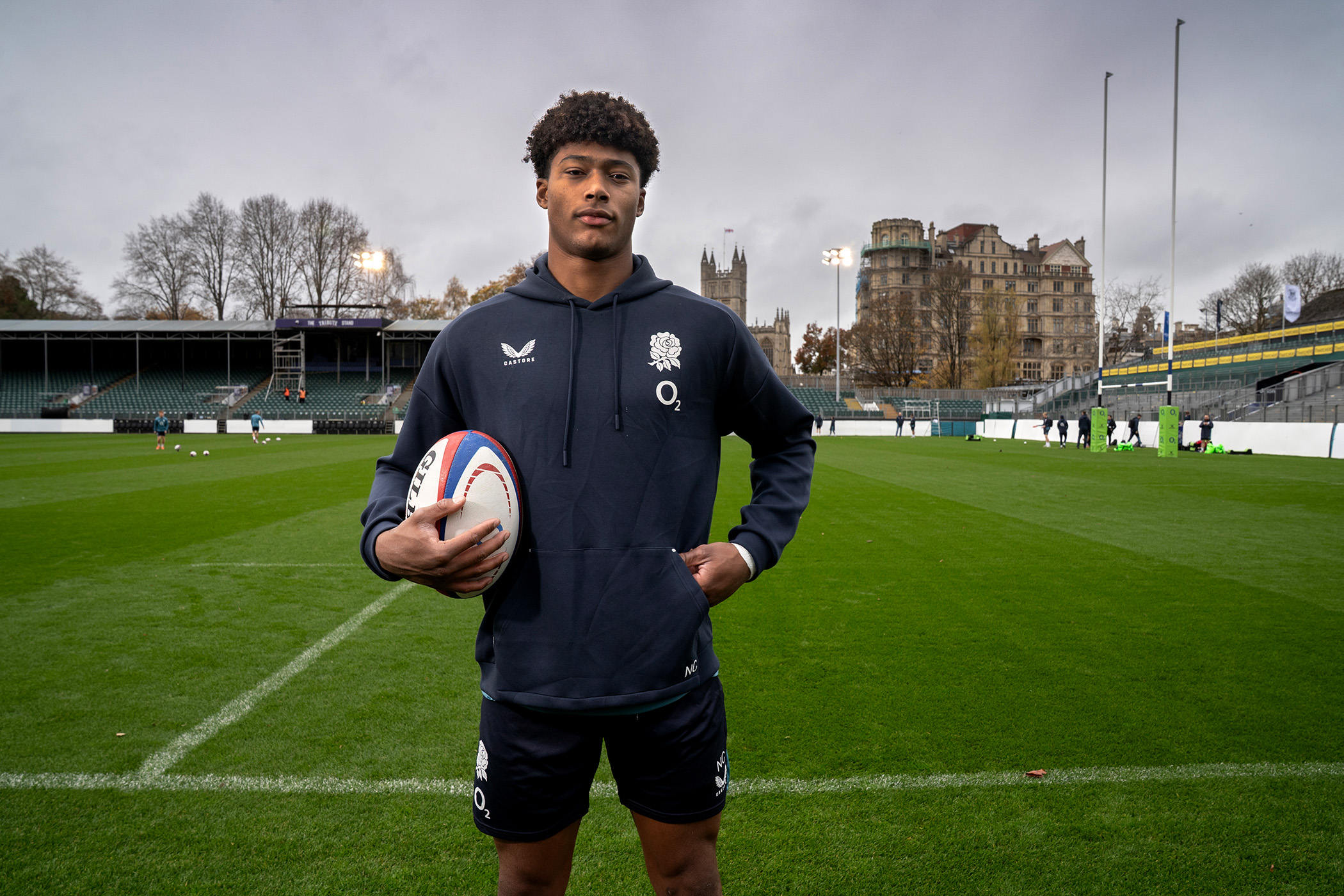

Grace Caluori can remember the Christmas list her younger son wrote at the age of 11. It focused on dreams and aspirations, less easy to put in a stocking, rather than toys and gadgets. “One year, I want to play for Saracens,” Noah had written at the top, followed by the desire to become a WWE wrestler.
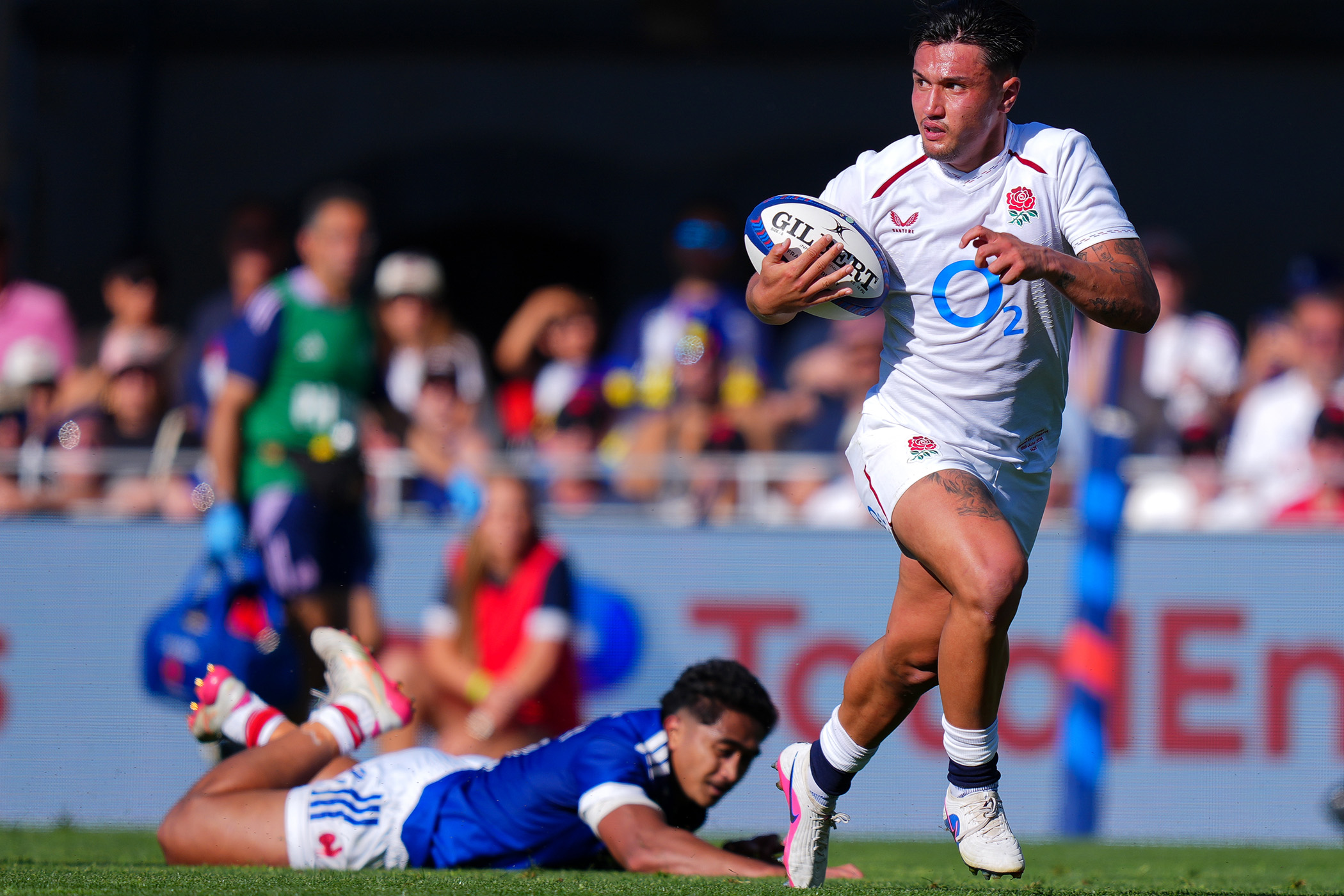
It was fortunate for Saracens, and now England, that Santa stopped at the first request. Four days after his 19th birthday last September, Noah Caluori scored a try on his Prem debut for the north London club and followed it three weeks later with five against Sale Sharks. There could have been a sixth when what his fans now know as the trademark Caluori leap was blocked illegally and Saracens were awarded a penalty try.
A week after that, Steve Borthwick named Caluori in his England training squad. It was about that time that Iain MacLeod’s friends began to tease him. “I got quite a bit of ribbing from mates who saw that video and remembered I had been his coach,” he said. “They asked what on earth I knew about teaching rugby.”
MacLeod, a Scot who can be found running the bar at Blackheath’s first XV matches, admits that aerial acrobatics is not something Caluori copied from him. Now, after 18 tries in the Prem – only one player in the 19-year-old wing’s lifetime has scored more in a season in the top flight – MacLeod’s former pupil has finally been named by Borthwick on the England bench to face Fiji tomorrow.
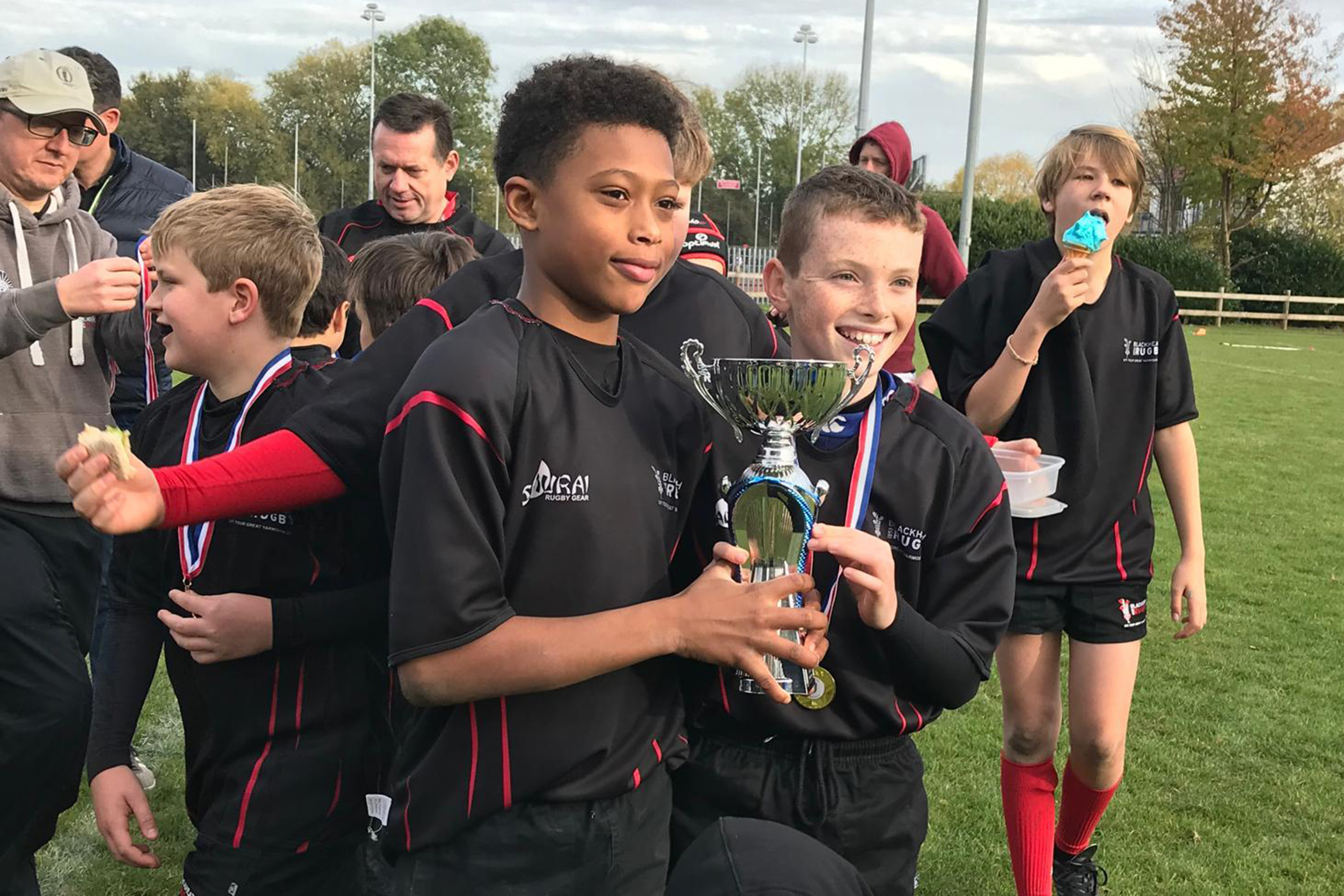
It is an honour for a coach to play midwife at the birth of a new star. MacLeod knows exactly when he first heard of Caluori because he has kept the email. At 12.47pm on November 20, 2015, he had a message from Kelvin Bush, with whom he coached the Blackheath Under-9s, saying that a new boy would be joining them.
“The St Dunstan’s conveyor belt continues,” Bush wrote, referring to the school in Catford, southeast London, attended by his son, Alex, and other Blackheath minis. Caluori’s PE teacher had seen his enthusiasm for sport and felt rugby might suit. Not that his talent was immediately recognised. Bush suggested in the email that he was “probably good enough” to play second team, with the potential to make the firsts.
“We soon figured out that Noah was a proper athlete,” MacLeod said. “You see some kids and just know they’re athletic. He never started apprehensive. He was always strong.”
Grace said that Noah loved all sports. “The house is full of medals,” she said. “Cross-country, duathlon, hockey, swimming… He was really good at cricket but found it too slow. Mr Linfield, the head of sports, told me ‘Your son has a gift for rugby’ and encouraged him to go to Blackheath. We began at Rectory Field every Sunday, rain or shine.”
His older brother, Josiah, is also sporty, as is Grace, who ran competitively in Nigeria. “I was training until the eighth month of my pregnancy,” she said. “I used to tell Noah that the energy was passed on to him in the womb.” His Swiss father, Andreas, from whom she is separated, took him to ski school from the age of 4. “That’s where I see his flying ability comes from,” she said. “He has no fear.”
The challenge for coaches is to find and bring out the different talents in their squad. Bush’s son was bigger than the rest so barged through opponents while MacLeod’s son, Rory, was fast and ran round them. Caluori was not the quickest to start with but he had an “extraordinary engine” and a desire always to have the ball.
Newsletters
Choose the newsletters you want to receive
View more
For information about how The Observer protects your data, read our Privacy Policy
“He had this ability to rip the ball out of a guy’s arms, run off and score a try,” Bush recalled. MacLeod said he would hunt down the ball and, once he had it, not easily relinquish it. “Trying to get him to pass was a challenge,” Bush said.
He was also brave, perhaps to the point of folly. “Noah played games with broken arms, which we didn’t know until afterwards,” Bush said. “I remember on two occasions he came off saying ‘my arm’s sore’ and when his mother took him to hospital she found he had fractured it.” Grace said her son has “an incredibly high pain threshold”.
For her, the best things he learnt were teamwork, respect, enjoyment, discipline and sportsmanship, TREDS in the RFU coaching manual. She has fond memories of an Under-11s tour to Great Yarmouth. “Iain had the surnames inscribed on their shirts and the boys were over the moon,” she said. “There was the most special togetherness.”
After six years, it was time to move on. Macleod showed me the reference he wrote to Mill Hill School, where Noah got three A*s in his A levels, praising his leadership and attentiveness. He, or Santa Claus, also directed him via the Kent pathway into the Saracens academy where he joined Jack Murphy, a former minis team-mate, and Olamide Sodeke, who was in the age-group above at Blackheath, won the Under-20s World Cup and played with Caluori for England A against Spain last year.
Five years above them at Saracens is Theo Dan, the England hooker, who played for Blackheath minis from the age of 6, while another alumnus of the world’s oldest open club is Will Stuart, the Bath, England and Lions prop, who was sent to play a season for the first XV when he was 18 and finding his feet at London Wasps.
One of the lovely touches by the RFU recently is posting on social media a list of the grassroots clubs where England players began. In the squad for Fiji, Blackheath appears alongside Sevenoaks (Ben Earl), Old Redcliffians (Ellis Genge) and Lymm (Alex Mitchell). At all these places and more there will have been volunteers like MacLeod and Bush who sacrificed their weekends to help children to follow their dreams.
The goal is to help each one to find their level. “Not everyone can play for England or in the Prem,” Bush said. “Some may go on to play first or second team rugby here – and that is a hell of a level to aspire to – and others will just like the social aspects of it.”
Here I must declare an interest as the father of a boy in the current Blackheath Under-9s. Humph is a long way from being one of the better players – though I was proud that he won last season’s TREDS award – but if his ultimate role in the sport is to stand on the touchline drinking beer and cheering like his dad, my job will have been done. Grassroots rugby is all about giving children a lifelong love of the game.
It is for this that Grace Caluori is most grateful. “Noah had a wonderful few years there,” she said. “It was a community, not a club. A real family.”
Photograph by Tom Pilston for The Observer