

The Sunday Stat: The two teams’ first innings in the Lord’s Test lasted for a total of 69.3 overs – the sixth-shortest combined completed first innings in Test history.
Men’s Test cricket will celebrate its 150th birthday next March. More than 2,600 matches have been played. Only 12 times have the two teams been bowled out in their first innings in a combined total of under 80 overs. Three of those games have involved Ben Stokes’s England, in their most recent six Tests (Perth and Melbourne in last winter’s Ashes, and this week at Lord’s against New Zealand). Test cricket, for both better and worse, is not what it was.
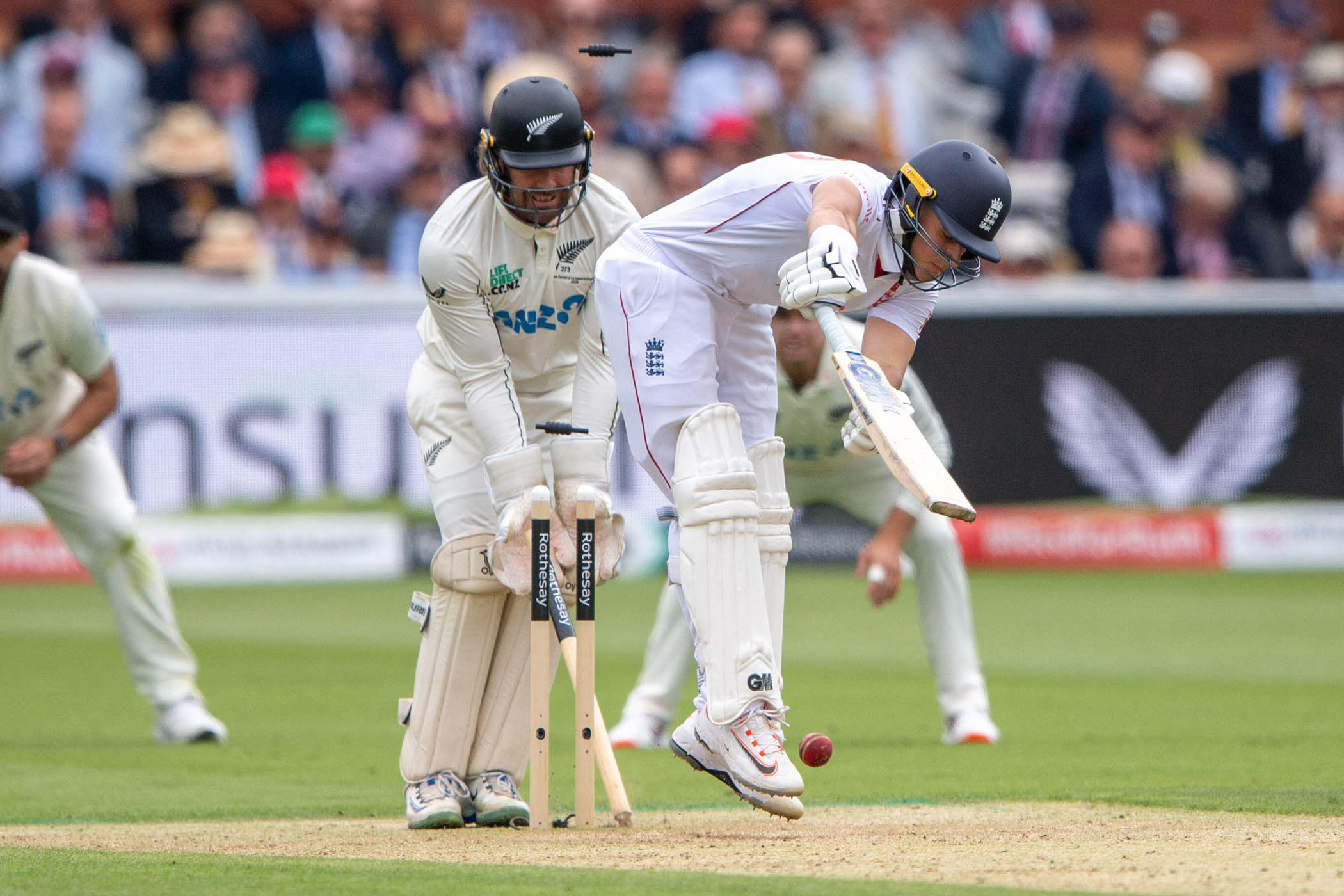
The first Test of this summer has been a good-bad game of cricket – dramatic and fluctuating, but fickle, arbitrary and somewhat monochrome, undermined by a surface that contravened the laws of cricketing physics far too often, and whose untrustworthiness has been exacerbated by two high-grade bowling attacks. The unpredictability of bounce and movement directly resulted in several wickets, notably Matt Henry bowling Jacob Bethell with a rancid scuttler that data suggested was among the least bouncy deliveries in the last 20 years of Test cricket in England. It brewed uncertainty in the batters’ footwork, resulting in a constant stream of wickets, rueful looks and shaking heads.
By the end of day two, a wicket had fallen every 24.9 deliveries. At that point, it was in the top 10 on the all-time global list of least balls per wicket in a men’s Test (along with December’s Melbourne Test, when a wicket fell every 23.6 balls). It was the third-lowest recorded in a Test in England, and the lowest since 1907, with potential to move into second place behind the 1888 Lord’s Ashes Test, when the fall of 40 wickets in 792 balls prompted some heavily-whiskered chuntering about the state of red-ball batting.
Of the 35 wickets to fall on the first three days, 22 were bowled or leg before wicket 12 and 10 respectively, at a rate of one every 6.4 overs bowled. Previously in Test cricket in England this millennium, a bowled or LBW dismissal has occurred on average once per 27.4 overs; in the 1980s and 1990s, every 31.3 overs. Four more stump-based dismissals would set a new record for a Test in England.
Given the conditions, then, it is hard to read much into England’s performance. They were all out in under 40 overs for the fourth time in their last six Tests, and the eighth in their last 19, a speed of scuttling they suffered only four times between 1982 and 2001 and not at all between 1921 and 1976. But they were doing nothing Bazballistic extravagant.
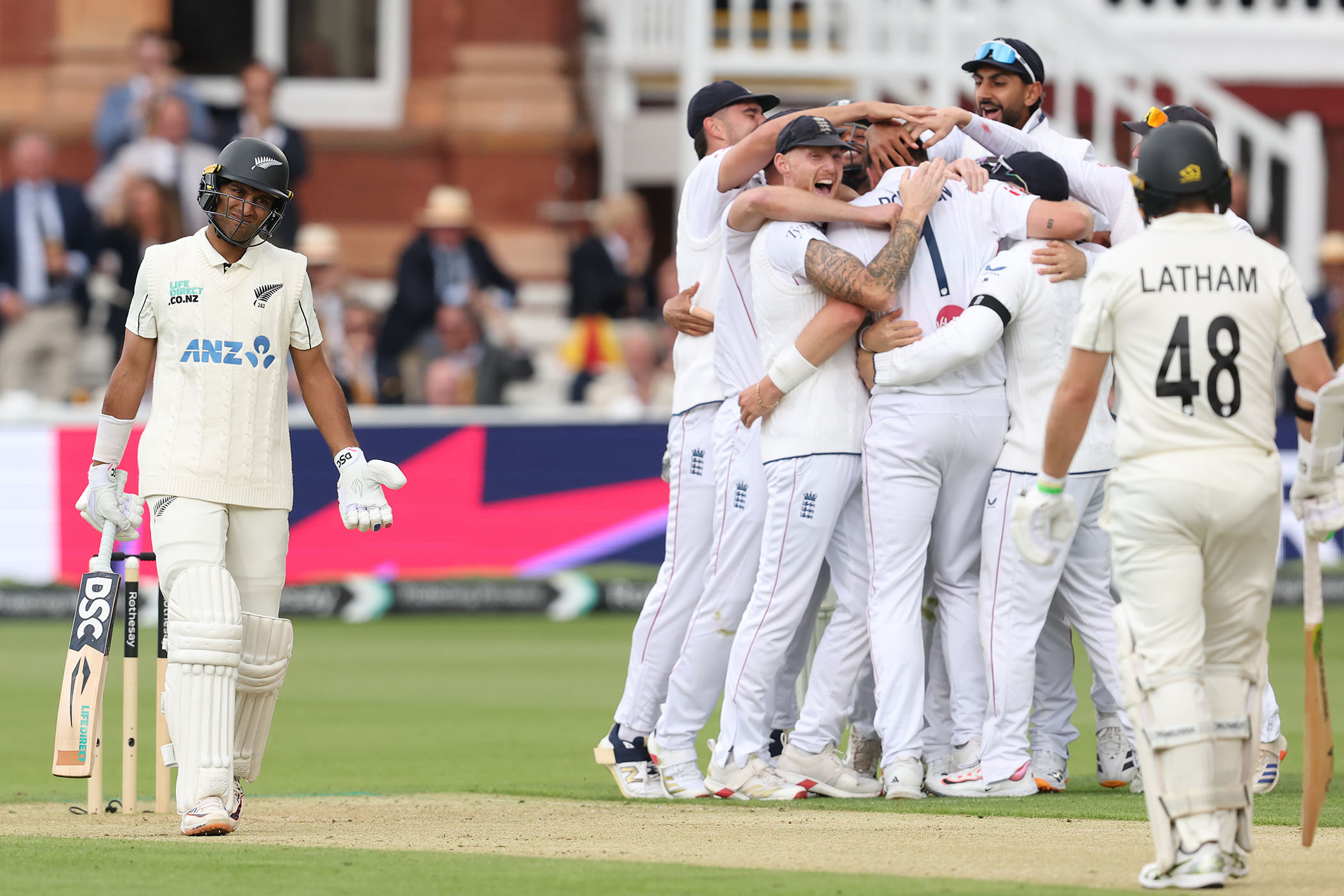
Their bowling has been excellent. They bowled out their opponents in first innings in under 30 overs for just the second time since 1952 (the other was when Stuart Broad demolished Australia at Trent Bridge in 2015, when the visitors were dismissed in 18.3 overs).
The New Zealand top four managed a total of four runs in their first innings, the joint-second worst performance by a top four in any Test innings, beaten only by Australia’s entirely runless top four in the second innings at Old Trafford, also in the wicket-drenched summer of 1888.
Ollie Robinson took three wickets in his first over (only the fourth opening bowler to do so in Test history), having failed to take a wicket in either of his previous two Tests. Gus Atkinson, after six wickets in 73 overs in Australia, took four in his first nine of the summer, bowling faster than he has ever been recorded bowling for England. Josh Tongue reached 50 wickets in his 10th Test – only Ian Botham had done so for England since the 1950s.
Overall, it has been a captivating and unsettling Test on another substandard Lord’s pitch. It is set to be another of the shortest completed Lord’s Tests (of the five shortest, four have taken place since 2018, and the other was in 1888).
Newsletters
Choose the newsletters you want to receive
View more
For information about how The Observer protects your data, read our Privacy Policy
Cricket at Lord’s in the last 10 summers has changed significantly. From 2017 to now, Tests at Lord’s have produced an average of 26.5 runs per wicket, and a wicket every 46.8 balls. Over the previous 10 summers, from 2007 to 2016, the average was 34.3 runs per wickets, and a wicket fell every 61.4 balls. For context, since 2017, the runs per wicket at other Test grounds in England has been 32.4, down a little from 33.5 in the 2007-16 period.
There have been brilliant matches at the ground (notably the fervid 2023 Ashes Test, and last summer’s old-school thriller against India), but too much cricket where the bat-ball balance has been unhealthily skewed. The Lord’s Tests played since 2017 have been on average around 80 overs shorter than those played from 2007 to 2016. The most significant impact of this is that cricket fans are deprived of an entire day’s worth of distraction from everything else in the world, which is, after all, sport’s primary function.
Photograph by SSP Sport via Alamy