
There’s an odd thing about cricket. Almost at all times, a style of play is described from a mental perspective, rather than a tactical one.
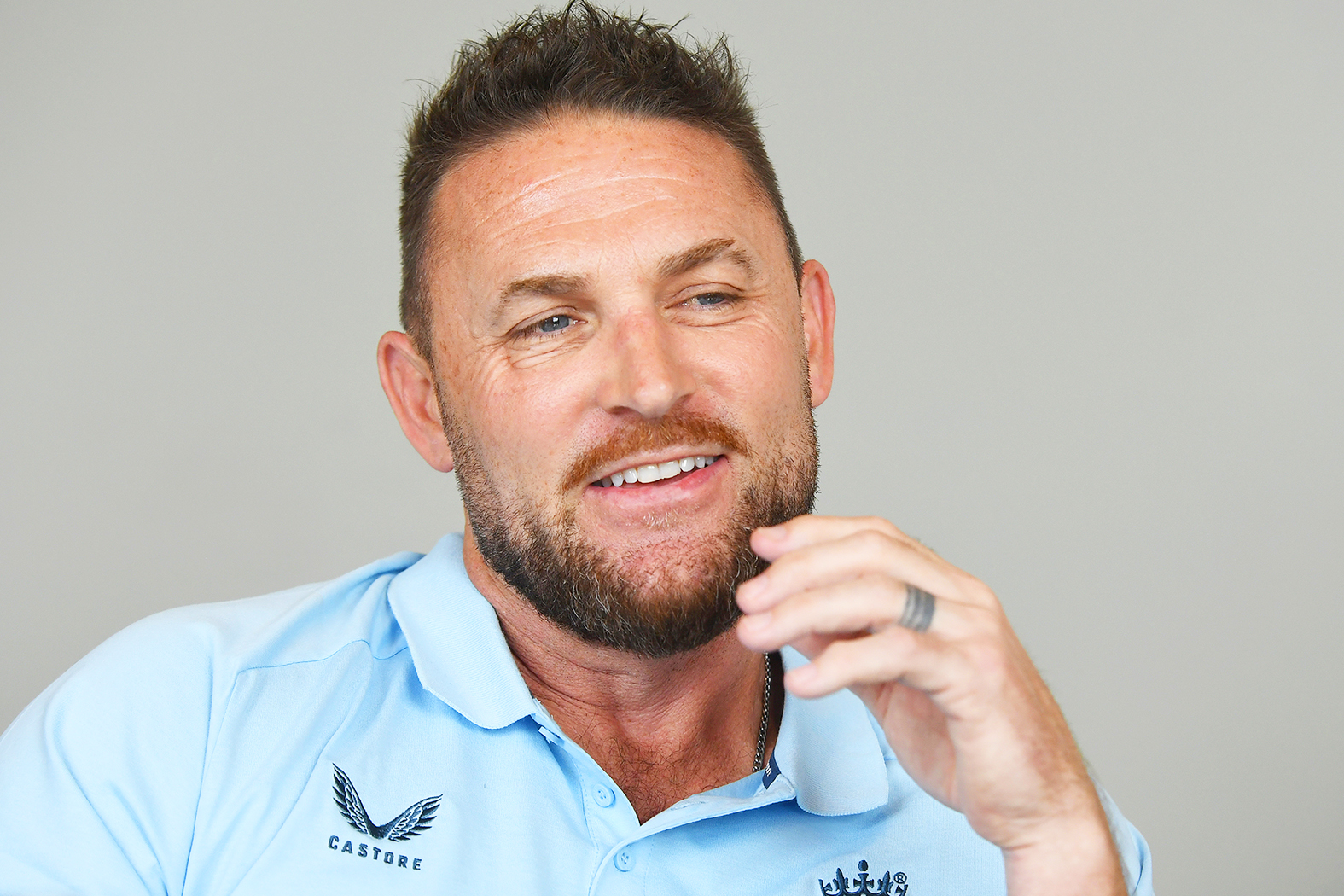
This England team, under Brendon McCullum, has always wanted to play “brave and positive” cricket.
And now, with McCullum in his fourth year as head coach, and arguably beginning his third and final act with his contract up at the end of the 2027 Ashes next summer, the newest era will see England still play “brave and positive” cricket, but also a style of cricket that is “slightly smarter”.
What, exactly, does this mean for you or me when sitting down to watch on Thursday? In what way will this England team look different? Slightly fewer boundaries? Slightly less funky fields? More meat and two veg for everyone? The news, by the sound of it, is that sensible is the new radical.
There remains an unsatisfactory element to the continuation of this regime. The rockstar head coach who came in with rockstar ideas has now been put behind a desk and asked to calm it down. Success, which could well still be achieved, will not be under the original blueprint that McCullum and Ben Stokes laid out. That legacy has already been written. Thrilling but ultimately unsuccessful. Instead, it will be the same men delivering a dialled-down message. The anti-Spinal Tap.
The opening stanza of the summer against New Zealand brings jeopardy. The Black Caps possess a world-class bowling attack and a solid batting line-up headlined by Kane Williamson and Rachin Ravindra. Make no mistake, England can play well and lose. At which point, the question over McCullum’s job security may rear its head again. Has McCullum been given a fresh slate to work from? Or is he now on a one-summer trial to prove his worth?
“I’m not really sure,” was McCullum’s answer, when asked whether his conversations with the ECB over the last few months have reset the clock to carry him through to the end of next year, or if he remains on a renewed probation.
Off-field changes have been made, with a much-bolstered backroom staff that flies contrary to McCullum’s initial preference for a trimmed-down coaching unit.
The hands-off approach taken by England coaches will remain under scrutiny. In an interview with Wisden Cricket Monthly, Jamie Smith spoke about asking for footage from the Ashes following the series and identified an historical technical flaw that had crept back into his game and led to a series of bowled dismissals. On the one hand, a player taking responsibility is to be encouraged. On the other hand, he had been away with England for the best part of three months and none of the staff had identified it or worked with him on it. That can’t be right.
The curfew, brought in after a series of late-night incidents were reported over the Ashes and during the previous white-ball tour of New Zealand, remains in place. McCullum is calling for a “tighter grip” across “everything”, whether that be discipline, culture, training and the rest.
Newsletters
Choose the newsletters you want to receive
View more
For information about how The Observer protects your data, read our Privacy Policy
He stops short of saying his players had got too comfortable previously, but the rhetoric and desire for a stricter regime suggests otherwise, with the pendulum swinging back towards skin-folds and Yo-Yo tests after England’s Ashes drubbing.
“I thought both teams were evenly matched talent and skill-wise,” McCullum said, reflecting on the Ashes. “I always thought what was going to separate success and failure in Australia was how you handled the pressure, because the pressure was at its absolute highest. I felt when we got down there, we were ready for that. In hindsight, we weren’t.”
For what it’s worth, having covered this England team across McCullum’s tenure, I’ve happily fallen for his charm at most, if not every, turn. Leaving press conferences held in dingy hotel meeting rooms in India, feeling inspired that this is the right man for the job, only to read the transcript back and be bemused by the lack of substance I was sure I’d heard earlier.
For players who have their game in working order, he is unanimously popular. Joe Root, Harry Brook, and previously Stuart Broad and James Anderson have all raved about him. The accepted conclusion now is that in 2022, McCullum let an experienced, talented team loose from their shackles. But crucially, they had a back catalogue of hard work behind them.
Four years later, with players like Jamie Smith still learning what their “natural game” is, the hands-off coach will be required to get his hands dirty.
“I hope so,” McCullum replied, when asked whether a player who had last been part of the squad four years ago, and was to return now, would notice a difference. “That’s what we’re trying to achieve. I still want us to be recognisable from what we’ve been over the last four years, but I want us to be a better version of it.
“A team which handles pressure more, which is able to win those big moments and tactically understands when the game is teetering and is still able to remain centred on what works really well for us, but is just [able] to improve slightly on scenarios which we have been falling short on.”
The rallying call, simply put, is for England to be better. If only someone had thought of that earlier.
Photograph by Philip Brown / Getty Images