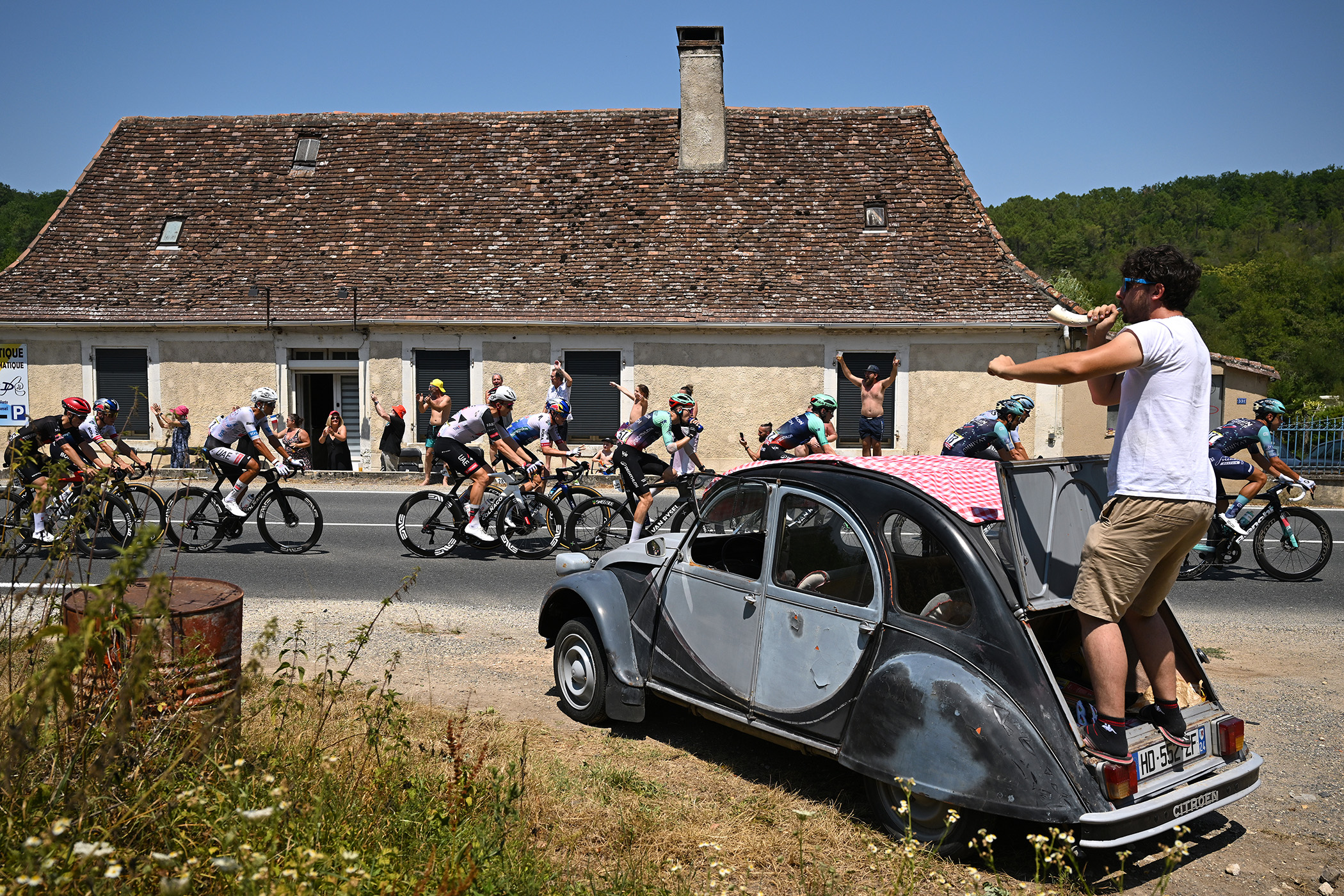

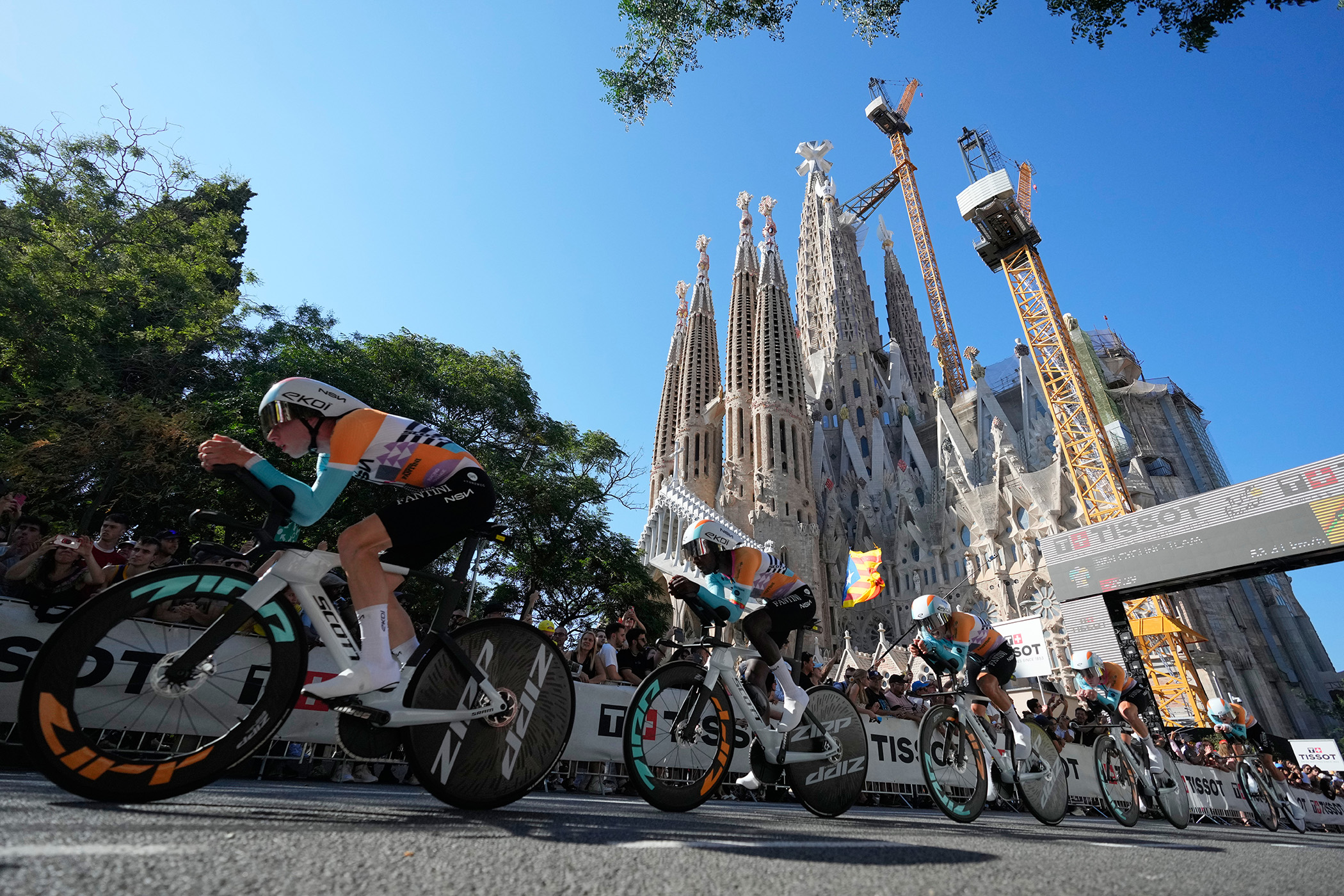
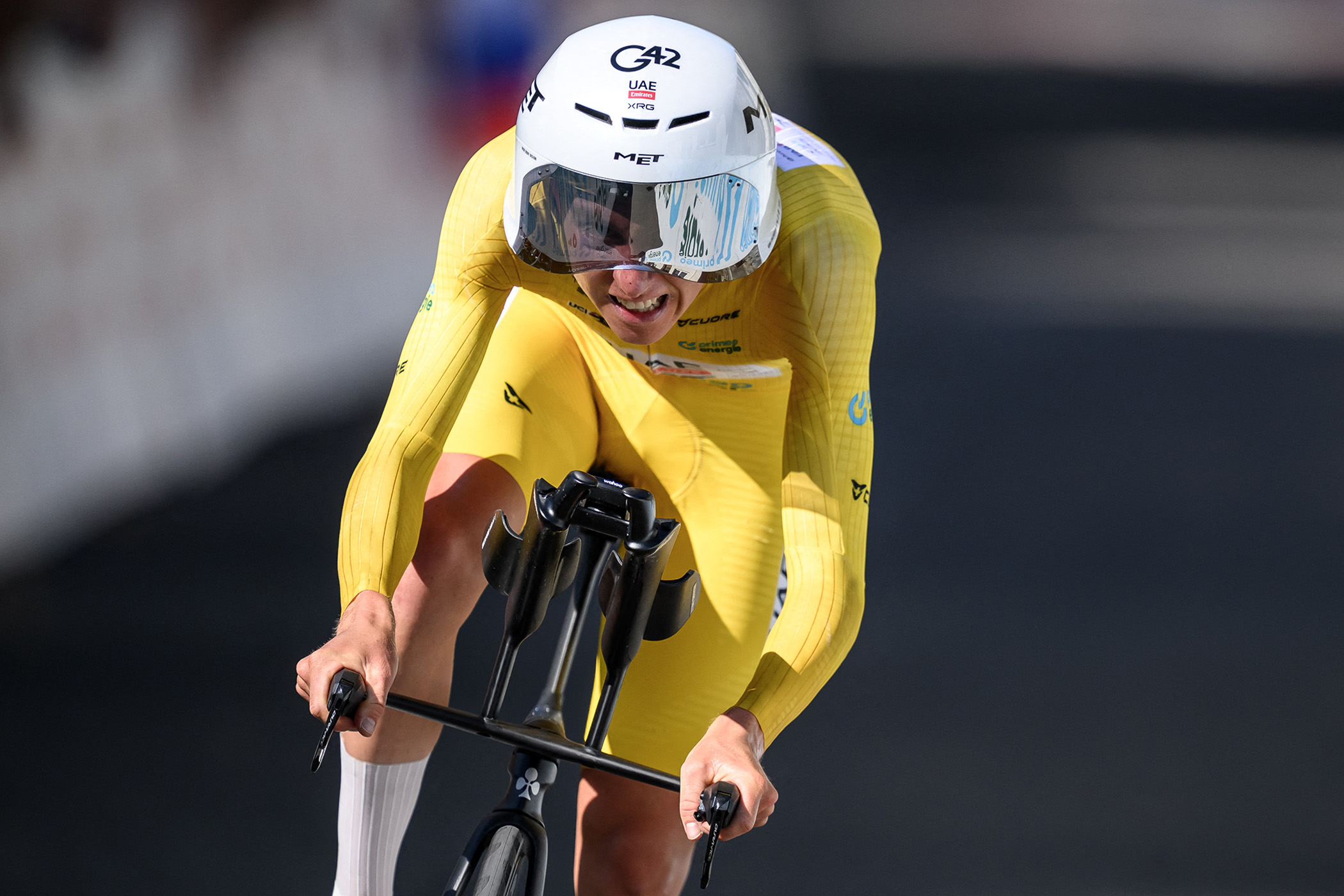
The opening week of the Tour de France has been dominated by Tadej Pogačar and his UAE Team Emirates-XRG team, but it’s also been marked and affected by Europe’s record-breaking and prolonged heatwave.
After winning a moderate uphill finish in Les Angles on stage three, further east along the Pyrenees chain on Thursday, Pogačar attacked 5.5km from the summit of the iconic Col du Tourmalet, descended down the other side, and then time trialled to an epic 43km solo victory in Gavarnie-Gèdre. His winning margin to his closest rival Jonas Vingegaard was 2:38.
Though more than half of the race is still to run, Pogačar’s advantage already looks close to insurmountable, as the defending champion seeks to win a record-equalling fifth yellow jersey.
One of the few factors that could prevent his coronation is the weather.
Temperatures across France have approached and in some cases exceeded 40°C in almost all of the stages so far, causing a notable reduction in the number of roadside fans in some host towns. On stage three, the public were even told to stay away (not everyone adhered to the plea) as a wildfire raged nearby.
Race officials haven’t ruled out the possibility of stage cancellations or alterations. “We are ready to adapt anywhere, anytime,” race director Christian Prudhomme said.
The effects on the 184 competing riders has been pronounced. Many have reported that their resting heart rates are around five beats higher, as their bodies respond to the excessive weather conditions, as well as to the physical stresses of the race. Riders are also going through three to four bottles of water and carbohydrate drinks every hour to stave off dehydration.
In an effort to keep cool, they’re stuffing ice socks (ice cubes inside tights) down their jerseys, and jumping into ice baths post-stage. They’re also sleeping on cooling mattresses, putting ice vests on their riders pre-stage, and sucking on ice-pops.
“It’s a logistical nightmare when it’s hot,” Pogačar said: “It is dangerous if you don’t keep your body temperature down.”
Naturally, the Tour peloton is abuzz with talk of how the world’s biggest bike race can respond and prepare for such temperatures in the future, with climate change making previously infrequent weather much more common. “Five years ago it was totally different to what we have now,” Pogačar added.
Newsletters
Choose the newsletters you want to receive
View more
For information about how The Observer protects your data, read our Privacy Policy
One drastic solution is to move the start time of each stage to the early morning, as opposed to a midday or even mid-afternoon start. “One of the major factors that would help, if you’re not going to change the Tour de France from the peak of the summer, is to bring the race forward earlier,” Luke Durbridge, who is riding his 12th and final Tour for Jayco-AlUla, told The Observer.
“But it would change the dynamic of the TV coverage. It’d make a huge difference in terms of people getting home from work and putting the Tour on and seeing the last 30km.”
There are, Durbridge said, more practical changes that could be made. “In exceptional circumstances, there should be a lot more motorbike services giving water. It shouldn’t even be a request – it should be a given.
“There are other little things that could be worked on that would help everyone. On stage six we rode 22km to the bus after the stage and after riding five hours in the heat. It made it a 220km day.”
The extreme heat is expected to dissipate slightly in the coming week as the race heads into France profonde and the Massif Central. Save for the annual Bastille Day ding-dong on Tuesday, in which Pogačar’s young teammate and stage two winner Isaac del Toro will attempt to fend off attacks from the six other riders fighting for the third place he currently occupies, the GC race should take a backseat as the sprinters and the breakaway hopefuls come to the fore.
For Pogačar, Vingegaard and the other GC contenders, it’s a week of relative relaxation before the race explodes back into life. Taking things more calmly, however, is easier said than done when the mercury doesn’t budge from the mid-30s.
Photograph by Dario Belingheri/Getty Images