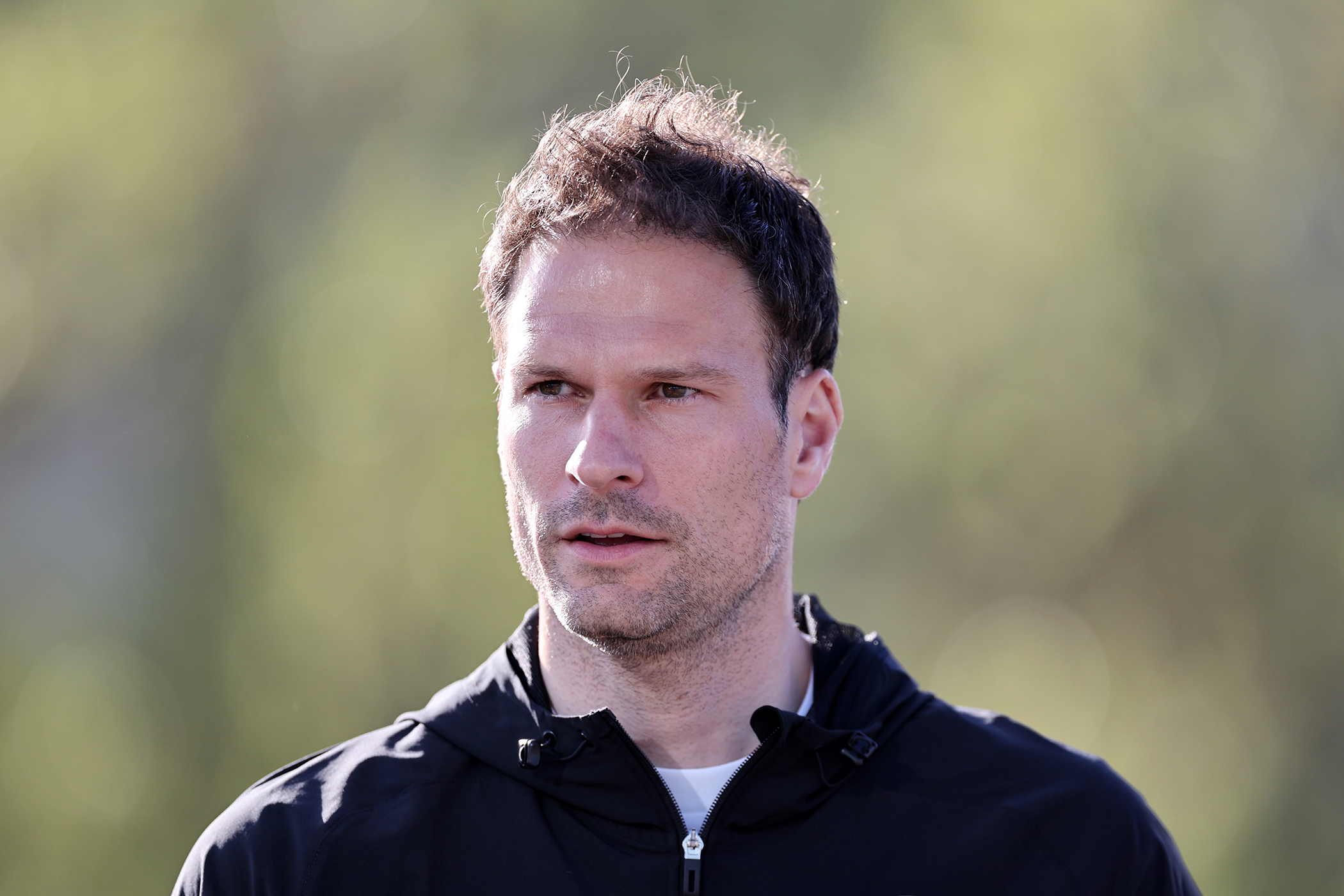

Asmir Begović was only four years old when his family fled the Bosnian war for Germany, but though he recalls little of the time he still has flashes. “I remember being on a boat, I remember being in a car, I remember dark times,” he tells The Observer.
Now 38, the goalkeeper has enjoyed a storied career, which took him through all four of England’s leagues, seasons in Italy and Azerbaijan, peaking in a Premier League title with Chelsea in 2017 – a trajectory made all the more remarkable given the trauma of his early life.
He has pieced together the gaps in his fragmented memory during conversations with his parents. “They had a decision to make: do you flee or not? In Bosnia there wasn’t much of a decision. Really quickly my life was turned upside down.”
Begović was “given a lot of responsibility” to look after his younger brother while his parents worked. “It was very hectic,” he says. “Thankfully we stuck together as a family and made it work.”
But after six years of building a new life and bedding in, they were uprooted again. A change in German legislation meant they no longer had the right paperwork to stay. Offered an opportunity in Canada, they left a life behind once more.
To be forced from your home once is hard enough; twice in six years is harsh indeed. Begović was ten and remembers the second departure vividly. “That was a lot harder for me. I was a little bit older, had a lot of friends, was settled in Germany, and settled at home. That was difficult to comprehend.” Somehow, he is able to make a light joke about it being “probably a little bit easier for my parents the second time around – that’s not saying much.
“You move to another country, you don’t know the language, you don’t know anyone, you’re moving to a completely different space. It’s really difficult.”
Football was his salvation. Begović was always likely to be a goalkeeper – his father was a professional goalkeeper in Bosnia and his grandfather was a goalkeeper, too. “It was all I ever wanted to do,” he says.
It was also a way to fit in and belong. Everyone is, after all, always looking for a goalkeeper. “Changing countries, that was the one time I could escape and be part of a group and get away from the regular life challenges that were brought to us.
“It was useful for my own sanity, useful socially, useful for making friends. It’s massive. You find a ball, you find a team, and very quickly you’re part of something.”
Newsletters
Choose the newsletters you want to receive
View more
For information about how The Observer protects your data, read our Privacy Policy
He only fully grasped the magnitude of his parents’ sacrifices once he had children of his own. They are now nine and 16. He has spoken to them about their family history. They ask questions and he tries to find answers, though he is unsure how much they take in.
“We have a chat about things and you want them to appreciate what they have and being in a much better situation. Sometimes people take certain things for granted in life. These situations can be humbling for everyone.
“I don’t think you really appreciate it fully until later on. Nothing prepares you for it. Unless it happens to you or someone close to you, it’s a difficult one to understand.”
His experiences have shaped his perspective on refugees – one he wishes others would share. He is part of the refugee agency UNHCR’s Gamechanging Team, made up of high-profile footballers who experienced displacement. More than 117m people – including 48.8m children – have been forcibly displaced globally. “That’s a frightening number,” he says.
What do people misunderstand about refugees? “The biggest thing is that it’s not our choice. People don’t choose to be displaced and choose to flee their home and country. There has to be empathy and compassion that comes into that.”
Begović can now see how his turbulent early years prepared him well for a career in football: new clubs, new cities, new countries, new dressing rooms, shifting squad dynamics and different people, sometimes not sharing a common language. Six years after arriving in Canada, he was on the move again – this time of his own volition – when he signed for Portsmouth at 16 after a successful trial. “There was some level of positivity that came with those moves because you were able to use the techniques and skills later on in your career,” he says.
As he edges towards the end of that career, Begović is not looking too far ahead. After a “difficult” season that ended in relegation from the Championship with Leicester City – “you get into negative situations and it’s very difficult to get out of it; ultimately you have to learn from it” – his contract expires at the end of June.
He wants to keep playing and there are options, “but as you get a little bit older, you’re not the most important person anymore”. His wife, Nicolle, represents Bosnia & Herzegovina in dressage, and he is enjoying spending time with his family. After 21 years as a professional, the grind is wearing thin. “The seasons can be very long and incredibly taxing. I’m really lucky, I’ve got an unbelievable family. My kids and wife have been incredibly patient and supportive over the years. They have sacrificed a lot.”
Running the Asmir Begović Goalkeeper Academy and the growing AB1GK brand of goalkeeper and training gear has been “an escape from the daily pressures” of the game. The academy now has centres around the world, including Bosnia and Herzegovina and Germany.
When he does hang up his gloves, he intends to stay in football, whether in punditry, coaching, management or as a technical director. But it will have to be the right move for everyone. Wherever he ends up, Begović offers life experience and perspective few others can match.
To find out more about UNHCR’s Gamechanging Team, click here
Photograph by Getty Images