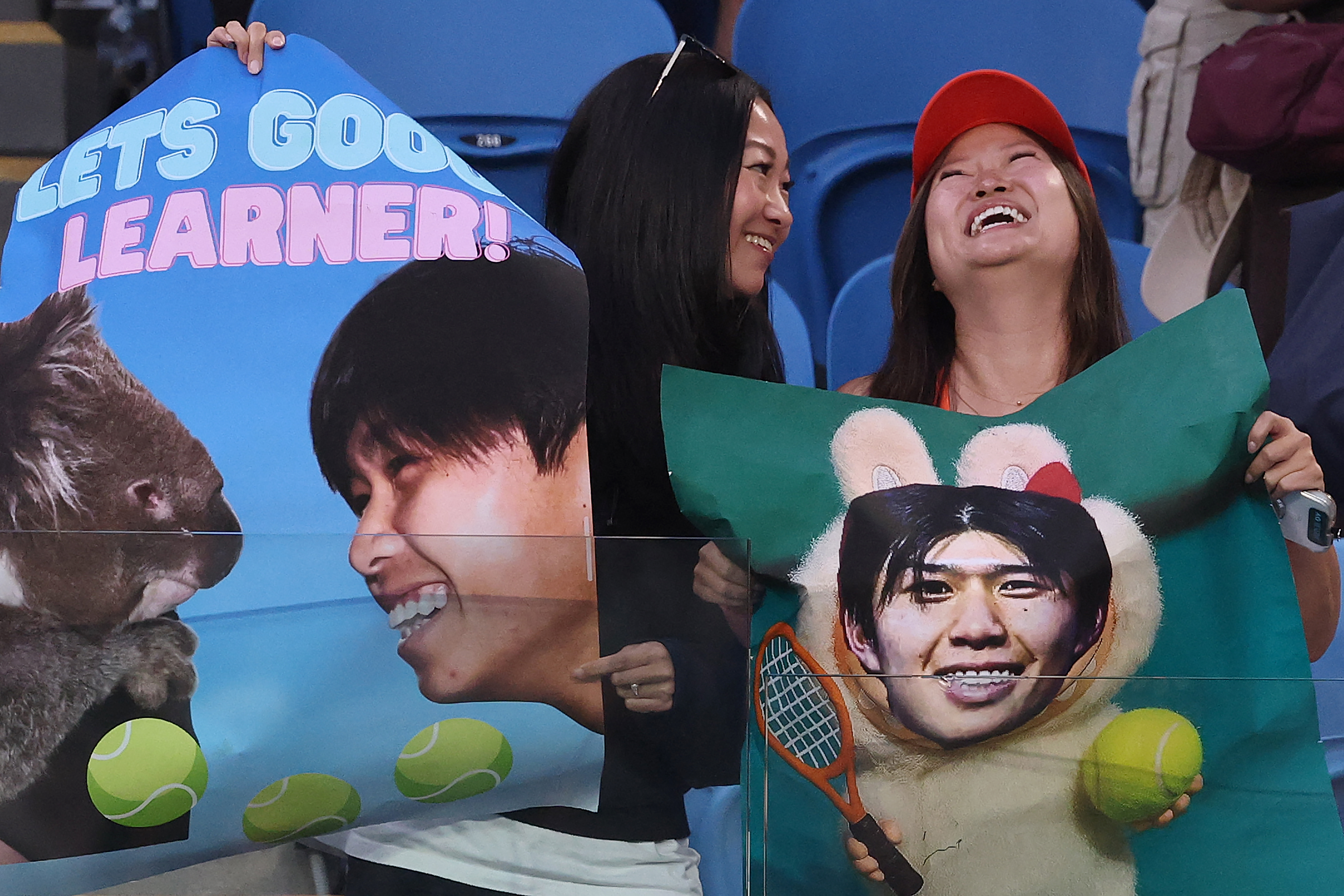

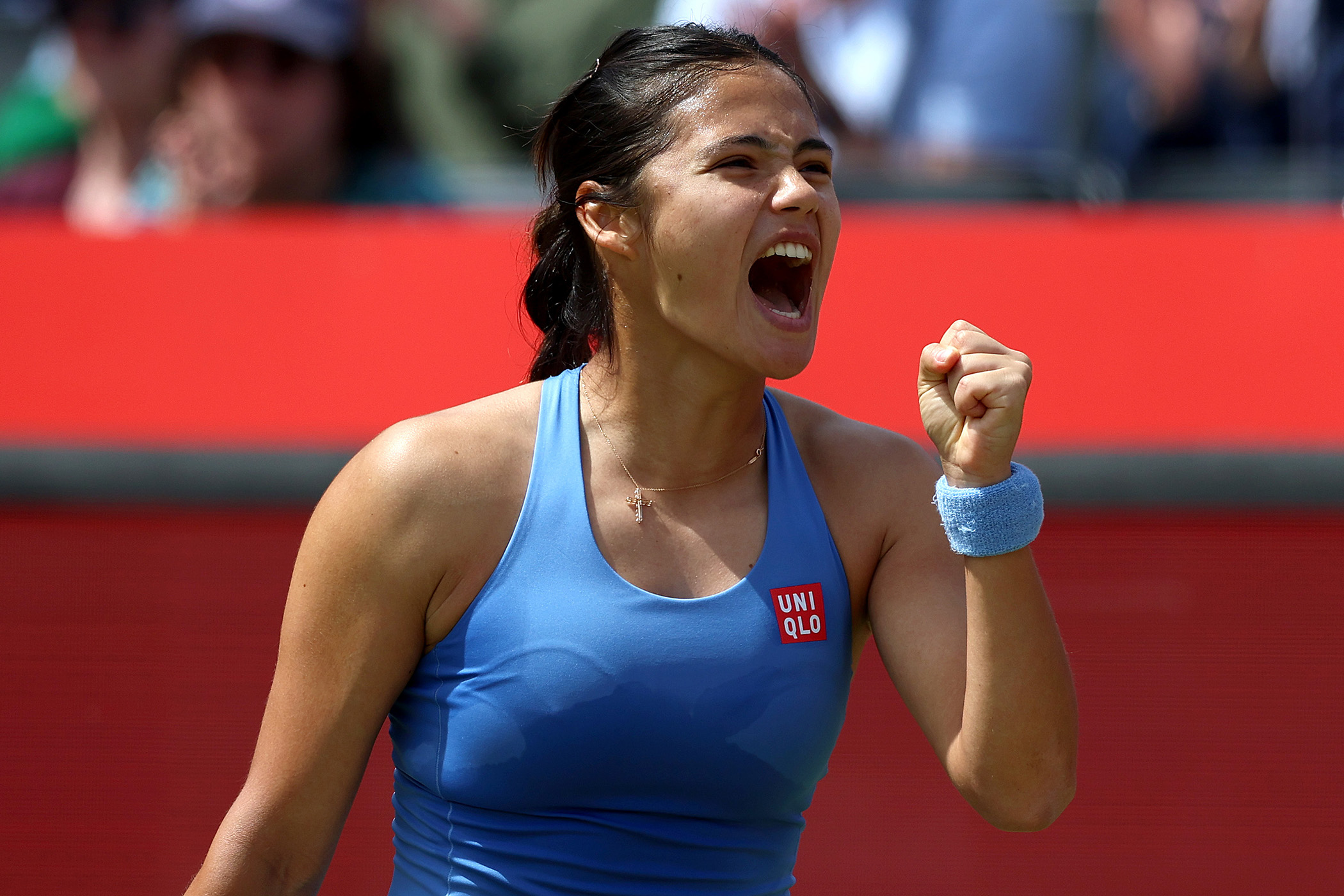
As Melbourne blurred and warped under tyrannical heat, the edges of tennis’s future sharpened into focus. Even in defeat, Learner Tien and Iva Jovic glimmered, all grace and promise, the two youngest singles quarter-finalists of this year’s Australian Open at 20 and 18 respectively. These are inevitable talents, shiny and fun and premium, the next cohort tasked with disrupting an elite which feels more ossified than ever.
Jovic became the youngest American woman to reach the quarter-finals of a grand slam since Venus Williams in 1998, not dropping a set before a 6-3, 6-0 quarter-final demolition by Aryna Sabalenka. 191st in the world a year ago, next week she will rise to No 20, while Novak Djokovic anointed her “a future No 1”. Her 11 matches won this year across Auckland, Hobart and Melbourne are the most of any WTA Tour-level player. She does a convincing impression of maturity, the product of that rare psychology that truly brilliant athletes possess to remain level and grounded however great the pressure.
And already one of the sport’s finest from the baseline, Tien reached the fourth round in Melbourne last year and went one further this week as the 29th seed, coach Michael Chang helping expand his previously defensive game to one capable of condemning Daniil Medvedev to his first 6-0 set at a grand slam. He won the ATP Next Gen finals in December, the sport's effective U21 slam, having lost to fellow prodigy Joao Fonseca the year prior.
Tien’s parents emigrated from Vietnam to South California; his father during the Vietnam War and his mother by a boat which was repeatedly attacked by pirates. He was named Learner because his mum was a teacher, and his sister is called Justice after their lawyer dad. Coincidentally, Jovic’s father was born in Serbia and her mother in Croatia, while Iva was born in Torrance, a 40-minute drive north of Tien in Irvine. It is at the very least ironic, that American tennis over the next decade will be defined by three second-generation immigrants – Jovic, Tien and 24-year-old Amanda Anisimova – and a black woman, Coco Gauff. In the right light, it would be a front of quiet rebellion.
This has been a tournament dominated by both Americans and American discourse. Six of the 16 quarter-finalists across men's and women's singles are from the US, while the majority of American players at Melbourne Park have been asked by a journalist “how it feels to play under the American flag”, if anything a question too vaguely worded. And yet The Wall Street Journal and Sky News Australia, among others, published articles criticising his perceived audacity. For asking Tien how important his heritage was to him, Brad Gilbert, Andre Agassi’s former coach, wrote that I should have my media accreditation stripped.
The responses from players to these questions were, charitably, varied. Madison Keys spoke well about the US as “a nation of immigration”, while Gauff said “it is hard being a black woman in this country and having to experience things, even online, and seeing marginalized communities being affected”.
Most simply refused to engage. Anisimova said “that’s not relevant”, later clarifying “I didn’t want to answer a question that was obviously intended for a headline and clickbait; that was my right. It had nothing to do with my political views.” Taylor Fritz opted for “whatever I say is going to get put in a headline, out of context, so I'd really rather not do something that's going to cause a big distraction for me in the middle of the tournament.” Last October his partner Morgan Riddle protested against Donald Trump in Minnesota wearing an “Immigrants Make America Great” t-shirt. Tien went for “I don’t really want to talk about that right now”. Neither does anyone else, but necessity has overtaken desire here.
Ben Shelton was the most belligerent, writing “USA til it’s backwards” on the camera after beating Valentin Vacherot in the third round, better understood as “USA no matter what”. He later wrote on Instagram “literally no underlying message with my camera sign… a lot of young Americans killing it in Australia this year”. Patriotism has always acted as an awkward intersection between sport and politics, but given the weaponisation of MAGA nationalism, displays like this are now inevitably interpreted as somewhere between implicit and direct support for the Trump administration.
There is a sliding scale of potential controversy here too. This week NBA guard Tyrese Haliburton wrote “Alex Pretti was murdered”, while WNBA MVP Breanna Stewart displayed a sign reading “Abolish ICE”. Minnesota Vikings cornerback Dwight McGlothern Jr simply said “it’s not right what’s happening in Minnesota”.
No-one is being asked to lead the revolution, but not engaging with the question, not attempting even to produce platitudes about atrocities committed against compatriots, is a selfish prioritisation of sponsorship deals and social media comments over objective morality. Of course, players’ stances are led by their PR advisers, and entirely avoiding anything approaching controversy appears to be the option du jour. But as Gauff has demonstrated previously, it is possible to have a public ethical spine in tennis and still make generational wealth.
Newsletters
Choose the newsletters you want to receive
View more
For information about how The Observer protects your data, read our Privacy Policy
Welcome to a new reality for American athletes, the full rogue state treatment. None of this is fair on them but, as with Russian athletes, fairness is irrelevant. Anger should not be aimed at journalists asking reasonable questions, but at the president and his policies for putting athletes in this position. Players ask to be viewed as human beings who happen to play tennis, yet hide behind “I’m just a tennis player” when convenient.
It has long been obvious that the “keep sport out of politics” bullshit has stretched well beyond the limits of feasibility, particularly in America. Trump delayed the US Open final last August so he could sit courtside as a show of power, stealing attention from those who deserved it, as he would at the Ryder Cup a month later. This is without mentioning the Fifa Peace Prize or the impending UFC White House. These are examples not just of politics’ permanent relationship to sport, but its ability to corrupt and exploit it, to poach its popularity and goodness.
And this pressure will inevitably worsen after ICE’s appointment as security for US dignitaries at the Winter Olympics next month, already an event saturated with patriotic fervour and national identity. From there everything is leading to the World Cup and a potential boycott, with the Los Angeles Olympics in 2028. The US Open returns in August. Whether athletes or fans like it or not, the future of American tennis, of American sport, is inseparable from the future of America. But the same goes for the present.
Photography by David Gray/AFP