

A clear sign that all is not going well with a side can often be when the rumours and whispers start to build up. When the questions move from focusing on how players performed or the use of certain tactics, to which members of the coaching staff may not survive the end of tournament review. How bad a loss – on the assumption that defeat is a certainty – would be (reluctantly) acceptable. Even whether potential candidates have been lined up.
On the one hand, sure, it is just gossip. Titbits that people have heard. Too unsubstantiated to repeat here. But enough to make you start wondering about the state of this team in the near future. Forget about the Rugby World Cup next year - what would England look like this summer? They had never lost four games in a single Six Nations Championship before. If that unwelcome bit of history happened here in Paris, could they produce an extraordinary performance to convince you that they were still travelling in the right direction under Steve Borthwick, despite their record of one win out of five? The answer it turned out, at the end of a bonkers 48-46 triumph to clinch the title for France, was yes.
England had originally hoped they would end this Six Nations with a trophy, validation of their recent upward curve, continuing their double-digit winning run. Instead, they arrived here with the air of a wounded boxer stepping into a fight nursing a few broken ribs, outmatched against a superior opponent. Well, even an underdog in the ring sometimes only needs to land one punch. And a bonus-point try after 33 minutes was an upset that no one saw coming.
With their tournament hopes over weeks ago, and having hit a new low with that first-ever loss to Italy the week before, what exactly were some realistic expectations for England here? To improve their discipline, maybe, after eight yellow cards in four matches? To show more cutting edge in attack? More organisation in defence? Any bread crumbs of progress across those areas would be welcome. To quieten the chatter. To at least create some uncertainty over where the Six Nations trophy might end up, having been jetted over hastily from Dublin to be in Paris in time for kick-off.
Welcomingly, there were signs of life. When was the last time England mauled successfully enough to win a penalty? The opening game against Wales? Adding in Ollie Chessum as a bigger blindside, bulking up England’s pack, was a necessary move that instantly seemed to help.
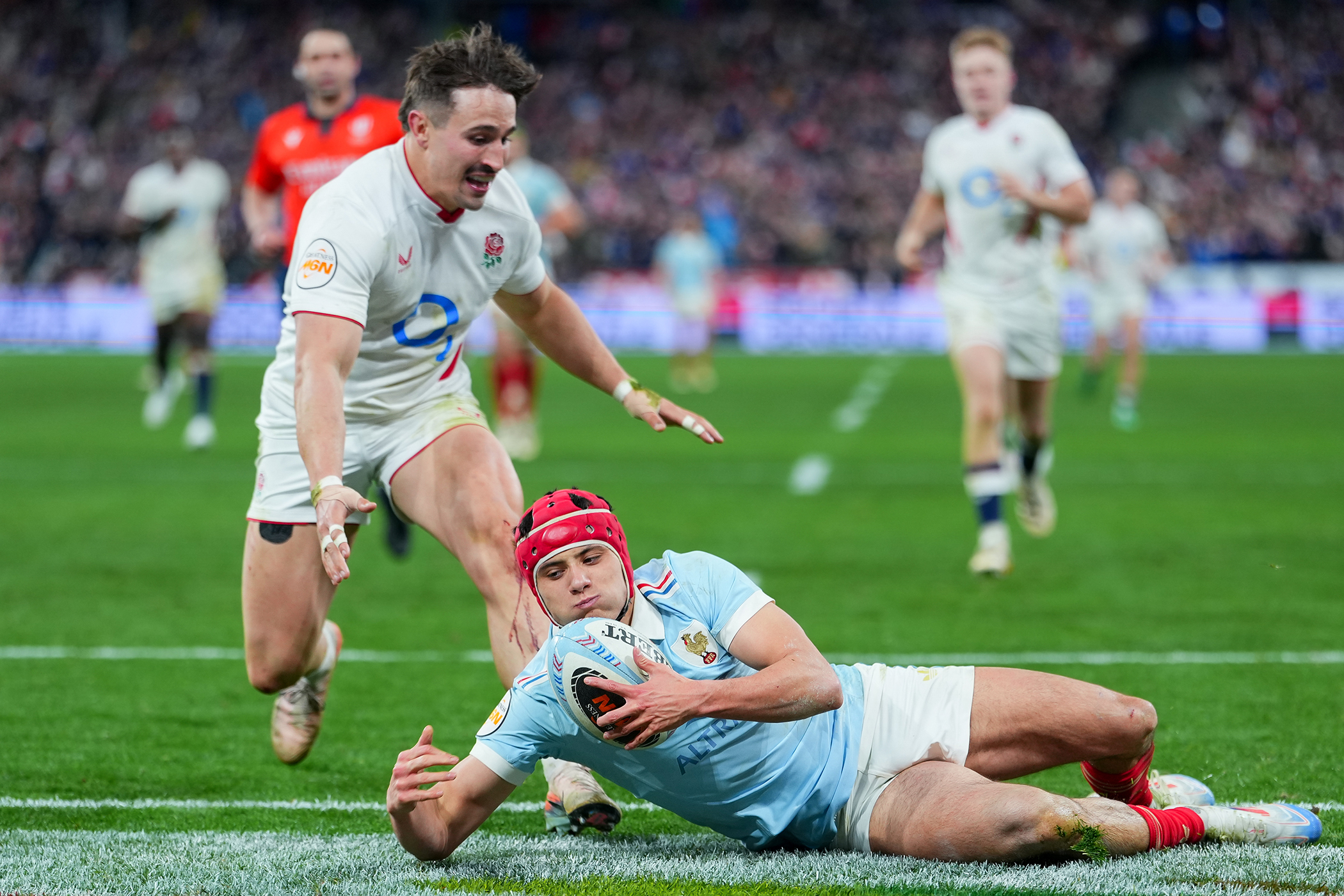
Consecutive mauls in France’s half put England in position for Chessum to eventually bash over himself to level the game, but his best was yet to come: a quality turnover then topped by his breakaway interception try in the second half, cantering clear like a Gold Cup winner at Cheltenham. It was a defiant, enjoyable display from the Leicester forward.
In fact, Chessum was everywhere, in many ways the embodiment of an England side that we just have not seen really since they easily dispatched Wales in the opening round. This ferocity has not been there. This willingness to shift the ball at pace. Fin Smith looked like Fin Smith again, the one from Northampton Saints who runs one of the country’s more exciting backlines, rather than the fly-half following instructions to kick and then kick again.
There was an alertness and crispness to England’s passing that has been missing. Seb Atkinson and Tommy Freeman carried flatter to the line and kept France guessing. Make defences stop to think and gaps will usually appear. England for too long in this Six Nations relied purely on winning the ball back in the air, a contest they themselves have often described as 50-50. Less so here.
Defensively? Well, no one has really been able to live with France, but England will have been quietly seething at being caught out twice by kicks behind for France’s first two tries, failing to contain the rapid Louis Bielle-Biarrey. Ill-discipline reared its head too with Ellis Genge’s yellow card for illegally collapsing a French maul close to the line, completing an unwanted Grand Slam of a yellow card in every single match so far. They still ended up losing the penalty count. Still, as long as Genge has been on the field, England’s scrum has always been dominant.
Before kick-off the idea of England going to South Africa in July to take on the back-to-back world champions at their most imposing venue, Ellis Park in Johannesburg, seemed somewhat ominous. To have taken France into the final seconds with a lead, making the home crowd sweat about whether the title would really end up in Paris? That is a huge stride forward. It might even be enough in defeat to convince the RFU that Borthwick is still the right coach.
Yet at the same time, there are massive questions. The final Saturday of the Six Nations can produce some wild contests and this was another for the annals, with 13 tries in total. So is this who England really are? How they really want to play? Or was the box-kick dominated game plan they stuck so rigidly to in Rome and against Scotland thrown out the window because of the sudden pressure on players and coaches? To prove that winning run of 12 Test wins in a row was not a fluke?
Those can all be debated in the coming days. Win or lose, the answer at the end of a game best described as bonkers, was that England appear to have life.
Photography by Franco Arland/Getty Images
Newsletters
Choose the newsletters you want to receive
View more
For information about how The Observer protects your data, read our Privacy Policy