
It is a football match so important that according to José Mourinho, the “world stopped” when it was played during his time as manager of Real Madrid. Arguably the biggest rivalry in world football, built on years of Spanish history and politics, Barcelona v Real Madrid – El Clásico – is a mythic fixture.
In Sid Lowe’s book on the rivalry, Fear and Loathing in La Liga, he recounts how the graveyard alongside Camp Nou – Cementeri de les Corts – fills with people ahead of the match asking their relatives or former Barcelona players buried there for help in the game. El Clásico is a life or death matter.
Unsurprisingly, this is an enmity that transcends gender. Unfortunately, the capacity for it to be a sporting contest has not. Barcelona Femeni have met Real Madrid on 25 occasions, since Real Madrid formally took over the licence of CD Tacón in 2020. They have won on 24 of those occasions, the sole win for Real Madrid coming in the league last March.
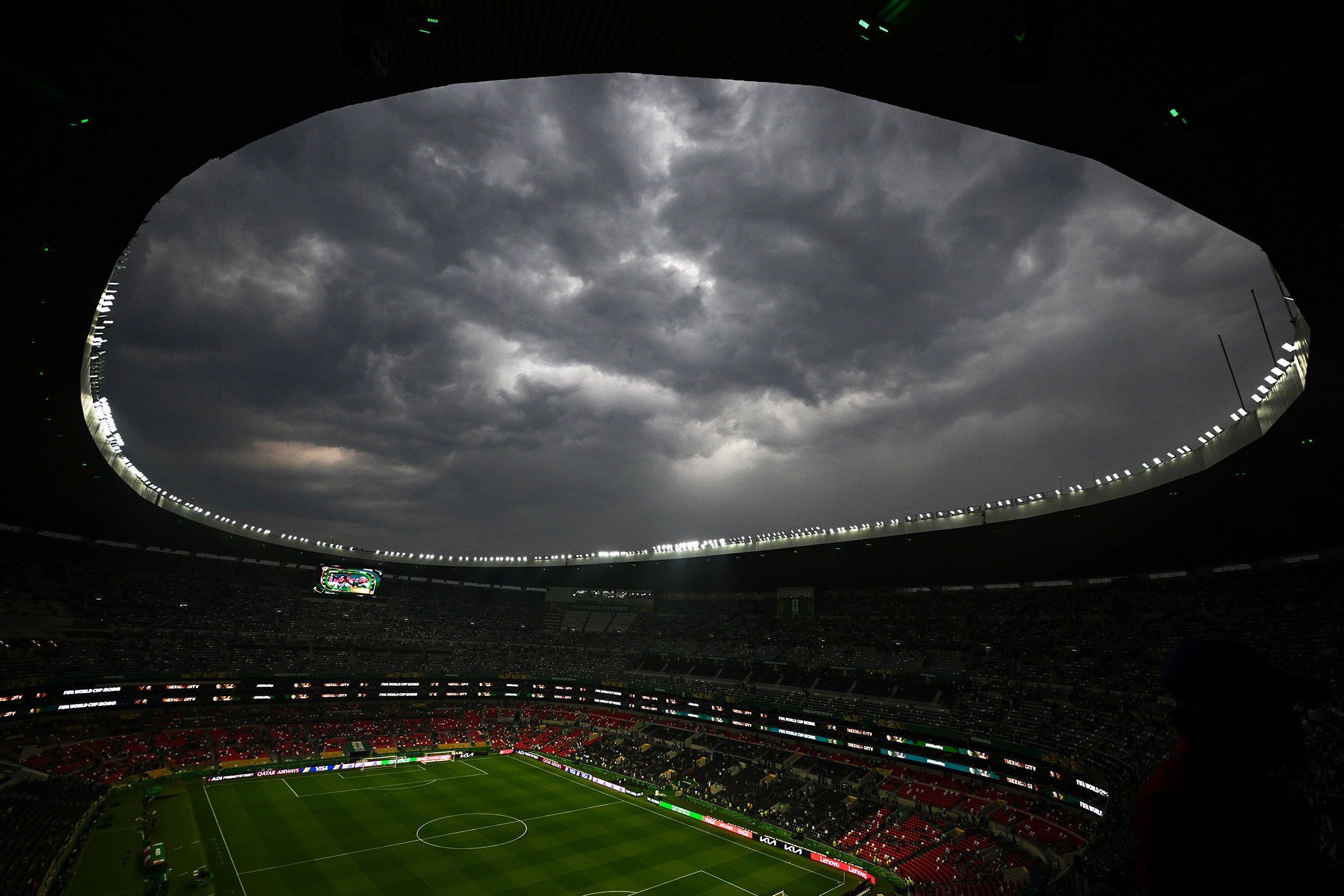
Women’s football returned to the newly reopened Spotify Camp Nou this week as Barcelona and Real Madrid met in the Champions League for the second time in their history. On the first occasion, in 2022, it was the first time women’s football had ever been played at the iconic stadium. A crowd of 91,553 showed up – a world record surpassing the 1999 World Cup final at the Rose Bowl in Pasadena. That record was beaten a couple of weeks later when 91,648 people watched Barcelona thrash Wolfsburg 5-1 to reach the Champions League final.
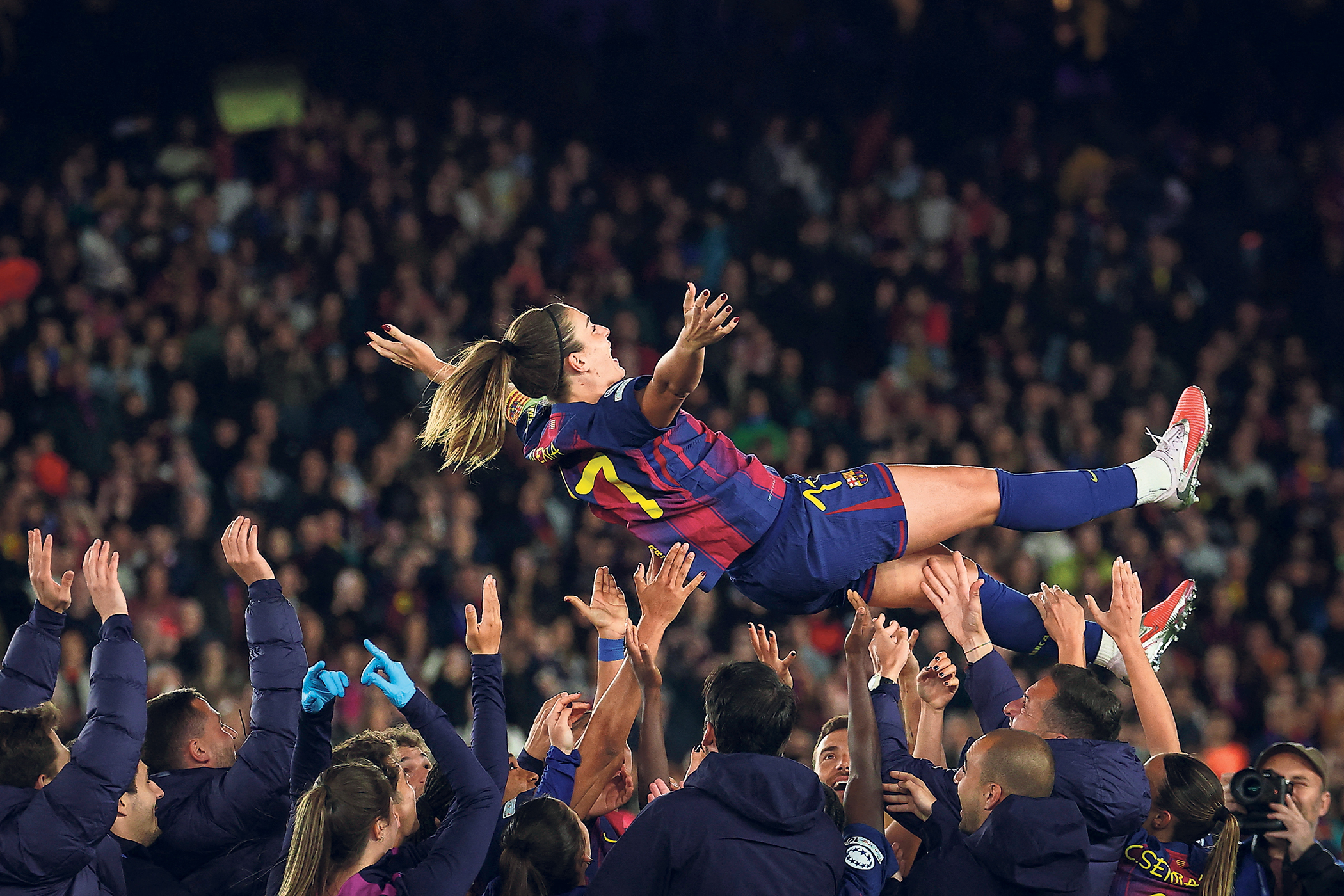
Four years on and a strong sense of deja vu permeated the 60,067 in the ground as Alexia Putellas took a bow. In her 500th game, she had put Barcelona 1-0 up after eight minutes. Her footballing exploits may have been overshadowed by Aitana Bonmatí in recent years, who is out injured, but Alexia remains La Reina, the undisputed queen of Barcelona.
In her post-match interview, she pointed to the corner in the stands from which she watched Barcelona play when she was growing up. There is no doubt that she knows what it means to play for this team, in this fixture.
‘The failure of the Spanish league to keep pace with Europe’s elite affects Barcelona if they like it or not’
‘The failure of the Spanish league to keep pace with Europe’s elite affects Barcelona if they like it or not’
Barcelona had already won the first leg 6-2. After 34 minutes, they were 4-0 up. In the end, the match finished 6-0, 12-2 on aggregate. It was slightly tighter four years ago – Barcelona won 8-3 across two legs that time.
To the Barcelona fans in the ground, this is pure enjoyment. Each and every goal is met with more raucous cheers. This team beat Real Madrid 3-0 at the weekend too, their league match sandwiched in between the two quarter-final legs to gain the most attention during the men’s international break.
But for Real Madrid, their record in El Clásico is humiliating, and their record outside is hardly much better. They are undisputedly the second best team in Spain but are still yet to win a major trophy, most notably losing out in the final of the Copa de la Reina to cross-town rivals Atlético Madrid in 2022-23, the year Barcelona were disqualified from the competition for fielding an ineligible player.
They have also never played at the Bernabéu, instead playing all their games at the Estadio Alfredo di Stéfano, a pitch at Real Madrid’s training ground, pushed out on the edge of the city by the airport.
Newsletters
Choose the newsletters you want to receive
View more
For information about how The Observer protects your data, read our Privacy Policy
While Barcelona fans might not care that Real Madrid are not very good, it affects them too. This Barcelona generation has dominated European competition over the past couple of years. They have reached every final of the Champions League since 2020-21 when they first won it, and look heavy favourites ahead of a semi-final against Bayern Munich to do the same again.
But there is still a sense that this team are not rigorously tested enough. When they have a year like last season, where they lost the Champions League final to an Arsenal side who were seen as massive underdogs, they fade into the background.
Domestic achievements are viewed as irrelevant given the supposed weakness of the league. Barcelona fans online will argue until they are blue in the face that this is a result of international observers underestimating the quality of the domestic top flight, Liga F.
Yet the reality is that all three of the other big leagues have had multiple Champions League semi-finalists in recent years. England can boast having three quarter-finalists two years in a row, and may even consider themselves slightly unlucky that on both occasions two English teams were drawn against each other. By these kinds of criteria, other European leagues are far stronger.
The failure of the Spanish league as a whole, and Real Madrid in particular, to keep pace with the elite echelons of European football affects Barcelona whether they want it to or not. There is certainly no sense that the Real Madrid president, Florentino Pérez, cares, given his own reticence to bring in a women’s team in the first place. He might not care about the women’s team but surely he cares about El Clásico as a product?
The reality is that what could be a genuinely great fixture, one of the highlights of the women’s game as it is in the men’s, simply becomes a foregone conclusion. Not so much life and death but more the Simpsons meme – stop, stop, Real Madrid are already dead.
Photograph by Joan Gosa/Avalon