


When it comes to iconic New York City addresses, few carry the cultural weight of 30 Rockefeller Plaza.
In a city overflowing with landmarks, “30 Rock” stands apart. Immortalised by a TV show, anchored in festive tradition and drawing tourists daily to the Top of the Rock for panoramic views of the US’s most populous city. Beyond the sightseeing, the 67-storey art deco skyscraper houses hundreds of businesses, from NBC to Deloitte and Starbucks.
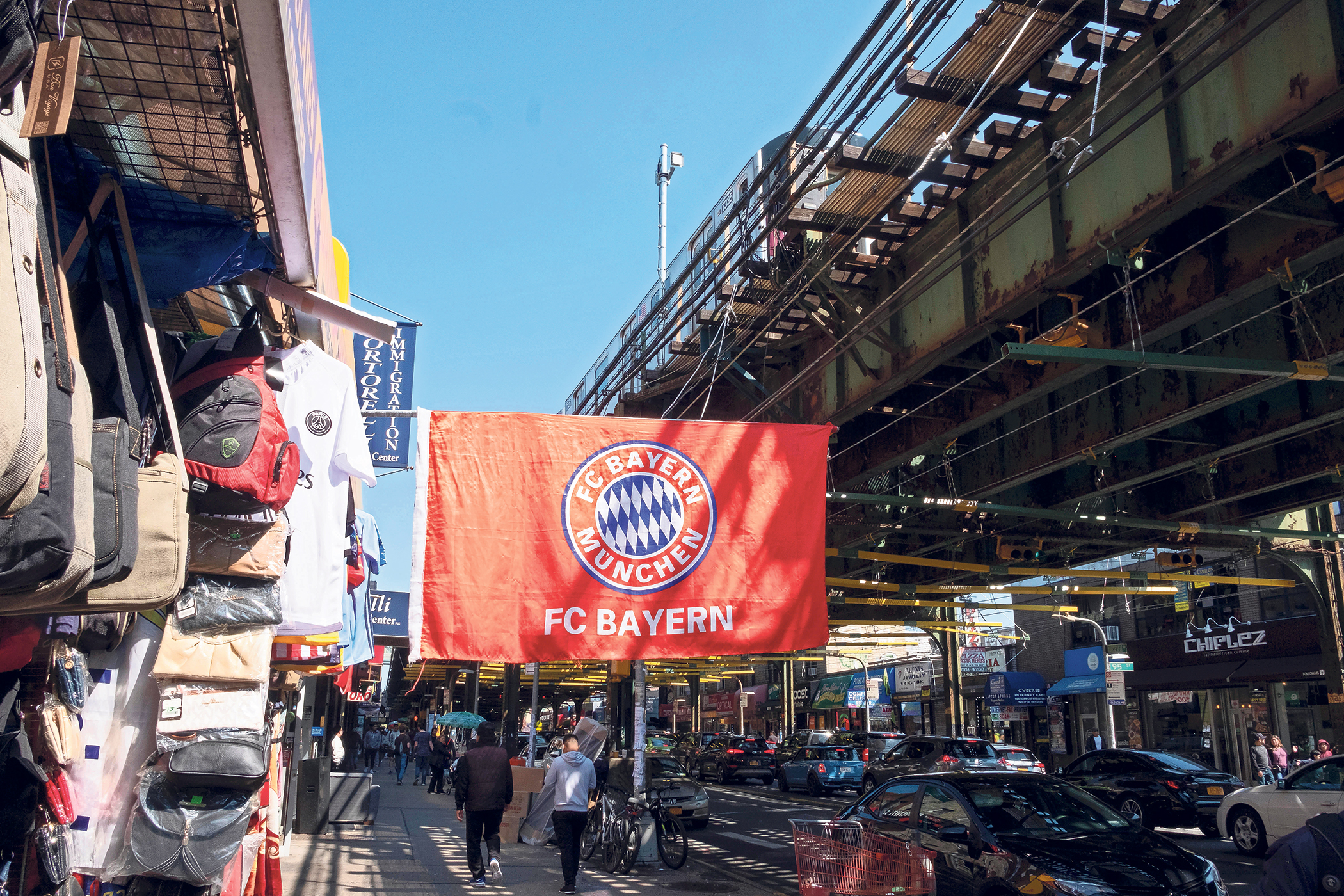
Tucked away in Suite 2040 is FC Bayern Munich LLC. The Bundesliga giants’ US‑registered arm operates from Manhattan with a clear mission, that is to grow Bayern’s reach in an English‑speaking market that feels on the cusp of a football boom, with the 2026 Fifa World Cup arriving on North American soil.
Bayern had been on Madison Avenue from 2014 until they moved into 30 Rock at the end of 2023. But they are far from alone. Over the past 10 years, as football’s globalisation has intensified and the US has become a critical market for fan engagement and commercial expansion, clubs and leagues have planted their flags across Manhattan.
Bayern, Borussia Dortmund, Eintracht Frankfurt, the Premier League, La Liga and the Bundesliga all operate offices on the island. Liverpool maintains a fixed space within Fenway Sports Management’s Flatiron District headquarters, just blocks from Serie A’s base. Fifa has set up shop in Trump Tower on Fifth Avenue, while Paris Saint‑Germain run a physical retail store on the same famous strip.
Owners are embedded too, with AC Milan’s RedBird Capital Partners on Madison Avenue; City Football Group, owners of Manchester City, on Third Avenue; and Mediacom, owners of Fiorentina, in the Financial District.
“This office is the very first international office that Bayern Munich opened,” said Dee Kundra, managing director (Americas) at Bayern.
“When you look at the numbers back then about why the club decided to open an office in the US, the figures were something like there’s 100 million people interested in football here. That’s more than the population of Germany, so the potential is huge. Before we came here we asked, ‘Is this beneficial to us, can we really make a difference?’ The potential was just very difficult not to take up. Then it came down to where it would be located. Obviously there’s a time difference, it’s much easier to be on the East Coast, but New York is a real hub in terms of all of the headquarters being [here] such as the NFL, NBA and MLS headquarters.
“As a city, though, New York has the biggest Latino population in the States, between here, California [LA] on the West Coast and then Texas [Houston; San Antonio] as well. So you already have a community that is so involved and so intrigued and loves football. We also have the benefit of something like 60 million people with German heritage in the US, so we’re able to tap into that.
“When we’re looking at new audiences, you’re really looking at the Champions League as well. It’s something that is really interesting for Americanst. They love to see the best teams competing. That’s where Europe’s best come together, and the CBS product they have is excellent.”
New York City is a global mecca in terms of business, sport and media
New York City is a global mecca in terms of business, sport and media
Kate Pratt Theobald
Across town, Liverpool, current Premier League champions, have been refining their US strategy for years. While American ownership is now commonplace in English football, Fenway Sports Group was an early adopter of applying US sports‑business thinking to the Premier League when it arrived in 2010. Its data‑driven approach has shaped both the football operation and the commercial engine behind it, and establishing a presence in one of the world’s most global business hubs has been central to that.
Brands such as Tommy Hilfiger, Peloton and Google Pixel have partnered with Liverpool in recent years, drawn by the club’s ability to activate a vast international fanbase.
“We opened a New York office back in 2019, and really our ownership and leadership team had good foresight, where we were looking at football, which had grown at such a planetary scale commercially,” said Kate Pratt Theobald, commercial director at Liverpool, who leads the club’s operation out of the Midtown office.
“There were a couple of clubs that had offices in New York City, which is certainly a global mecca in terms of business, sport and media. We had our US ownership HQ up in Boston with Fenway Sports Group. Fenway Sports Management, our internal agency within FSG, had just opened a small office with about three folks in it, and it coincided with the role being hired to really look at strategic growth within the Americas for Liverpool.
“We’ve got over 24 million followers in the States, more than any club or team in the NFL, NBA etc. They’re not all in one market, and all 24 million aren’t sitting in New York, so figuring out how we worked with partners to crack into the US market is something we’ve made good strides on, always through a global lens.
“The majority of our partners are looking to plant a flag within the US, but also globally. From a commercial and media business perspective, New York was just the right market for us.
“From a global partnerships perspective, the bulk of our big partners care about New York City in some facet. So for a component‑parts perspective, New York made sense for us. We’ve done an audit across all of our partners to say: which markets matter to you globally, within the States, and both North and South America? New York will continue to be a priority market for many of our biggest global partners.”
This summer, Liverpool will face Hollywood‑owned Wrexham at Yankee Stadium, a fixture designed to leverage both clubs’ appeal, with Wrexham’s following supercharged by Ryan Reynolds and Rob Mac.
For any club seeking to tap into the booming US football market, long considered the sport’s toughest frontier, New York City remains the essential tentpole.
Photograph by Ira Berger/Alamy
Newsletters
Choose the newsletters you want to receive
View more
For information about how The Observer protects your data, read our Privacy Policy