
It was, perhaps, just the sort of story to be submerged by the unrelenting tide of news. At roughly the same time, after all, Mohamed Salah announced he was leaving Liverpool, Igor Tudor was told he was leaving Tottenham, and a dozen or more teams were competing for the final six slots at this summer’s World Cup.
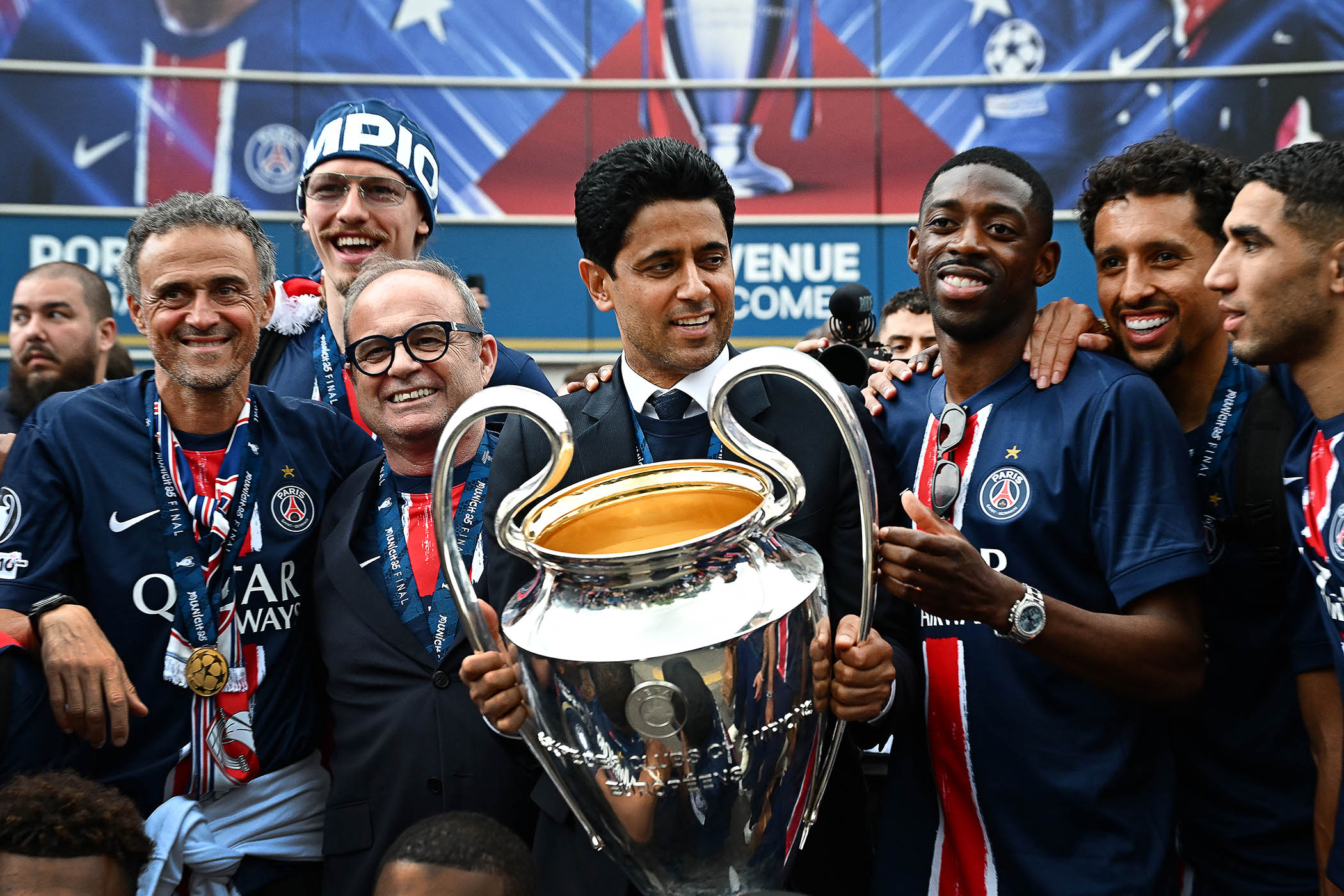
Two French teams squabbling over fixture scheduling, by contrast, seemed minor. It looked, at first glance, like a very parochial matter, albeit one being played out both publicly and bitterly: a quarrel in a faraway land between two clubs of whom we know nothing. Well, one, at least. Paris St-Germain are European champions. We know plenty about them. RC Lens, their opponents, not so much.
The squabble bears revisiting, though, because the issues that lie at its heart have a significance that extends way beyond the confines of Ligue 1. To précis: late last month, PSG requested that their league game against Lens be postponed. It was due to take place on Saturday, and it would have been a showpiece fixture, a meeting between first and second in the Ligue 1 table.
The timing of that title showdown, though, did not work for PSG: it fell between the two legs of Luis Enrique’s team’s Champions League quarterfinal with Liverpool. PSG asked that the game be moved back by almost a month, in order to give them as much time as possible to prepare for their trip to Anfield.
That sort of request is hardly unprecedented. The game’s authorities, in France, often rearrange the domestic schedule to give those teams competing in Europe a helping hand. Lens, though, took exception.
PSG’s proposal, a splenetic club statement said, would “mean that Racing Club de Lens would not play competitively for 15 days, and would then have to play matches every three days. It is a schedule that is not in keeping with the one that was set at the start of the season, and it does not work for a club who cannot deal with these new constraints without consequence.”
There are two things going on here. One is related to an increasingly acrimonious power struggle in French football. Lens, like several of the country’s other major teams, have in recent years become wholly exasperated by the influence wielded over Ligue 1 by both PSG in general and the club’s president, Nasser al-Khelaifi, in particular.
Ligue 1 has, for example, spent much of this season building out its own streaming service after the collapse of France’s domestic television rights. Most teams have been quick to realise that they have to do all they can to entice subscribers, even if that involves permitting behind-the-scenes access to cameras. Executives at clubs like Lens, Marseille and Lyon feel PSG have been rather less willing to help.
The same schism applies over long-awaited governance reforms. A substantial number of teams want to change the way Ligue 1 operates, to make it more streamlined, more efficient, more like the Premier League. There are absolutely no prizes for guessing who they believe is always standing in their way.
Lens’ statement crystallised much of that rancour. In short, PSG’s rivals believe they are behind a “worrying trend…that the French league is being relegated to a mere variable that can be adjusted to the European demands of certain clubs.” PSG’s domestic opponents believe that France’s perennial champion has a vested interest in diminishing Ligue 1.
All of that might sound slightly esoteric, nothing more than a tussle for control between different sets of self-interested executives in a league that – outside France – not many people watch anyway. But it touches on what may well be the defining issue facing modern football: the question of who the game is supposed to serve.
This is the second – much more universal – aspect of Lens’ complaint. It has long been a kneejerk response, whenever England’s European contingent fail to live up to their own expectations in the Champions League, to suggest that the Premier League should do more to help our brave boys. Why can’t they change the schedule to give Arsenal or Manchester City or whoever more time to rest before venturing into continental competition? Why can’t we do as the French do?
That managers and players – and even fans of those clubs competing – should think like this is totally natural, wholly understandable and not without merit. But that logic ignores the fact that overburdening elite teams functions as a sort of natural corrective, a check built (by accident, probably, rather than design) into the structure of the game.
Like PSG, the elite of the Premier League already have a host of advantages over opponents, both domestically and in Europe. They can buy more of the best players. They can pay the highest salaries. They can attract the finest managers. All of that is reinforced, year on year, by the access they have to the riches on offer in the Champions League. That cycle gathers speed with every new television rights deal, every negotiation with Uefa on the matter of prize money. The rich get richer, and as a result they tend to get better, too.
Nobody, at all, ever, in football has done anything to suggest they want to slow that process down or, better still, investigate a way to cap those advantages. In England, the dream of most fans is to get an owner richer than anybody else’s. In Europe, the elite have long since allowed themselves to outgrow their domestic competitions.
It should, then, be celebrated as almost the last bastion of competitive balance that success brings with it more challenges. It is (obviously) harder to compete on multiple fronts, as it always has been. Players are more exposed to fatigue and to injury. Coaches have less time to train, and more opponents to study. The air gets thinner. The challenge gets harder.
That is not a bug in the system, something to be ironed out by kowtowing to the powerful. It is a feature, something that should be guarded yet more jealously as more and more of the game’s economy flows into the coffers of just a handful of teams. It is what enables the lesser lights to compete, even fleetingly, with the engorged titans that have seized control of the game. It is one of the few ways that remain to level the playing field, just a little, to make it worth playing at all.
Photograph by AFP via Getty Images
Newsletters
Choose the newsletters you want to receive
View more
For information about how The Observer protects your data, read our Privacy Policy