


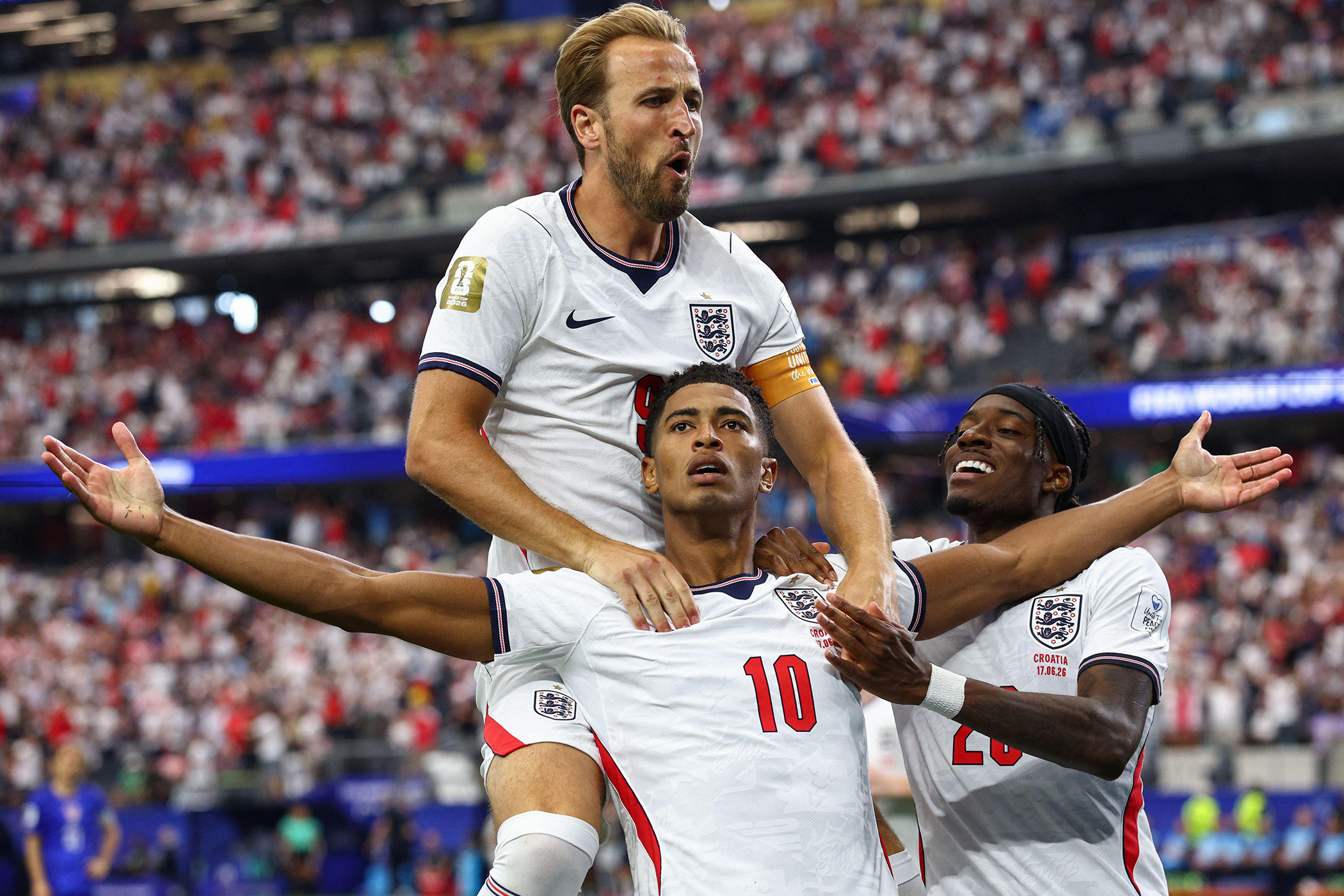
As the two-word song “Roman Abramovich” echoed around Stamford Bridge on Tuesday evening, never quite full and already emptying further, there was a reminder that Chelsea fans’ relationship with their former master remains, at best, deeply weird. Abramovich seemingly represents both a real and imagined past, a shorthand for nostalgia and indeterminate glory days, but most fundamentally for someone who is not the current guy.
Of course to a certain extent, Abramovich was the ideal owner – rarely seen and even more rarely heard from, willing to haemorrhage money – £900,000 a week for 19 years according to football finance expert Kieran Maguire – and seemingly asking for nothing in return. He redefined Chelsea’s place in the world and sense of self. Yet he is also an exiled Russian oligarch proven to have overseen systemic cheating, making undeclared payments worth £47.5m between 2011 and 2018 to facilitate the signings of seven players, including Eden Hazard, David Luiz, Ramires, Willian and Nemanja Matic.
And so, on Monday, Chelsea were fined £10.75m, given a suspended one-year first-team transfer ban and a nine-month ban on signing players from other academies. This is simultaneously a record Premier League fine and insufficient to the extent of insulting every other top-flight team, alongside the notions of fairness and adequate punishment. Chelsea have so little regard for £10m that they have previously frittered away such a sum on Cesare Casadei (17 appearances in three years at the Blues), not far from a charitable donation itself.
Somewhere in here is a discussion about what a football club actually is, a permanent institution or an ever-changing collection of people brought together by a sense of shared identity. Because yes, this was not co-owners Todd Boehly or Behdad Eghbali’s fault. Almost no trace of Abramovich-era players and staff members remains, a total generational purge.
But the current ownership and executives unquestionably benefit from the cultural and commercial capital produced by trophies inseparable from these payments. Luiz and Ramires were fundamental in the 2011-12 Champions League win, without which Hazard has admitted he would not have considered joining Chelsea, ensuing bung to an agent involved in his transfer or not. Of course, Hazard would score 30 goals and create 15 more across the two victorious Premier League seasons, alongside winning and converting the decisive penalty in the 2018 FA Cup final. And without these, the modern Chelsea would be a less attractive prospect for potential players and sponsors and investors, for fans from Kensington to Kigali. They would be a different club.
As the Premier League argued, Chelsea would have still passed profit and sustainability rules (PSR) had they declared the payments, so why hide them? Why pay them through “third-party entities” predominantly based in a Caribbean tax haven? Who is benefiting here? What’s the actual story?
A Premier League statement said that a two-window transfer ban would have been an “appropriate” sanction had there been no self-reporting or co-operation, as though this is some exceptional act of nobility, rather than both the legal and moral bare minimum, and ultimately an act of self-protection. The co-operation is only so valuable because the league appears to have had no hope or method of discerning the deceit itself. Of course, BlueCo’s lawyers and accountants discovered these payments in the process of buying the club and still persevered, effectively deducting £150m from the purchase price, held to pay any fines resulting from the previous ownership. So the only people this has really impacted are potential Ukrainian war victims – everything left from the £150m is being added to Abramovich’s frozen pile, which Sir Keir Starmer is reportedly about to sue him to gain control of.
Chelsea’s punishment exposes something between an unwillingness and inability for the Premier League to enforce its own regulations adequately or consistently. Perhaps it is fear, perhaps weakness, but handing billionaires paltry financial punishments for financial breaches is tantamount to charging interest on cheating. Everton’s first points deduction for breaching PSR established that “financial penalty for a club that enjoys the support of a wealthy owner is not sufficient”, until, apparently, it is.
Of course, this verdict is most relevant to the Manchester City case, the great impending referendum on the Premier League’s spine and strength and sustainability. The most serious charges against City span a similar period and include similar alleged offences. If time seems to have been the greatest healer at Chelsea, who is to suggest the outcome at the Etihad will be different?
One argument around the City case has always been that severe punishment would damage the Premier League brand, effectively invalidating a decade of competition. But what actually protects the brand is a sense of stringent fairness and legitimacy, that wrongdoing will be punished and sporting excellence rewarded. This is what it exists to uphold, an existence weakened by every day City’s charges linger unresolved, by nation state owners and inconsistent application of the regulations, and by this pathetic fine.
Newsletters
Choose the newsletters you want to receive
View more
For information about how The Observer protects your data, read our Privacy Policy
Photograph by Alex Caparros/UEFA via Getty Images