
“A universal player, one who transcends the modern tribal conversation around teams,” says executive film producer Dan Egan when asked why he chose to tell the story of Clyde Best, West Ham’s first Black player, whose undeniable impact extended far beyond the East End.
The legacy of Best, now 75, a Bermudian forward who blazed a trail in the English top flight and US soccer, is the subject of a new documentary in London this month.
A technically gifted and pacy player in his prime, Best’s career and role as a reference point is brilliantly illustrated by those who came after him. A number of “the firsts” look up to him: Howard Gayle, Liverpool’s first Black player, Viv Anderson, the first player of Black origin to play for England, Paul Canoville, the first to break the mould at Chelsea, and others featured in the film, bow to his sacrifice.
Best is a proud Bermudian. The island is indelibly marked by British, American and Caribbean influences, and the presence of servicemen was the backdrop to Best’s burgeoning love of sport, including Test cricket and football. As a 12-year-old he played with men from the Royal Navy stationed at the dockyard. “That’s what really got me going,” he says. “If you’re good enough, you’re old enough.” He says the men he played against would tell him he was going to “play in England one day”.
After turning out for his home village and Bermuda at just 15, it became clear how special Best was. Hungarian legend Ferenc Puskás was an admirer. Coaching in New York in the 1960s as he prepared for a career in management, Puskás implored Best to join him. But Best turned him down, citing a preference for London. Ron Greenwood, the former England manager whom Best describes as a “mathematician”, summoned him for a trial at West Ham in 1968, and he never looked back.
“Baseball has its Jackie Robinson, and now soccer has its Clyde Best”
“Baseball has its Jackie Robinson, and now soccer has its Clyde Best”
Dan Egan
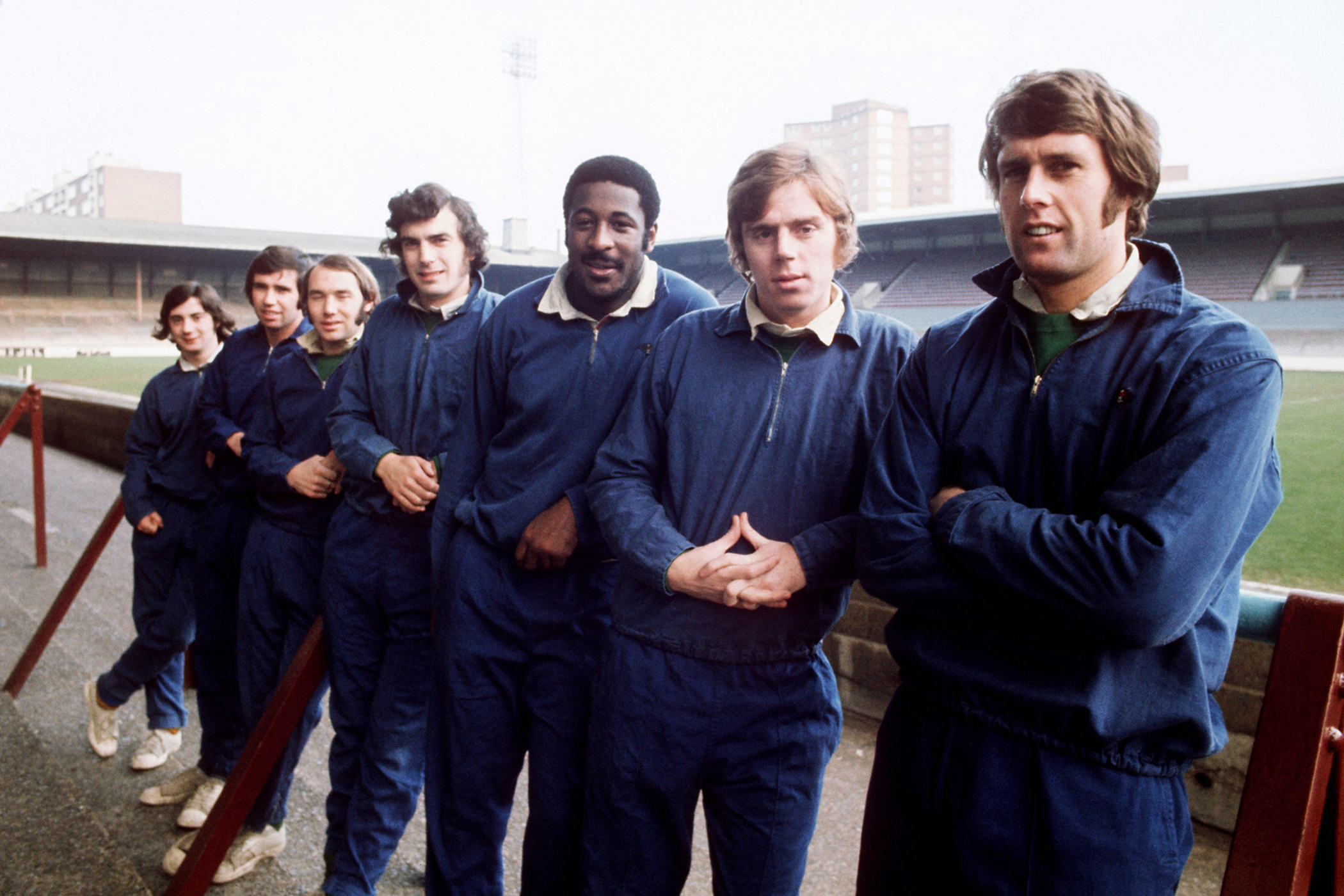
Best had watched the 1964 FA Cup final in which West Ham won their first major trophy, beating Preston, and England’s victory over West Germany in the 1966 World Cup final, and was inspired by captain Bobby Moore, Martin Peters and Geoff Hurst. “It was unbelievable,” he says, describing his awe at being in the same dressing room as them at 17.
“Because a lot of us were younger players, and we were playing with three respected footballers. Bobby Moore: a genius at playing football; Martin taught me to bend my run to match my pace; and Geoff – all those goals he scored at the World Cup were made on the training ground. They were brilliant ambassadors for West Ham and England.”
It is easy to forget the social climate that a young Best encountered when he moved to England, stoked by the fallout from Enoch Powell’s “rivers of blood” speech in the same year, which opposed mass immigration. Although Best says Upton Park was “his place”, and his time at the club preceded the period when sympathisers of the far-right National Front handed out leaflets there a decade later, not everywhere in English football had acclimatised to the presence of a Black player. “I quickly got used to racism,” he says. “You have to make a decision on how you’re going to handle it. Before I left Bermuda, my dad told me, ‘Clyde, when you go to England, you’re not playing for yourself, you’re playing for all the people coming after you, and all the people struggling to make ends meet.’”
Best recounts monkey chants, hostile crowds making noises at him, and a threat he received in the post that he would be attacked with acid. He says the diligence of his team-mates and Greenwood and his staff, as well as proving his ability, was what kept him going. He references a solo goal against Everton in 1972, as having silenced the naysayers.
Going up against the greats of his day gave him power, among them his namesake George Best of Manchester United. “George and I had a good relationship, and I always told him, ‘George, when I come to Manchester, this is your place, but when you come to Upton Park, that’s my place.’ I made him look crazy and I would tell George, ‘Don’t get angry, you had your turn. It’s my turn.’”
Newsletters
Choose the newsletters you want to receive
View more
For information about how The Observer protects your data, read our Privacy Policy
Remembering getting the better of Gordon Banks, then considered the world’s best goalkeeper, fills Clyde with glee. “It’s funny because Gordon said there are three players in the world that I hate playing against: Pelé, George Best and Clyde Best. I would give it some leather when I played against Gordon.”
Best’s time in the North American Soccer League with the Tampa Bay Rowdies and the Portland Timbers is seen as one of the first steps towards professionalising the game there. For Egan, there would be no World Cup in 1994, or this summer, without the groundwork of Best, his West Ham team-mate Ade Coker and others.
“Baseball has its Jackie Robinson, and now soccer has its Clyde Best,” Egan says. “A 17-year-old boy on a one-way plane ticket – that’s so powerful. We all need a piece of Clyde Best in our lives and we all have to overcome the belly of the whale experience. They came looking for him and he changed the game.”
Transforming the Beautiful Game: The Clyde Best Story is on at Sadler’s Wells East 25-28 March
Photography by Getty Images