

Bayern Munich had been doing the groundwork for four years. Probably more, in fact. In March 2022, Florian Wirtz was an 18-year-old of raw, shimmering promise. He was coming to the end of his first full season at Bayer Leverkusen. He was part of the national team’s plans for the World Cup. He was, everyone agreed, the future of German football.
And then, in a derby against FC Köln – the club, as it happens, where he had started out – he tore his cruciate ligament. He was devastated. The injury would cost him 10 months of his career; he would not quite recover in time to make it to Qatar that winter. (This may have been a stroke of luck: Germany were knocked out, again, at the group stage.)
In the miserable, fretful days immediately after the injury, Wirtz and his family received succour from an unlikely source. Uli Hoeness, erstwhile president but eternal powerbroker at Bayern, contacted the teenager’s father, Hans, volunteering to use his connections to get the player a fast-tracked appointment with a specialist surgeon in Innsbruck. Wirtz took him up on the offer.
Hans – and presumably Florian – never forgot that kindness. Hoeness was indelibly associated with a rival club, yet he was happy to act “selflessly”, as Wirtz Senior would later say, to help a stricken teenager. Now it would be churlish to suggest that Hoeness’s gesture was anything other than pure altruism, but it is just possible he may have had an ulterior motive.
Bayern, after all, has long come to regard the rest of German football as its own private shopping mall. For decades, the club made a point of plucking the best and brightest talent from the rest of the Bundesliga and relocating them to Munich. It was, for a long time, the perfect model: Bayern got stronger by making its rivals weaker.
For years, Bayern effectively functioned as a Bundesliga select XI, winning not just an endless stream of national titles but three European cups with sides recruited from Hamburg and Schalke and Wolfsburg and, more than anyone else, Borussia Dortmund. That was the last side to threaten Bayern’s domestic hegemony. Bayern duly picked them clean.
This arrangement worked very nicely for Bayern, obviously, and the Bundesliga always seemed curiously content with it, too. Christian Seifert, the competition’s former chief executive, tended to take the view that Bayern served as a sort of advertising board for the league as a whole; the Bundesliga benefitted from being home to a European powerhouse.
Hoeness’s early overtures to the Wirtz family, it is probably not too cynical to suggest, were an attempt to run that playbook, to make sure that when Wirtz did choose to move on from Leverkusen, he would regard Bayern as his natural next stopping point. That moment duly arrived last summer. The hitch, of course, was that Wirtz chose to move to Liverpool instead.
In the circumstances, given the longstanding charm offensive, the rebuff stung Bayern. “I have to say honestly, in the case of Florian Wirtz, it still hurts,” Karl-Heinz Rummenigge, another of Bayern’s great statesmen, said in September.
It was not, though, the first time it had happened. The Bundesliga’s clubs realised some time ago that selling players to the Premier League was preferable to waving them off to the big red machine down south. Not only are English teams willing to pay more – figures that Rummenigge has described as “financial madness” – but they do not subsequently insist on crushing all of your hopes and dreams for three to five seasons, too.
In the last decade or so, then, Bayern has watched powerless as the fruit of the Bundesliga has set off for England: Kai Havertz to Chelsea from Leverkusen, Erling Haaland to Manchester City from Dortmund, Naby Keïta from Leipzig to Liverpool. Bayern had, at one point, harboured hopes of signing all of them. None came to pass.
For a long time, the assumption was that this economic shift would lead – at some point – to a sporting one. Bayern’s wealth might enable the club to remain a dominant domestic force, but as a European power, it would struggle to keep pace not only with the Premier League, but also the likes of Real Madrid and Paris Saint-Germain. Bayern, after all, has always made a point of not being quite as imprudent with salaries as some of the club’s continental rivals.
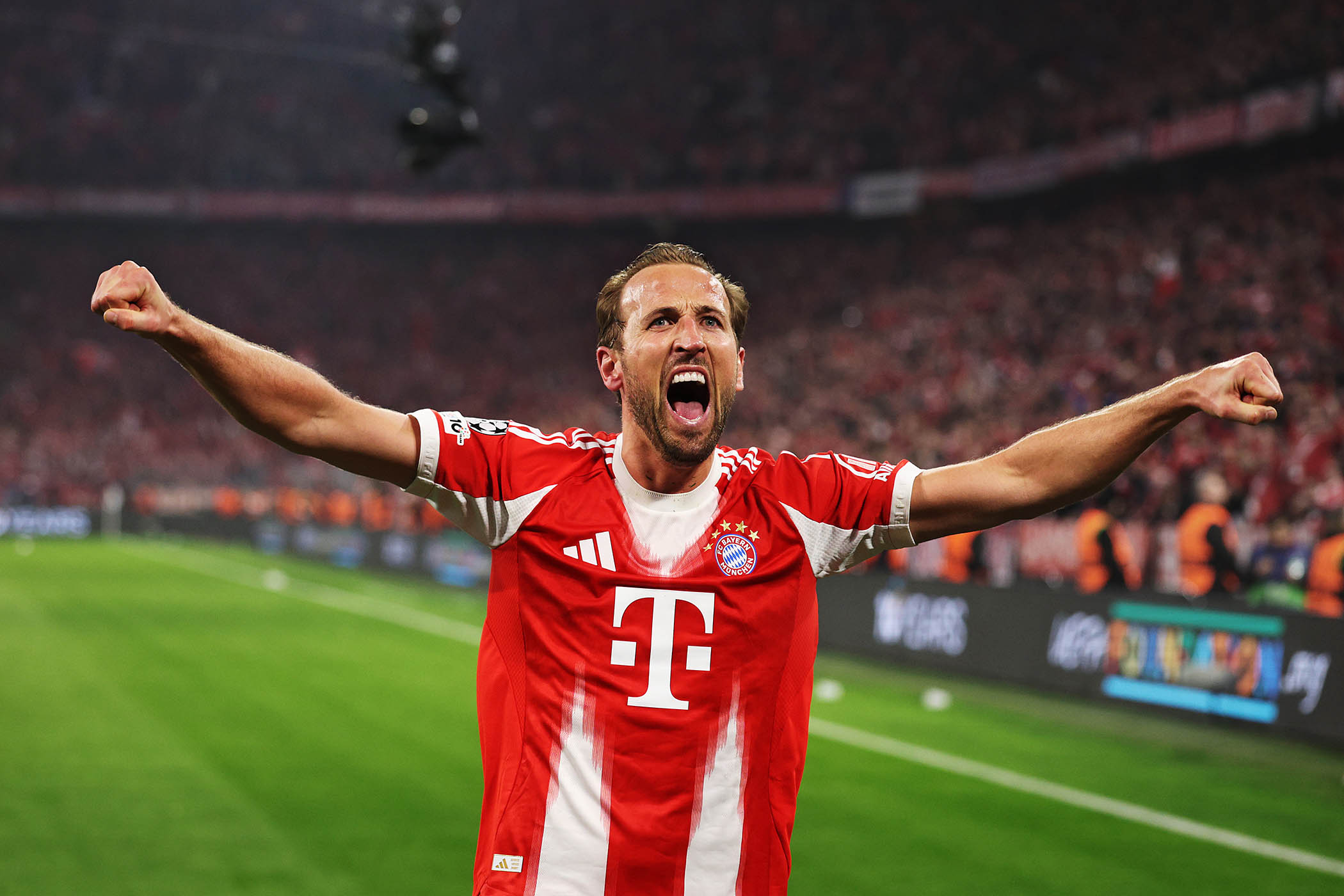
As the sight of Bayern in a Champions League semi-final this week indicates, it has not quite worked out like that. At the root of that is a shift in Bayern’s recruitment strategy that has not received the attention it should. Yes, Vincent Kompany’s team still contains a host of players extracted from their domestic rivals, frequently on free transfers, having been persuaded to run their contracts out elsewhere.
But there are also several faces much more familiar to regular viewers of the Premier League. Harry Kane, the England captain, of course. Luis Díaz, last year an English champion with Liverpool. And, possibly the most apposite example, Michael Olise, picked up from Crystal Palace and now arguably the most electrifying player in Europe.
This has not happened by accident. Bayern has, instead, smartly adapted to its new reality: rather than trying to compete with England’s elite for emerging players from the Bundesliga, it has positioned itself as an escape route for those looking to make the jump from the Premier League to the Champions League.
Three years ago, Kane, reaching the autumn of his career, wanted to win trophies. That was politically impossible within England. Bayern was his natural first port of call. A year later, the nature of Olise’s release clause at Crystal Palace meant there was no route for him to move to one of England’s elite. Bayern offered the chance to shine in Europe’s premier competition.
They may soon be joined by another; it is Bayern, reportedly, that Anthony Gordon is hoping to join from Newcastle. He fits the bill perfectly: a player keen to prove his worth in the Champions League, employed by a club that would not willingly sell him to a domestic rival. There is a gap there, and within it an opportunity. Bayern has always been very good at taking those, wherever it finds them.
Photograph by Adam Pretty/Getty Images
Newsletters
Choose the newsletters you want to receive
View more
For information about how The Observer protects your data, read our Privacy Policy