


For more on this story, listen to Doped Up! now on The Observer app or wherever you get your podcasts
On Sunday 24 May, a select group of drug-enhanced athletes will gather in the Nevada desert to compete in what has been called a “dangerous clown show” by Travis Tygart, the American anti-doping chief who exposed Lance Armstrong, more than a decade ago.
The Enhanced Games, which take place over Memorial Weekend in a custom-built venue in Las Vegas, will showcase the benefits of testosterone, human growth hormone and steroids – products banned by anti-doping rules – in what the organisers believe is a celebration of enhancement, longevity and science.
Max Martin, the CEO of the Enhanced Games, told The Observer that the event will demonstrate that “under the right clinical and medical supervision, enhancements can be administered safely to athletes” and that this will enable them to “tap into a new pocket of potential that they couldn’t naturally tap into”.
The launch of the Enhanced Games has been fuelled by the fatigue within sport with fighting doping and by the unsatisfactory and confusing outcomes of a series of high-profile cases.
“Instead of being naive and pretending that [enhancement] is not happening, we’re taking the approach to say, there is an alternative route that you can go,” Martin said. “It might not be for everyone, but there certainly are a ton of people who find this extremely exciting, which is why we’ve created this.”
But for Tygart, the CEO of USADA, the American anti-doping agency, the Enhanced Games is a betrayal of fundamental values and should act as a wake-up call to world sport’s anti-doping bodies.
He said: “It should cause us to ask ourselves, ‘Is clean sport something we value?’ And if it is, then we need to work to ensure that we deliver on the promise to athletes who choose to compete in the Olympic movement, which is fair sport done by the rules.”
I have produced a podcast for The Observer that explores the failures in anti-doping and the disillusion among athletes that has fuelled the creation of the Enhanced Games.
Tygart, a frequent critic of WADA, the World Anti-Doping Agency, has accused the global body of “turning a blind eye” to the now-infamous scandal of 2024, in which it was revealed that 23 Chinese swimmers had been cleared of doping and then allowed to compete in the Olympics.
Newsletters
Choose the newsletters you want to receive
View more
For information about how The Observer protects your data, read our Privacy Policy
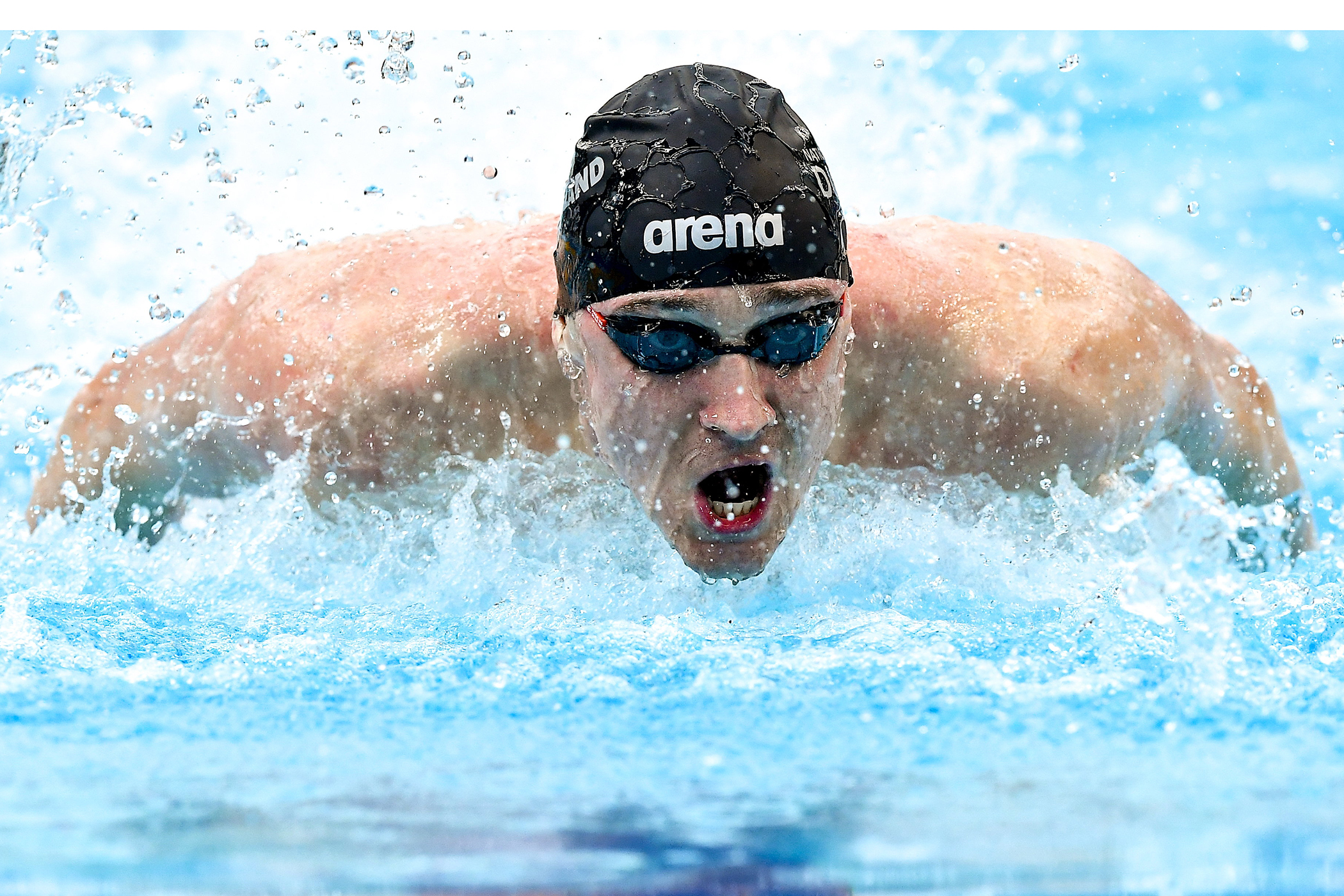
WADA’s decision to exonerate the Chinese athletes was a pivotal moment for former Olympic swimmer Shane Ryan. The Irish athlete, who will be competing in Las Vegas, has been undergoing a programme of enhancement at a training camp in Abu Dhabi.
“It’s actually not even a fair playing field at the Olympic Games,” the Irishman said. “We found out, right before the Paris Olympic Games, there were Chinese athletes that tested positive for a banned substance before the Tokyo Games.
“The Chinese athletes got medals. They weren’t stripped, and some of them were still able to compete in Paris,” he added.
“I’m like, ‘How is this system so rigged?’ It’s just not a fair thing. It really drove me up a wall, and I felt like I wasn’t being respected or even just given a fair chance.”
In a statement, WADA told The Observer that it had acted “in accordance with the rules” and that it had shown “no bias towards China whatsoever”.
“WADA is independent and apolitical, treating all athletes equally under the World Anti-Doping Code, regardless of where they come from,” they said.
Despite that, a growing disillusion with the anti-doping system, allied to a sense that not all athletes are equal and that the system favours the powerful and wealthy, was further reinforced by retired cyclist Lizzy Banks.
Like the 23 Chinese athletes, Banks fought a positive test for contamination. She was exonerated by the UK Anti-Doping Agency, which accepted she was not at fault, but this was only after spending her life savings, losing her career and suffering from suicidal thoughts.
Ironically, Banks had been a vociferous advocate of anti-doping and had believed in the system. “It just felt like something you had to do – a hoop you had to jump through,” she said.
“And if that was what was required to keep the sport safe and clean, then no problem. The problem at the moment with anti-doping is that if you’re a careful athlete who does everything that they can to avoid a banned substance, and yet you test positive through contamination, it is almost impossible to find the source.”
The trauma of reliving the battle to clear her name still reduces Banks to tears.
“I worked so hard and I sacrificed so much to be successful in sport and to have a career in sport,” she said. “I missed the births of family members. I missed weddings. I missed so many events that I will never be able to get back.
“Everything was taken from me because the people who work at WADA refuse to acknowledge their responsibility and act properly. They don’t care.”
But is the Enhanced Games more than a moment, a brand-building exercise for pharmaceuticals and tech bros?
“It’s a sporting endeavour, and it’s building out a consumer business that will improve millions of people’s lives,” Martin said. “In the first year, we’re going to have roughly 50 athletes. Over 10 years, we will have 500 athletes that have benefited from all of the work we’re doing. We actually decided that we want to make enhancements accessible to broader society and consumers as well. All of the work we do with athletes is going to inform how we can build a product portfolio and improve prescription guidelines for our consumers.”
Tygart maintains that the responsibility now lies with the anti-doping movement to fight back. “It pains me when I see athletes join the Enhanced Games, or others who say that the reason they left was because the system let them down,” he said.
“That’s incredibly personal to those of us in our organisation. And if it [failings in anti-doping] truly did have something to do with that decision, then that’s a call to us to step up and do more to ensure that that doesn’t happen.”
Caught between an anti-doping system they have lost faith in and opportunistic entrepreneurs who seek to exploit their performances for commercial ends, are the athletes themselves.
“Most of the time, I just feel like I’m screaming into the void,” Banks said. “I think what I have done has made people aware of the failings in anti-doping, but it is a real problem that many athletes are facing today.”
Photograph by Piaras Ó Mídheach/Sportsfile via Getty Images