
A shoal of cameras followed Frank Lampard as he prowled across the penalty area, soaking in the adulation of Coventry City’s euphoric fans. There were eight photographers, a couple more capturing the moment for socials, and one television crew, walking at a slight crouch, the unnaturally low angle designed to cast their subject as a colossus.
It had been the same during the game. At every turn, Sky Sports’ cameras had flicked to Lampard, the story of the 90 minutes mediated through his reactions: a mask of agony as his side struggled in the first half; sinking gloomily in his seat when Ryoya Morishita gave Blackburn the lead; embracing his staff when Bobby Thomas equalised and Coventry, after 25 long years, knew they were about to return to the Premier League.
That achievement has for much of the season been presented to no small extent as his; ever since his appointment in 2024, the club have been unofficially nicknamed “Frank Lampard’s Coventry City”. This is because Lampard, rightly or wrongly, sits comfortably above Coventry in modern football’s taxonomy of fame.
He is one of the defining figures of the Premier League era: not just as a serial winner, his résumé spangled with domestic and European honours, but as a central character in the rolling drama of the game for the better part of two decades. He was a pillar of the golden generation, likely the most high-profile group of players the country has ever produced. Like many of his peers, Lampard’s profile broke the boundaries of sport and took root in actual celebrity.
Coventry, on the other hand, have been a lower league team for a generation. Timing matters. In the spring of 2001, just as Lampard was preparing for the move to Chelsea that would make him a household name, Coventry were busy getting relegated. As the Premier League transformed from national obsession into Britain’s dominant cultural form, they were absent.
A quarter of a century on, it is no surprise that Lampard’s name recognition outstrips that of the club who employ him. The same thing happened to him at Derby, to Wayne Rooney at Birmingham City. The institution sits downstream of the figurehead; in that context, it is natural that the end of Coventry’s long wait has been understood through the lens of Lampard’s own redemption arc.
But the club’s promotion is not a story about the restoration of the 47-year-old’s reputation. Rather, it is one about the long-awaited revival of a team whose fans have suffered more than most over the last 25 years.
It was fitting that Coventry should have been promoted at Blackburn. Both clubs know what it is to be a cautionary tale, to be trapped in a cycle of drift and despair in the hands of owners who seem to be holding on to their asset less out of belief they can make it work and more out of a pigheaded refusal to accept things have gone wrong.
Coventry toiled under the miserable, futile ownership of Sisu, a hedge fund which bought the club in 2007, for more than a decade, long past the point when anyone remembered what had attracted it in the first place. They sank as low as the fourth tier. Not once but twice, disputes between the owners and both the local authority and the landlords of the CBS Arena forced them into unhappy ostracism, playing home games first at Northampton and then at Birmingham City.
Crowds dwindled and loyalties frayed. The decline, many assumed, was terminal. Under the ownership of Doug King, under the management first of Mark Robins and now Lampard, Coventry have returned from their wilderness. And the impact of that will resonate far beyond sport, into the city itself, a place that has always been a synonym for obscurity now cast into the world’s brightest spotlight.
Newsletters
Choose the newsletters you want to receive
View more
For information about how The Observer protects your data, read our Privacy Policy
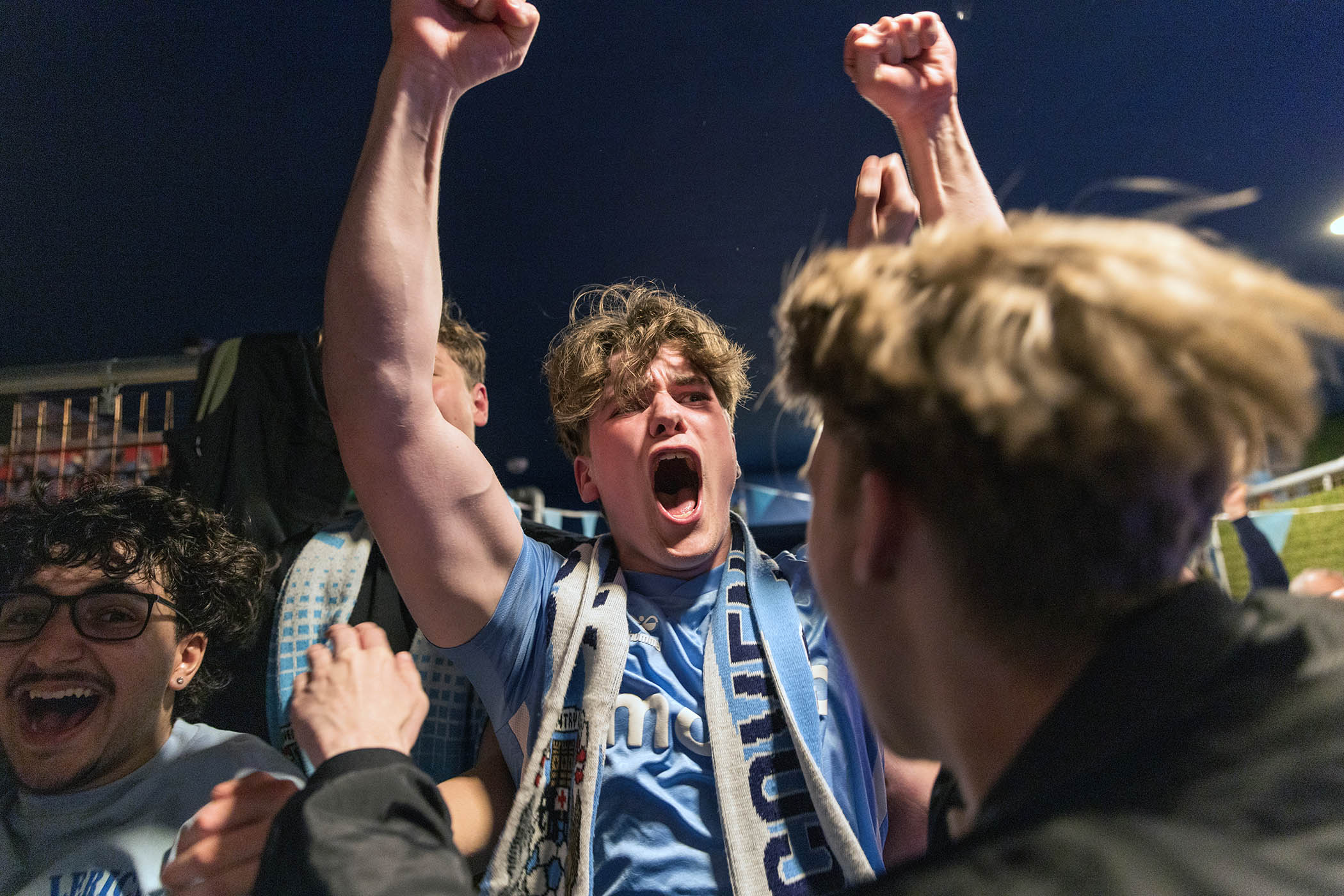
In theory, 7,100 Coventry fans made the journey north to Blackburn on Friday night, determined to bear witness to the moment that their agony ended. That felt like a conservative estimate. The wholeof Ewood Park’s Darwen End had been handed over to them. The fans streaming down Bolton Road, thronging pubs and brandishing flares, seemed to be wearing nothing but sky blue (and occasionally the roadworks orange of the current away kit).
‘Coventry is starting to see the economic benefits of promotion already’
‘Coventry is starting to see the economic benefits of promotion already’
Corin Crane, CEO of the Coventry Chamber of Commerce
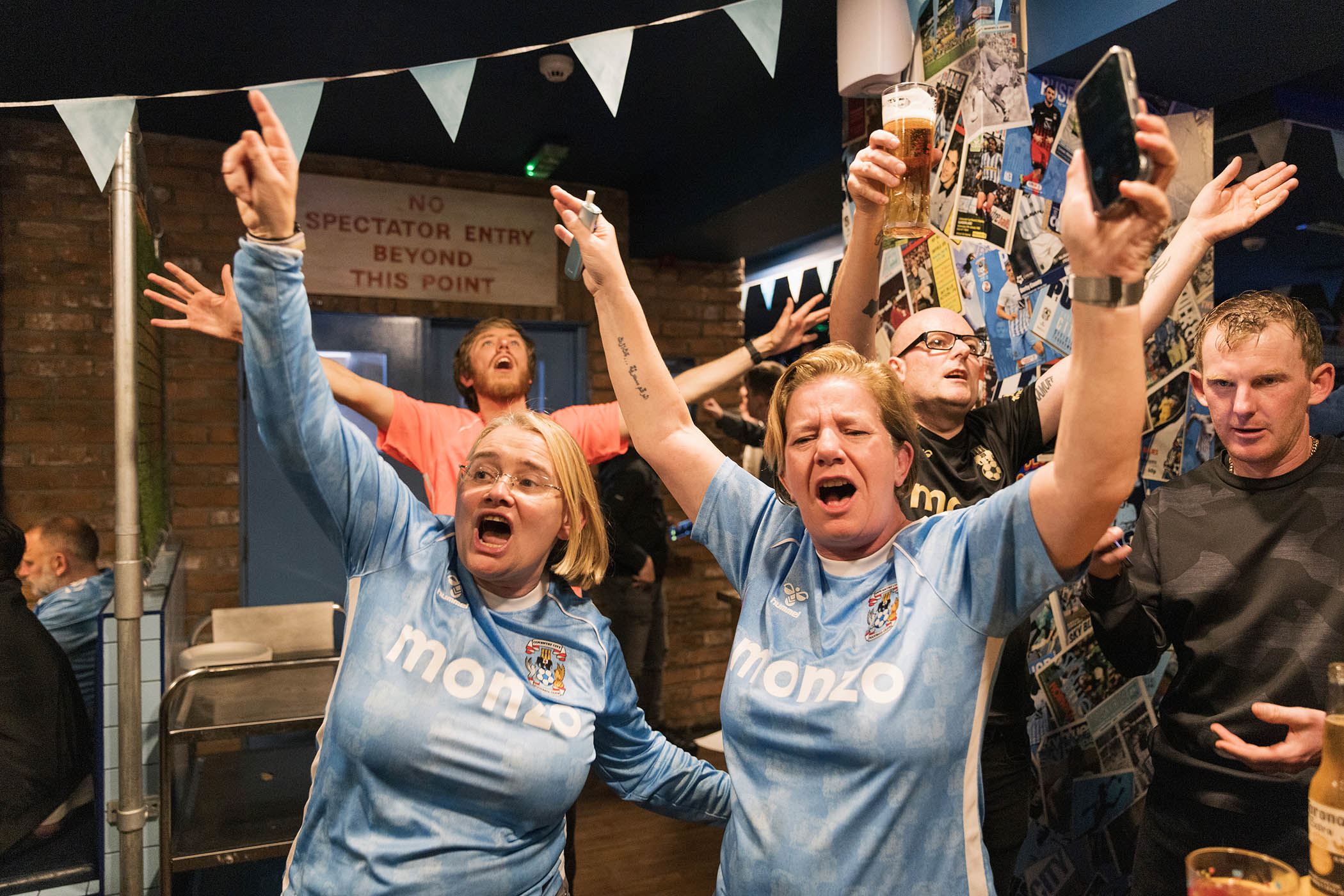
Those who had remained behind did their best to recreate that feeling. “All of the bars have been selling tickets for people to watch,” said Corin Crane, chief executive of the Coventry and Warwickshire Chamber of Commerce. “They’ve all sold out. The city’s starting to see the economic benefits of promotion already.”
This is traditionally how we think of the secondary effects of a club reaching the Premier League. For the city the team call home, it is presented as an immediate cash infusion, a sort of slow-rolling lottery windfall for the hospitality industry: a sold-out stadium means thousands more fans flocking into town every couple of weeks, spending money in pubs and restaurants. Quite how much money that will bring in is contingent on multiple factors – the number of pubs, the number of fans, the size of the city – but it is substantial.
The accountancy firm Ernst & Young estimated last year that the Premier League adds £9.8bn to the British economy; earlier figures, cited by Invest in Nottingham after that city’s return to the Premier League, suggested that fans spent £442m in regional cities in the 2019-20 season. The vast majority of that comes from international visitors.
But that instant spend is, according to Crane, only part of it. Studies show that cities which boast Premier League football see increased admission applications at their universities; relegation, researchers from the University of Stirling found, can lead to as much as an 8% drop. “You see that the development land around stadiums goes quicker,” Crane said. “There are more investment enquiries, more confidence. There are quite substantial economic benefits.”
King’s approach is likely to make that even more pronounced in Coventry’s case. He has committed the club to helping as many local businesses as possible, ensuring the whole region benefits from their success. “They have a deal with Dhillon’s Brewery to supply drinks,” Crane said. “Even the place they get their paper cups is only a couple of miles away.”
The real shift, though, is more of a slow-burn. “What we can see is that if you can sustain Premier League football, rather than just going up and then coming straight back down, that’s where it makes a real difference,” he said. “If you can stay up for four, five or six years, if you’ve prepared for it in a proper way, city-wide, it accelerates everything.”
Almost an hour after the final whistle had blown at Ewood Park, the stewards had finally succeeded in ushering Coventry’s players and staff away from their fans. The travelling support had worked their way through their entire songbook, offering hymns to the squad that had realised their dream.
Their final offering, though, was a touch more plangent. Coventry’s fans have adopted the refrain from We’ll Live and Die In These Towns – “Don’t let it drag you down now” – as a sort of unofficial anthem in recent years. The song by the local, Coventry-supporting band The Enemy is an almost Platonic ideal of the brand of music labelled “landfill indie” by the journalist Andrew Harrison.
“The [landfill] scene booted open the door for people from outside London to become full-time musicians by singing about what they knew,” Vice wrote in a retrospective. “[That was] what most British people know: that their post-industrial home town … was and is shit, that youth is precious and fleeting, and that the most reliable modes of escape are romance and drinking.”
That the fans have embraced it suggests they, and the band, know that description might be said – by others, not by The Observer – to fit Coventry as much as anywhere else. And that, of course, is the problem: that in the eyes of outsiders Coventry is anywhere else; beloved by its inhabitants, but just another of these towns, the places where “nothing happens to people like us”.
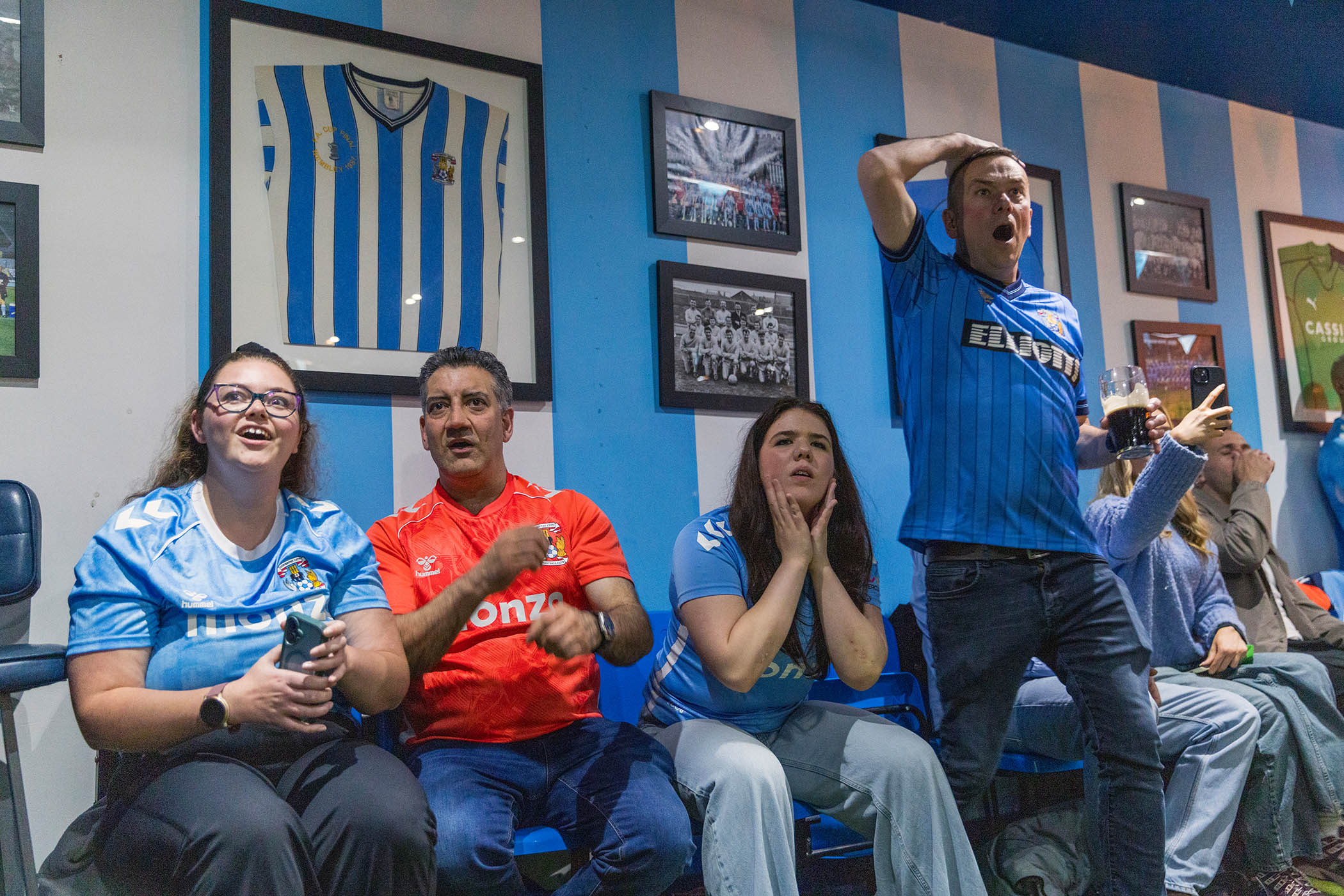
This, more than the money, is the true benefit of promotion. The Premier League may now rank as Britain’s greatest soft power export, above even the BBC and a scandal-ridden Royal Family. It boasts of being broadcast into 900 million homes across the planet; even if that is an exaggeration, it is undoubtedly a global phenomenon.
Being part of it offers a place that might otherwise struggle for recognition – Sunderland, Bournemouth, even Leeds – access to a form and scale of renown that would be unattainable without it. Coventry’s primary international identity from August will be that it is home to a Premier League football team.
That, in turn, provides what the academic John Crompton described as “psychic income”, the civic pride that a place can take in being home to an elite sports team. There is a value beyond the financial in being from somewhere that people have heard of; a sports club, researchers from the University of Pamplona found, “serve as important community anchors, reinforcing local identity and fostering a sense of belonging”.
That is something that King, in an interview with the Coventry Telegraph, showed he understood instinctively. “Part of the reason why I did this is because I understand how important football is to a community,” he said. “How a football team represents their community is important. It’s visible. Other towns and cities see what’s going down.”
After a quarter of a century, thanks to King and to Lampard and to their fans, that is true of Coventry once more. The team are back in the spotlight. People can see the city again.
Photographs by Gary Calton for The Observer