
The noise of a World Cup stadium is never quite right. Somehow, it just does not quite sound like football. The sport’s sonic backdrop varies from country to country, of course, in melody and pitch and rhythm, but generally it functions as a call-and-response, a Greek chorus providing a soundtrack to the game.
The World Cup is not like that. Instead, the noise tends to feel slightly hazy, indistinct, as though it is underwater. It often appears to be unrelated to events on the pitch, the most important game of many players’ lives conducted against a sort of semi-permanent cocktail party hubbub.
This phenomenon did not start in 2026; it has been the case for at least the last four tournaments. It is not something that can be instantly blamed on the nefarious attentions of the United States. There have been exceptions: England in the Azteca, England in Argentinian Atlanta, Ecuador in New York and New Jersey.
But it has been especially pronounced this time around. The games have been good, sometimes great. The stories, the intrigue and the romance, have been as good as ever. Spain and Argentina contain all the requisite epic qualities for a final.
And yet it has felt as though a rubicon has been crossed. The line between sport and entertainment has always been thinner than we generally care to admit; the World Cup has long had a dual identity, both a great global pageant and a ruthless athletic competition.
Regardless of who wins the final, the great legacy of this summer might well be that it represented the point that the balance between those contrasting forces shifted irrevocably in one direction: football’s grandest stage is now nothing but an entertainment business.
The most on-the-nose example is the halftime show that Gianni Infantino, the Fifa president, has foisted upon us. This is in direct contravention of the laws laid down by the International Football Association Board, which has always rejected it on the grounds of player wellbeing. No longer. That is how a sport would think.
It is also part of a pattern of Fifa bending its own rules. The decision to remove the suspension that would have ruled Cristiano Ronaldo out of Portugal’s first two games felt cheap at the time and seems downright troubling now; that provided the precedent for President Donald Trump to thumb the scales to get the USA’s Folarin Balogun off a ban. This is more than just Fifa bowing to political pressure; it is the deliberate adoption of a policy that dictates that the stars should be on the field. What matters more than anything else is the product.
There are, though, many more. When Fifa dispensed with the pretence that hydration breaks were to take on liquids, it was an attempt to commercialise what might have been three wasteful minutes in which we were not being told to drink Powerade.
The format itself, likewise, with the expansion from 32 to 48 teams pushed through with no regard for the quality of play or the integrity of the competition. Both were rooted in the logic of entertainment, rather than sport: not just “people like it, let’s make more” but the idea that anything that can be sold should be sold.
Newsletters
Choose the newsletters you want to receive
View more
For information about how The Observer protects your data, read our Privacy Policy
In the ticketing feeding frenzy, where profit was highlighted as the only thing that mattered, seats sold first on the open market – meaning a tacit abolition of the longstanding principle that fans of opposing teams should sort of be kept separate – and then on the resale, Fifa took a cut. But then, as far as Fifa seemed to see it, the people in the stadiums were not fans. They were customers. That the games had noise but for the most part lacked any sort of recognisable atmosphere was the consequence. A lot of people were there to witness the spectacle. Only a precious few, comparatively, were engaged in the business of creating it.
Infantino’s bet was the same as he made previously, and of his inglorious predecessors. The best measure of the World Cup’s greatness, its power and its meaning, is the extent to which it can retain its gleam even as those who should be its protectors seem determined to tarnish it.
For all the fears before the tournament started – the politics, climate change, pricing and the choleric nationalism of Maga – we should hold our noses and admit that this World Cup has, ultimately, worked.
Admittedly, Infantino was helped in that by the surprise absence of president Trump, his bosom pal, who seemed to forget about it until the third week, when he interceded to ask for favourable treatment for the US and got them knocked out in the process.
Most of his other gambles, though, have paid off. The stadiums have been full on all but a handful of occasions. Television viewing figures in the US have been astonishing. The expansion of the group phase might have reduced the stakes in any given game – there were two weeks of empty calories, a sporting equivalent of a sugar rush, a bender – but the quality of play did not dip, not meaningfully. Most teams justified their inclusion, on the pitch or, failing all else, off it.
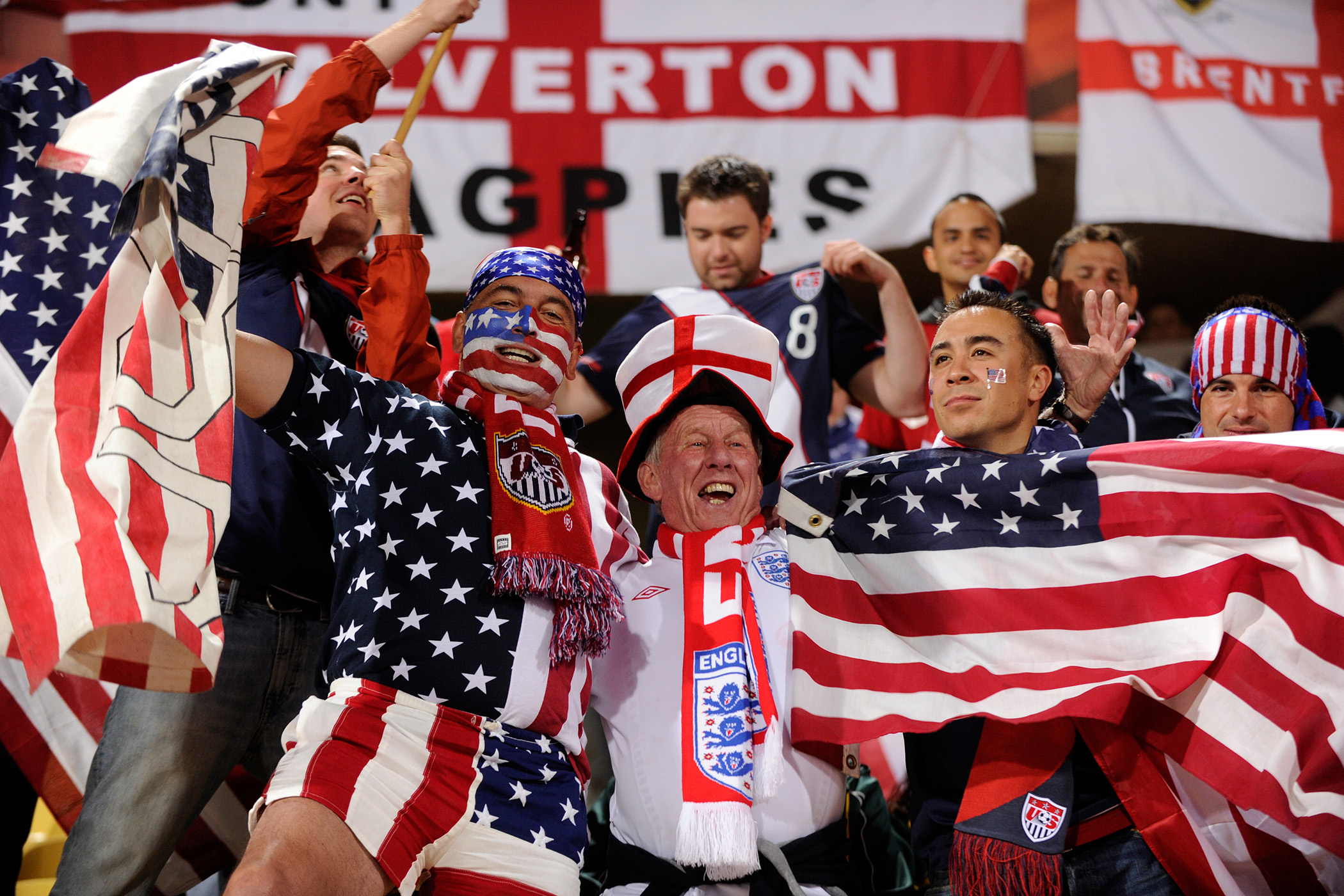
It is the ghost of that, more than the eventual victors, that may well linger longest in the US: the Tartan Army’s takeover of Boston, the dancing Dutch in Dallas and Kansas City, the Brazilians and Ecuadorians and, yes, the Argentinians are the images that will have reached the greatest number of Americans, this great wave of foreigners that came to their country – and to Mexico and Canada – and seemed so taken with it, so joyous in it.
Some will become fans of the sport, this the first step on a lifetime of misery and bitterness and expansive conspiracy theories about why all the referees are from Manchester; others might not, but they will probably still be happy to concede that the World Cup is, indeed, quite good fun.
That it is, in a way, might be the root of the confusion. The strength of this World Cup, of any World Cup, is the fans who travel around the world to watch, and those who welcome it to their home. They are what has made it so compelling.
The danger is that Fifa draw a very different lesson; that its success is their own handiwork, then use this as proof of concept for more changes, more chances to sell. That the wonder of Curaçao and Cape Verde and Lionel Messi and all the rest is harnessed to make more money, to play more games, to take the pinnacle of global sport and turn it into just another form of entertainment.
What are your thoughts on this? Send us a letter to letters@observer.co.uk
Photograph by Matthew Ashton/AMA/Corbis via Getty Images