

Shortly before kick-off in Dallas on 17 June the England starting line-up to play Croatia will drop and everyone will say: yeah, that’s about right.
Unless Thomas Tuchel has some secret plan the team to kick off England’s 2026 World Cup campaign will be something like: Pickford; James, Konsa, Guéhi, O’Reilly; Rice, Anderson; Saka, Bellingham/Rogers, Gordon; Kane. Nobody will remember the Ides of March of the Uruguay and Japan games. But that doesn’t buy Tuchel a pass for wasting two warm-up games.
England tournament build-ups are a cabaret that speak reliably of the country’s character. We may never again see England players in a dentist’s chair having shots poured down their gullets and all over their ripped attire – or a small midfielder being shoved into an overhead luggage compartment – but the intrigue endures.
This isn’t 1996, when the Hong Kong Jump Club binge preceded Euro 96. Nor is it 1966, the last time England’s men won a trophy, when Alf Ramsey had to tame the wild horse of a drinking culture. The Gareth Southgate era too has passed, so there will be no more praise for cultural resets.
Drinking has failed. Emotionalism has failed. Picking the right hotel, in town, or isolated, has failed. Benign patriotism and good causes in the Southgate era fell short and made him enemies on the woke-obsessed right as well as progressive friends.
So what we’re left with is science, reason, data, the micro-managed products of the Premier League academy system and, er, Harry Kane, a superstar in dire need of an understudy. Even Laurence Olivier had one: Anthony Hopkins, on one occasion.
Tuchel’s camp seems methodical and grown-up. On the principle that England need a manager who’s unlikely to repeat the errors of the past, he remains a fair bet. But things had better liven up in the two final preparation games – against New Zealand (6 June) and Costa Rica (10 June). A little urgency wouldn’t go amiss.
There used to be a quaint idea that you played your likely starting XI three months out, to give your best combination time to practise and coalesce. England, on the other hand, turned make-your-mind-up time into a data-driven fog of enforced rest, injury pull-outs and incomprehensible rotation.
“International breaks”, already loathed by Premier League addicts, aren’t enhanced by block auditions, pre-emptive strikes against summertime fatigue and last-minute scrambles to find a Kane-lite. Last week’s torpor wasn’t even relieved by results: a 1-1 draw with Uruguay and 1-0 defeat by Japan.
Wembley Stadium, bless it, has never been converted to the idea that performances matter more than results. Even when greater realism set in during the nadir of 2008-2016, England’s followers were inclined to think the job of foreign teams visiting London was not to participate in a mutually productive learning process but to be torn apart.
Newsletters
Choose the newsletters you want to receive
View more
For information about how The Observer protects your data, read our Privacy Policy
Decorum has improved since Bobby Robson was spat at in the 1980s but Tuchel joins Fabio Capello and Sven-Göran Eriksson among overseas England managers who will have found Wembley more of a syndrome than a stadium.
In a week when stampeding into football grounds (tailgating) was declared illegal, a greater danger in the Uruguay and Japan games was that England fans would hurt themselves rushing out.
No major entertainment form can afford to bore its audience into throwing paper aeroplanes. Tuchel would be within his rights to ask: “What pre-tournament formula has worked before in your 60 years of pain? Would you prefer to stick with the old anguish or might a new approach be overdue?”
The latter, many of us would argue, without quite stretching to splitting a March squad into two groups, or 11 changes, or mass substitutions, or a chaotic last look at Dominic Solanke and Dominic Calvert-Lewin.
Tuchel’s handling of Phil Foden, meanwhile, was surprisingly frantic. First he tried him in assorted midfield roles in training, then tested him as a false No 9. Tuchel transmits the impression of knowing his own mind but seemed in those two warm-up games to be seeking evidence he should have by now. He will have amassed more information about this England generation in Premier League games than from the false rhythms of international friendlies or easy qualifying wins.
The Uruguay and Japan games are time in our lives we’ll never get back. Proving that James Garner is quite good can’t compensate for the fact that England’s best World Cup XI will take to the field in Dallas as familiar strangers to one another. By then they’re meant to be a hardened fighting force.
It’s not all ominous. Tuchel has won a Champions League title and the league in Germany and France (with Bayern Munich and Paris Saint-Germain). You would expect him to be able to make smart decisions in games and as the tournament unfolds, even though he has never managed in one.
His nationality and intelligence should guide him clear of English entitlement and fatalism. What use is the “60 years of hurt” shtick to a German manager hired specifically to do what Southgate was unable to – win the defining knockout games? But in deferring to the Premier League “fatigue” mantra against Uruguay and Japan, he sent the country and his own players a message laced with anxiety.
Instead of reassurance and momentum, he offered indecision and hints of trepidation. The country prefers a bolder build-up, however many times it has come to nought.
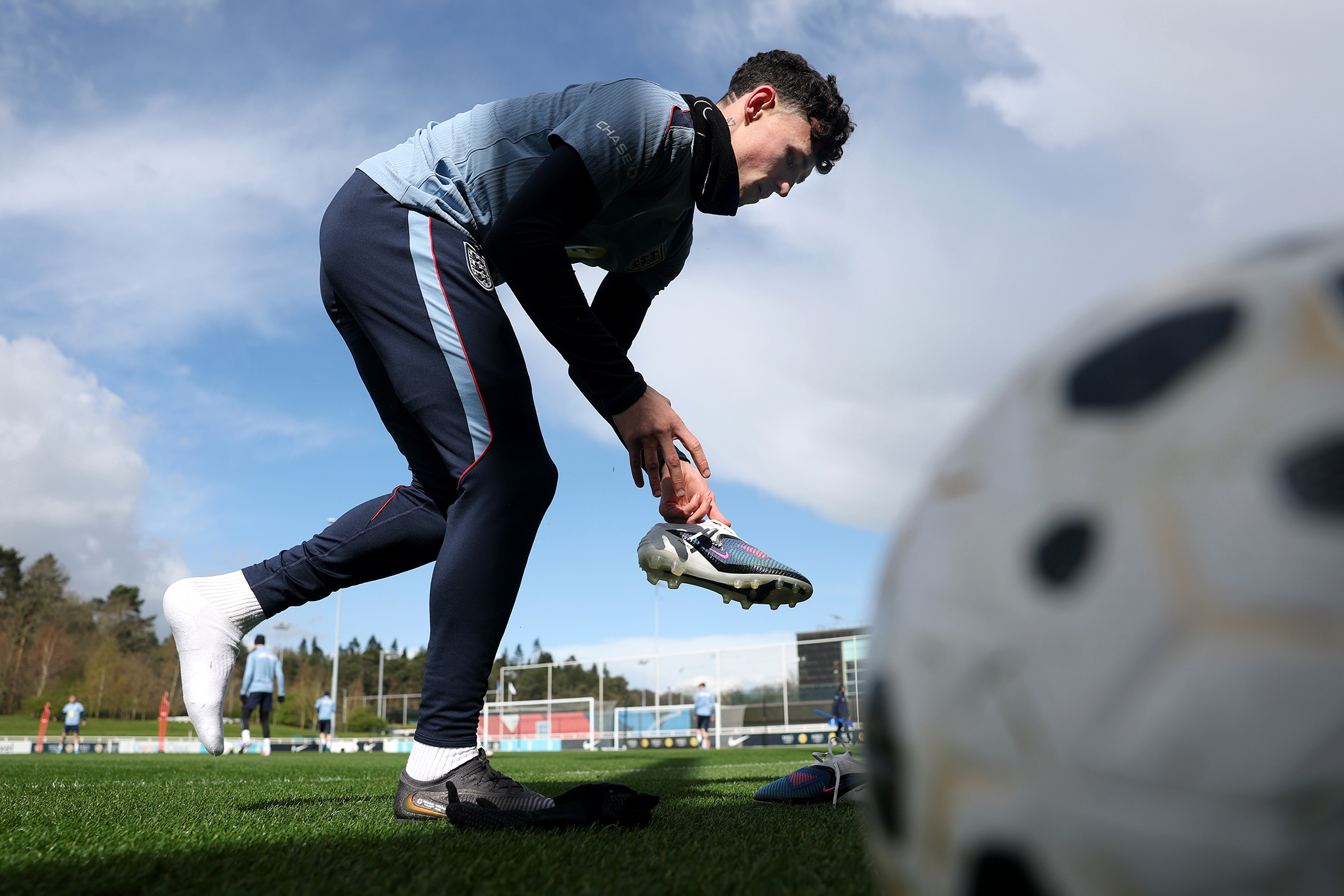
Photograph by Eddie Keogh – The FA via Getty Images