
In a parallel universe – or perhaps just a different country with alternative sports funding models and broadcast deals – Charlotte Gower’s extraordinary exploits might have prompted a trip to Salford on Thursday evening, to take her place alongside the great and the good nominated for the BBC Sports Personality of the Year.
You can be forgiven for not knowing Gower’s name; few outside of her small sporting island do, which is – on many levels – a source of shame.
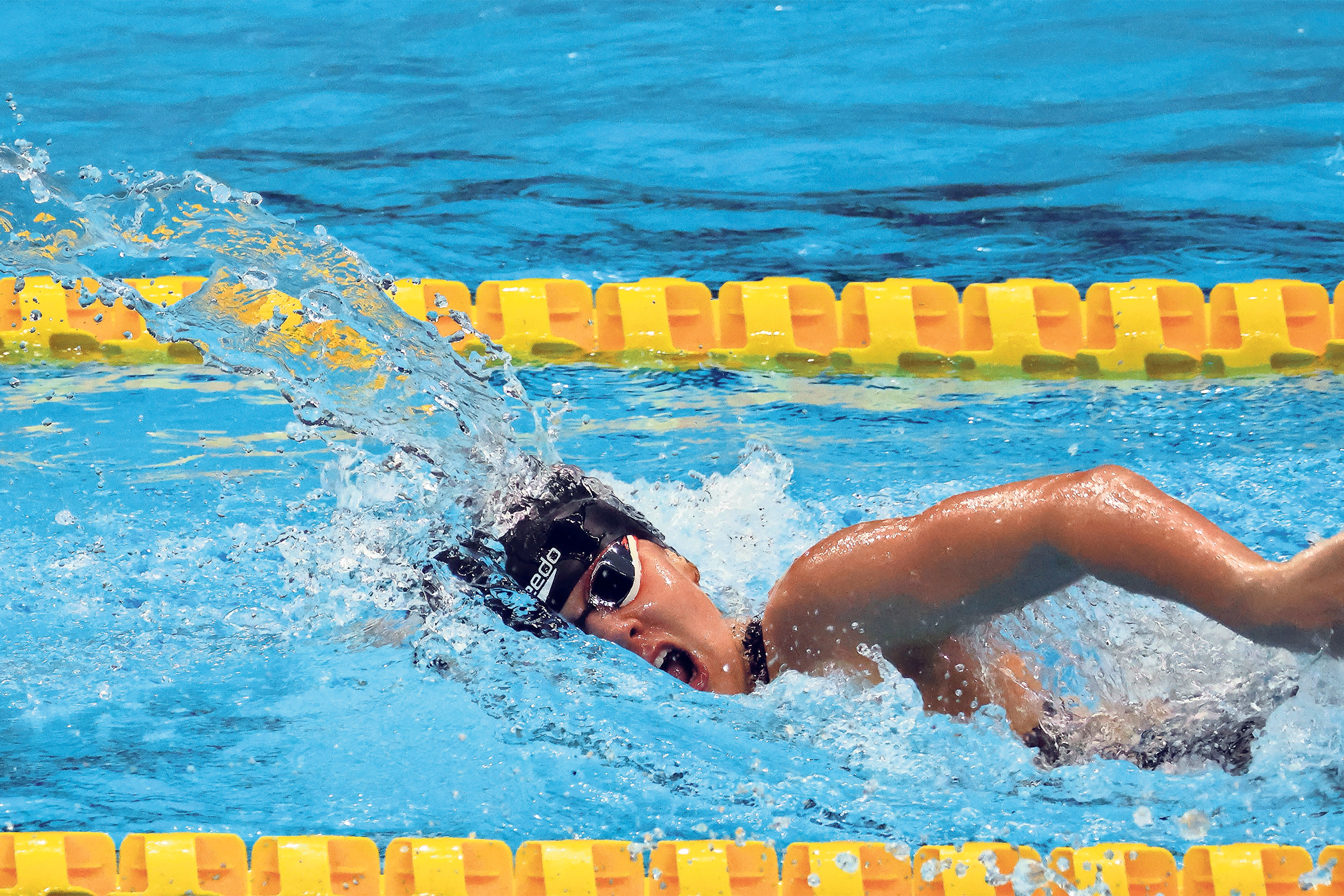
Hailing from the small Midlands village of Dunchurch, just outside Rugby, Gower is largely like any other 16-year-old studying for GCSEs, while dreaming of grander things. Last month, she achieved some of them when winning seven swimming medals, including three golds, at the Deaflympics in Tokyo.
Only one person, out of almost 3,000 that competed at the world’s biggest competition for hearing-impaired athletes, claimed more individual medals than Gower, who was one of the youngest competitors at the 18-sport event, and part of a small minority without any financial backing. In the deaf sporting community, Gower is deserving of her star status. In wider society, recognition is negligible, reflective of Britain’s contemptible attitude towards its deaf sportspeople.
Over this current four-year cycle to the Los Angeles 2028 Games, GB’s Olympians and Paralympians are funded to the tune of £330mn from UK Sport. It is one of the most acclaimed funding structures in global sport, affording hundreds of athletes the opportunity to devote their lives to their craft. By comparison, their deaf counterparts receive nothing.
With no category for hearing-impaired athletes in the Paralympics, deaf sportspeople instead compete at the Deaflympics. Held every four years, they are the longest running multi-sport event after the Olympics, established in 1924 – almost 40 years before the Paralympics were born.
In many countries worldwide, Deaflympians are treated the same as their Olympic and Paralympic counterparts – funded and celebrated equally, with no discrimination between events. UK Deaf Sport, the country’s governing body, estimates that 80% of the 79 nations competing in Tokyo were government-funded. Britain was not one of them, leaving each of their athletes to stump up £4,000 to compete.
“I think it’s very unfair,” says Gower, who is profoundly deaf in one ear and partially deaf in the other. “It’s quite upsetting because I still have a disability. The fact that all the other disabilities are grouped together in the Paralympics and they can all compete together just feels a bit like this disability is being excluded; like being deaf doesn’t count.
“We get provisions to help us in everyday life, but for some reason, in sport, we don’t get that – we’re pushed aside and told to compete with able-bodied people.”
There is a lack of funding and recognition for deaf athletes, they feel marginalised
There is a lack of funding and recognition for deaf athletes, they feel marginalised
Rachel Gower, Charlotte’s mother
The overwhelming majority of the time, that is precisely what Gower does. She is ranked inside the top 10 nationally for her age group across a number of disciplines and contested the 200 metres backstroke at this year’s senior Aquatics GB Swimming Championships.
Newsletters
Choose the newsletters you want to receive
View more
For information about how The Observer protects your data, read our Privacy Policy
That is, says UK Deaf Sport chief executive Chris Ratcliffe, highly uncommon. Fewer than 20 deaf athletes globally have ever competed at Olympic level.
“If you’re born deaf, it’s very likely that you won’t really have an opportunity to learn and develop the skillset to be good at sport until much later on for a range of reasons like access to communication, social isolation, and an inability to understand coaching instructions,” says Ratcliffe, who played water polo at the 1985 Deaflympics.
A few weeks before Britain’s unfunded athletes won a combined 12 medals at the Tokyo Games, Ratcliffe was part of a group that spoke to Parliament’s Culture, Media and Sport Committee, urging politicians to change the remit the government imposes on UK Sport focusing investment on Olympic and Paralympic disciplines.
“The only support I get is people’s sympathy,” swimmer Harry Hughes told them. “I’m at the point where I don’t want people’s sympathy anymore – I want action.”
A lack of funding meant Ratcliffe even had to act as a caddie to GB’s golfers in Tokyo, where he says he felt like he was “standing outside a shop with a wonderful display of goods that I cannot afford or have”.
“I feel very strongly that the deaf community in British sport is a poor relation in the disability sector. My operations manager always reminds me that our success is funded by bake sales. It’s not quite as crude as that, but we receive no support for training or preparation for our elite athletes.”
So scarce is Deaflympics coverage that Gower did not even know of their existence until last year. Like many of her GB team-mates, she fundraised her way to Japan, undertaking a 9.5km swim to replicate the 9,500km journey from London to Tokyo. Her achievements there saw her selected as flagbearer at the closing ceremony, but the response has been muted since returning home.
“The recognition from the people I know has been amazing, but it’s been a struggle beyond that,” she says. “I can say I won seven medals, but I have to tell people what the Deaflympics are first, which makes things harder.”
Her mother, Rachel, has since written to Lisa Nandy, Secretary of State for Culture, Media and Sport, pushing for action.
“I feel it’s such a wasted opportunity to celebrate success,” says Rachel. “The funding is one issue and the lack of recognition for these athletes is another. They are role models. It’s just so disappointing that this group is marginalised.”