
Here is one source of comfort about the Prem playoffs – there are reliable trends you can usually follow year in, year out.
For one, away teams almost never win. Prior to this weekend, only one side had done so in the past decade, with a comeback so impressive that it comes with its own nickname: Bristanbul. The mere mention of it is enough to fuel Bristolian nightmares, sparking visions of an improbable Harlequins comeback from 28-0 down to reach the final. For a team to win on the road in the Prem semi-finals has essentially required a miracle.
The second trend is even more unforgiving. No side, in the 23-year history of the playoffs, has ever won the Prem after finishing in third place. In fact no third-place side had even reached the Prem final since Saracens all the way back in 2010. Maybe trend is the wrong word. Maybe coming third is actually a curse.
Well, you can kiss those superstitions goodbye.
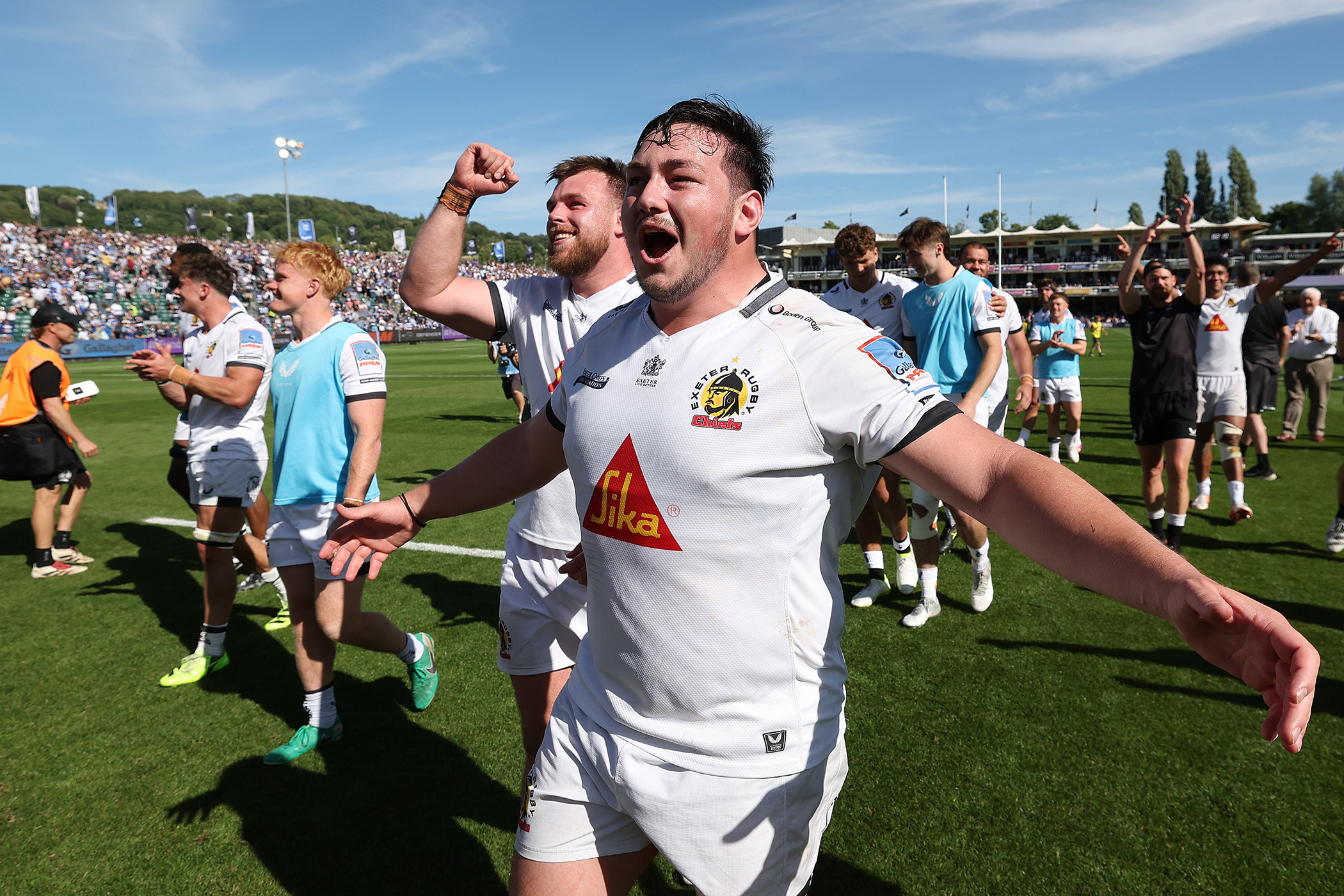
Exeter had already soared far above any expectations, but this? This was absurd. To hold Bath, the side who pride themselves more than any other in the league for the pick-and-go carries, out for 40 phases. To face a 26-10 half-time deficit, against a Bath side who had only lost at home once all season, and overcome that. To swap the front row just after half-time and take control of the scrum. All of it was wild.
This raft of new signings – Andrea Zambonin, Tom Hooper, Stephen Varney, Len Ikitau – have not merely settled into life in Devon, they instantly changed the direction of a club which looked lost, as has the arrival of Dave Walder, Exeter’s excellent new attack coach who took a veteran in Olly Woodburn and turned him into one of the best full-backs in the league. The stellar form of countless young players – Greg Fisilau making 28 tackles, the leadership of their young captain Dafydd Jenkins – is a credit to Exeter’s coaching staff. And now a first final since 2020. You can count the survivors from that day on one hand. To return to the summit with almost an entirely new group is a testament to Rob Baxter’s genius, and to the bond within the group itself.
“If you’re not emotionally involved together, that game becomes 30, 40 points in the second half. These lads aren’t like that. They are emotionally tied together. It’s the biggest credit I can give them more than anything else,” Baxter said.
As for Bath, the sense during their stuttering spell of the last few weeks was that they would eventually snap out of it and wake up, especially with so much on the line. Initially that was the case. They were too powerful, too direct, with four tries in the bank by half-time. It felt fitting that both of their props, Beno Obano and Thomas du Toit, scoring from short range.
Exeter in their heyday bullied teams in that manner too. They went on to do just that in the second half too, flipping the game as Bath began to look leggy and lacked impact from their bench.
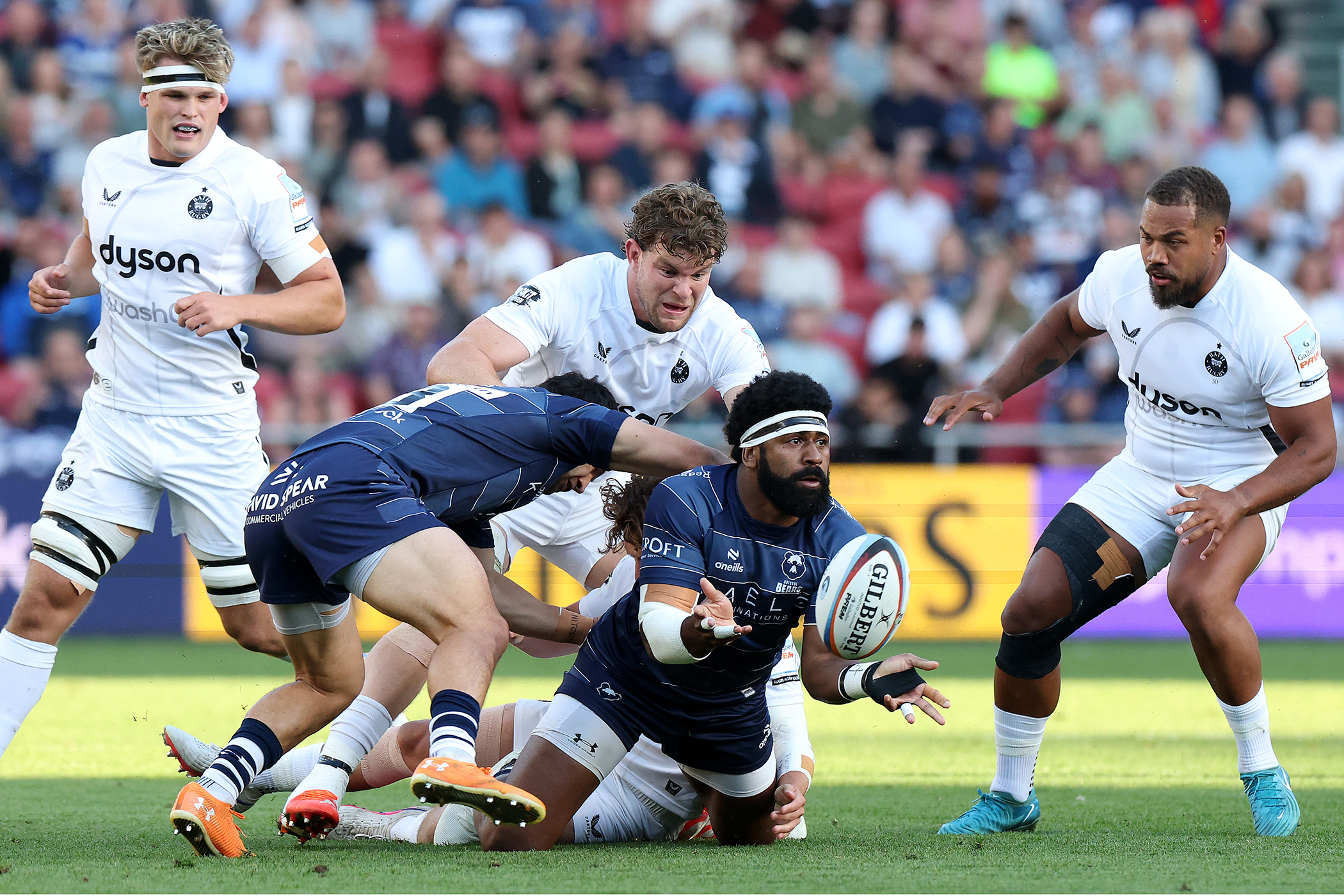
Still, they had a shot at an escape and a route to Twickenham. To go through 40 phases and not seriously consider the drop goal through either Santi Carreras, in for the injured Finn Russell, was bewildering. Or to move the ball to a wide open Joe Cokanasiga, alone on his wing with Exeter’s attention elsewhere. Bath’s attack stuttered early on with Carreras pulling the strings in an omen of what was to come. Had all their connections fizzed as well as Max Ojomoh and Ollie Lawrence in midfield, or their starting front row at scrum time, then they might have been out of sight. Calamitous does not quite do it justice.
Newsletters
Choose the newsletters you want to receive
View more
For information about how The Observer protects your data, read our Privacy Policy
Baxter, watching it all unfold presumably through his fingers, for the record never thought Bath would drop into the pocket.
“I bet there were about six or seven times when they could have made two passes wide and scored but they didn’t because they’re so good at converting. They have a super-strength there. Why would you run away from it and risk making the error? You might drop the ball or miss the drop goal. I don’t think they’ve done anything wrong there. It only feels wrong because they haven’t converted. That’s the tough part of rugby.”
Johann van Graan, his counterpart, tried to keep things in perspective while acknowledging the options available.
“Absolutely there were opportunities to move it but we decided to keep it tight and I back our players. It’s so easy as a coach to sit here as coach and say we should have done this and we should have done that. Santi was in the pocket. I’m not sure what the comms was at the time. Ultimately we didn’t use that last opportunity. That’s sport. We win together and we lose together.”
This semi-final felt like an attritional scrap, with each side pummelling the other with a barrage of blows. The East Midlands derby between Northampton Saints and Leicester Tigers on Friday night was more of a festival, a performance of attacking excellence. Northampton could make life easier for themselves by kicking three points now and again but where is the fun in that when, as their director of rugby Phil Dowson said afterwards, you can keep exerting pressure so those three-point opportunities become five or seven-pointers?
Friday’s semi-final inevitably was partly about Henry Pollock because, and this is meant positively, of course it was. Clocking up 26 carries requires an incredible appetite for hard work – he also had a try ruled out for a previous knock-on – and naturally it was Pollock booting the ball into the stands to send Northampton back to Twickenham. But it was also about Pollock’s mannerisms, his relationship with referees. As Dowson put it, the lessons Pollock had learned from facing Leicester at Welford Road a few weeks ago.
“His ability to learn from experience and apply that very quickly and effectively, how he talks to referees has changed in probably about three weeks. How he deals with confrontations has changed a little bit as well. You see that penalty today where he gets tackled and Luke says that’s taken the jackal away. He doesn’t say anything, he walks away. I hope that gets noticed as well, how quickly he matures and makes those decisions.”
Teams are playing for the biggest prize on the biggest stage, but also for one more week with their mates. Northampton will get that with George Furbank, a player made in the club’s academy whose debut came almost a decade ago, whose contributions to his club became the focus of Northampton’s approach this week. Bath will not be with Thomas du Toit. The imminent departure of the world’s best tighthead, impeccable in recent weeks, is going to hurt. Alfie Barbeary, on his way to Saracens, left everything out there.
Can Exeter, entirely unbothered by history, now go to Twickenham and complete the job, against a Northampton side capable of carving anyone open from anywhere? What a prospect. As for Bath, they will be reliving that final scenario, the decision to not go for a short-range drop goal, every day all summer.
Photo by David Rogers/Getty Images