
Ici, c’est Paris: On the final night of the Champions League’s group phase, the Virage Auteuil – the northernmost tip of the Parc des Princes, the part of the stadium that overhangs the Périphérique, home to some of Paris St-Germain’s ultra groups – was a riot of flags and flares, firecrackers twinkling underneath vast, swirling banners of red, white and blue.
The Auteuil had a reputation to maintain. L’Équipe had published a report on the Parc des Princes’ status as home to one of the most “brilliant” atmospheres in Europe. Various players had offered their testimony to that effect; Serge Gnabry, the Bayern Munich winger, had called it “electric.” The visit of Newcastle, the ultra collectives on the Auteuil had decided, was a chance to put on a show.
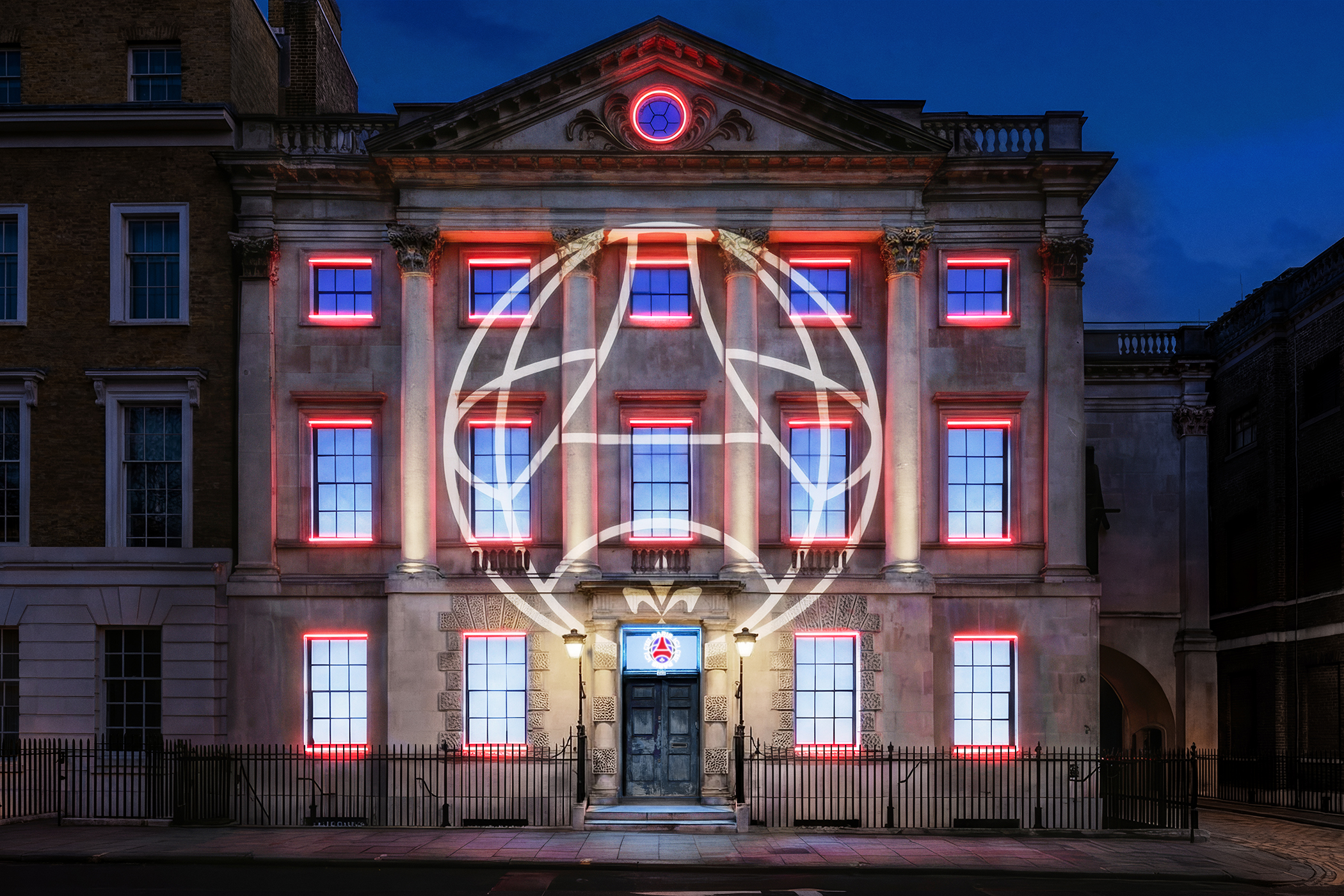
Ici aussi, c’est Paris: from Wednesday, not far from the chic ateliers and boulangeries of Marylebone Village, London, PSG will transform an event space on Cavendish Square into ‘Ici C’est Paris La Maison’, a “living space and experiential hub,” a place “where Parisian DNA engages with London’s energy.”
Over the next few days, visitors to La Maison can browse a variety of exclusive collaborations with brands like Walk in Paris, Macon&Lesquoy and the London Sneaker School. There are 50 limited edition skateboards available. Each one comes with a bespoke piece of poetry. There is an art installation, age-specific yoga classes, and an interactive exhibit conceived by Wayne MacGregor.
In the eyes of more traditional fans, these sorts of things – the periodic incursion of football clubs into what we must broadly call the “lifestyle space” – should come with a trigger warning; they are, for some, a sign of just how far from its roots football has drifted, damning evidence not just of the game’s gentrification but its commercialisation. Every collaboration, after all, is a chance to sell merchandise.
PSG are not the only club that has attempted to transcend sport and permeate the broader culture. Juventus and Inter Milan both redesigned their badges in the last few years in order to boost their appeal outside their established fanbase; Ajax collaborated with the clothing brand Daily Paper on the club’s third kit in 2022 and Manchester United are currently walking out in Stone Roses-themed anthem jackets.
The European champions, though, have done it both more consistently and more successfully than anyone else. They have worked with Air Jordan on various collections for years; they have, more recently, partnered with all sorts of achingly hip fashion labels, among them Bathing Ape, BornXRaised, Virgil Abloh Archive. Most have been glowingly reviewed by HighSnobiety and Hypebeast, the streetwear bibles. Last year, they launched Paris St-Germain Music Lab, a “global creative platform” where “sport, culture and music” meet.
That is not, given PSG’s history, all that surprising: Daniel Hechter, the fashion designer, was integral to the club’s founding a little more than half a century ago, and they were majority-owned for many years by Canal+, the television network. Even prior to the arrival of Qatar Sports Investments (QSI) in 2011 they were a “new generation” club, as their chief revenue officer, Richard Heaselgrave, put it. PSG have always existed at the intersection of sport and culture.
Their circumstances help, too. Not only, Heaselgrave said, can PSG point to the “global reputation” of Paris – drawing on the millions of tourists who visit every year – but they do not have to share it. Paris FC might have been promoted to Ligue 1 this season; Red Star, out in the suburbs, might have a much longer history, but there are not “seven clubs” competing for the right to advertise themselves globally as Paris’s team, like there are in London.
All of that is driven, ultimately, by a commercial imperative. PSG’s rise has been bankrolled by Qatari beneficence, of course: it was QSI’s investment in players which took a middleweight sort of a club and transformed them first into perennial French title-winners and then, last year, European champions. At the same time, and for much the same reason, the Parc des Princes was turned into a destination on many celebrities’ Paris itinerary.
Newsletters
Choose the newsletters you want to receive
View more
For information about how The Observer protects your data, read our Privacy Policy
But that does not mean that Nasser al-Khelaifi, PSG’s president and arguably the most powerful, most connected man in European football, wants to sign blank cheques forever. The club wants to generate as much of its own revenue as it can. That means attracting as much interest as possible, and Heaselgrave is at pains to stress that does not mean “fans,” but something closer to admirers, or perhaps well-wishers. “I want people to like my team,” he said.
Winning the Champions League is a pretty effective way to do that, obviously, but it is not reliable. “It’s almost like a casino,” Heaselgrave said. “Our competition on the pitch is Real Madrid, Manchester City, Liverpool, and they’re all trying really hard, too.” Instead, PSG has to go and find ways to engage new audiences wherever they may be.
What is striking, though, is how smoothly PSG have navigated the tension inherent within that; a tension that so many other clubs have found difficult to finesse: the balance between needing to entice more people without compromising what makes a club appealing in the first place. PSG has found a way to do art installations and ultra choreographies.
The key to that, Heaselgrave said, is “authenticity. If you’re going to think about food, fashion, or music, you have to be in those scenes in an authentic way,” he said. “You have to genuinely show up at fashion week. You have to be putting on music in the 16th arrondissement. You have to have a voice in that world. It can’t just be a marketing veneer.”
Just as significant, though, is an awareness that not everything can be for sale. Or, rather: an understanding of what it is that is being sold. The seats on the Virage Auteuil, for example, could very easily be stripped from the ultras and doubled or trebled or quadrupled in price. It would be a financial win, a welcome boost for the bottom line.
But there is an awareness – one lost on plenty of teams elsewhere – that it would not be a long-term one. The people who pay the highest prices to come to the Parc des Princes, after all, are not coming to see the fashion brand, or the cultural marque. They want the stadium, not La Maison. They are not even there just to see the team. They are there for the experience. “That is what so many people are searching for,” Heaselgrave said. PSG know that the ultras, the flags and the firecrackers on the Auteuil, are part of that. They have made sure that is not for sale.