
For this weekend, the wall between the Bicentenary Gate and the Grace Gate at Lord’s is lined with the milestones of women’s cricket.
It begins with the formation of the White Heather Cricket Club in 1887. The first-ever women’s Test between England and Australia in 1934 is there. As is the first women’s match at Lord’s, 50 years ago in 1976.
All this was in service of commemorating the first Women’s Test match to be held at Lord’s, played between England and India. “Made for this,” said the merchandising produced for the occasion, available on T-shirts, keyrings and magnets.
Yet for the past 200 years, the Marylebone Cricket Club (MCC) has been quite certain that women were not “made for this”. That history was strangely missing from the display.
There was nothing to commemorate the letter written by the Women’s Cricket Association in 1929 to the MCC requesting to play at Lord’s - only to be refused.
Or anything about the second letter sent in 1948 which received the response that “the chances of being able to fit in a game for the association are so remote that it would be best to abandon the idea at once”.
The Father Time wall commemorates W.G. Grace’s first match at Lord’s, but not his comment about The Original English Lady Cricketers, a women’s cricket team set up in 1890, that they “might be original and English, but they are neither cricketers nor ladies”.
It would be possible to fill the whole perimeter of Lord’s with moments such as these.
The absence of a women’s Test at Lord’s was flagged by the Independent Commission for Equity in Cricket’s report as a fact that ‘“alarmed”, as they investigated racism, sexism and elitism within English cricket following Azeem Rafiq’s allegations of racism at Yorkshire.
The tone of surprise the report took was a bit wide-eyed. It’s Lord’s – elitism is the point.
Newsletters
Choose the newsletters you want to receive
View more
For information about how The Observer protects your data, read our Privacy Policy
Yet as more than 50 former England players walked out onto the pitch at Lord’s on Friday to ring the opening bell, the significance of the occasion could hardly be overlooked.
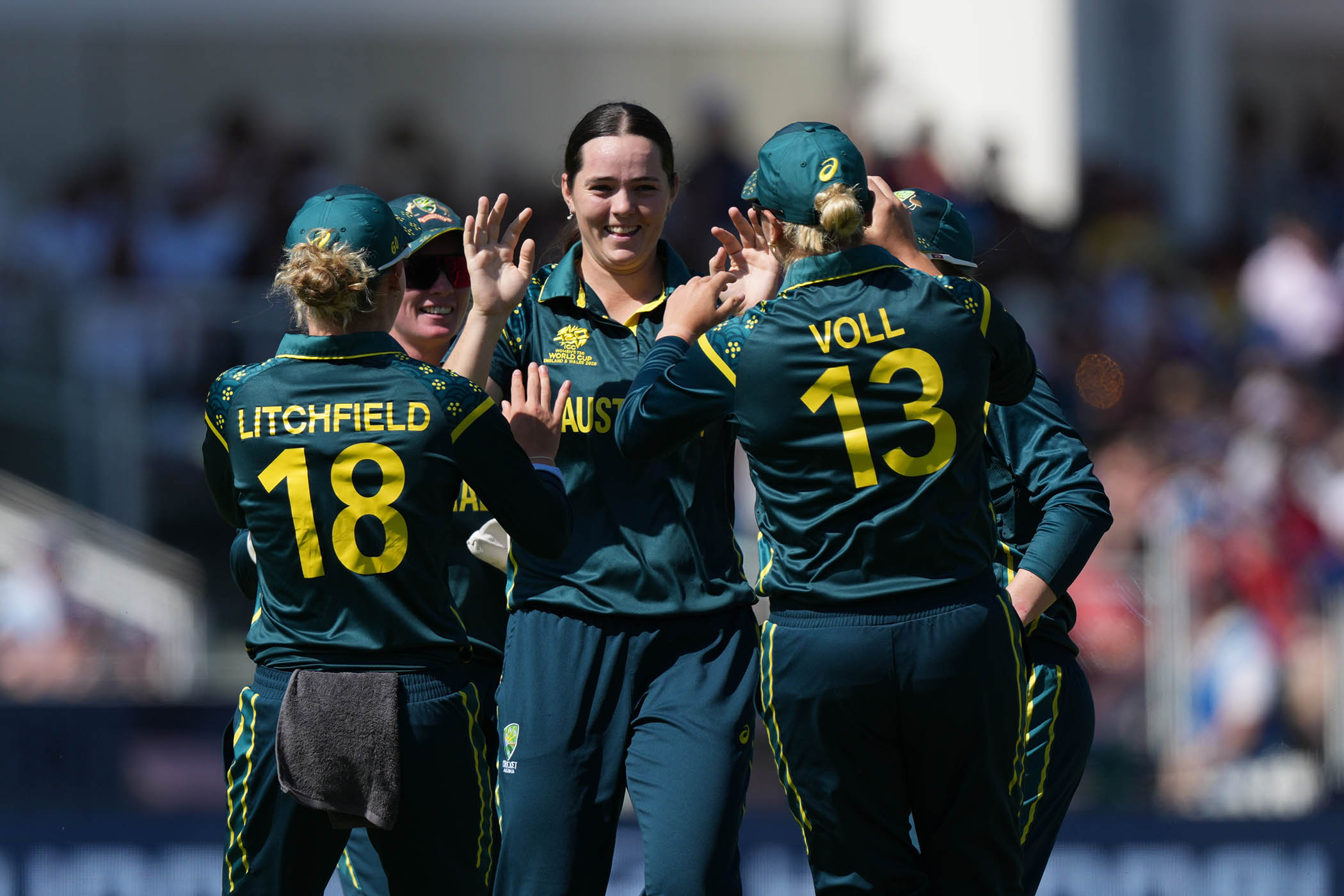
For many of the current England players, it had been five days since they last walked out at Lord’s. The Test came less than a week after they had lost the T20 World Cup final to Australia, with England’s opener Tammy Beaumont pointing out how hard the shift is both emotionally and technically.
“Some of them either haven’t gone home or have had one night in their own bed and then they’re back here doing literally the opposite end of cricket that you can do,” she said. “They’re going to have to settle into long spells, get used to leaving the ball again.”
Words that preceded unfortunate events, as none of England’s batters settled into a spell longer than 85 balls.
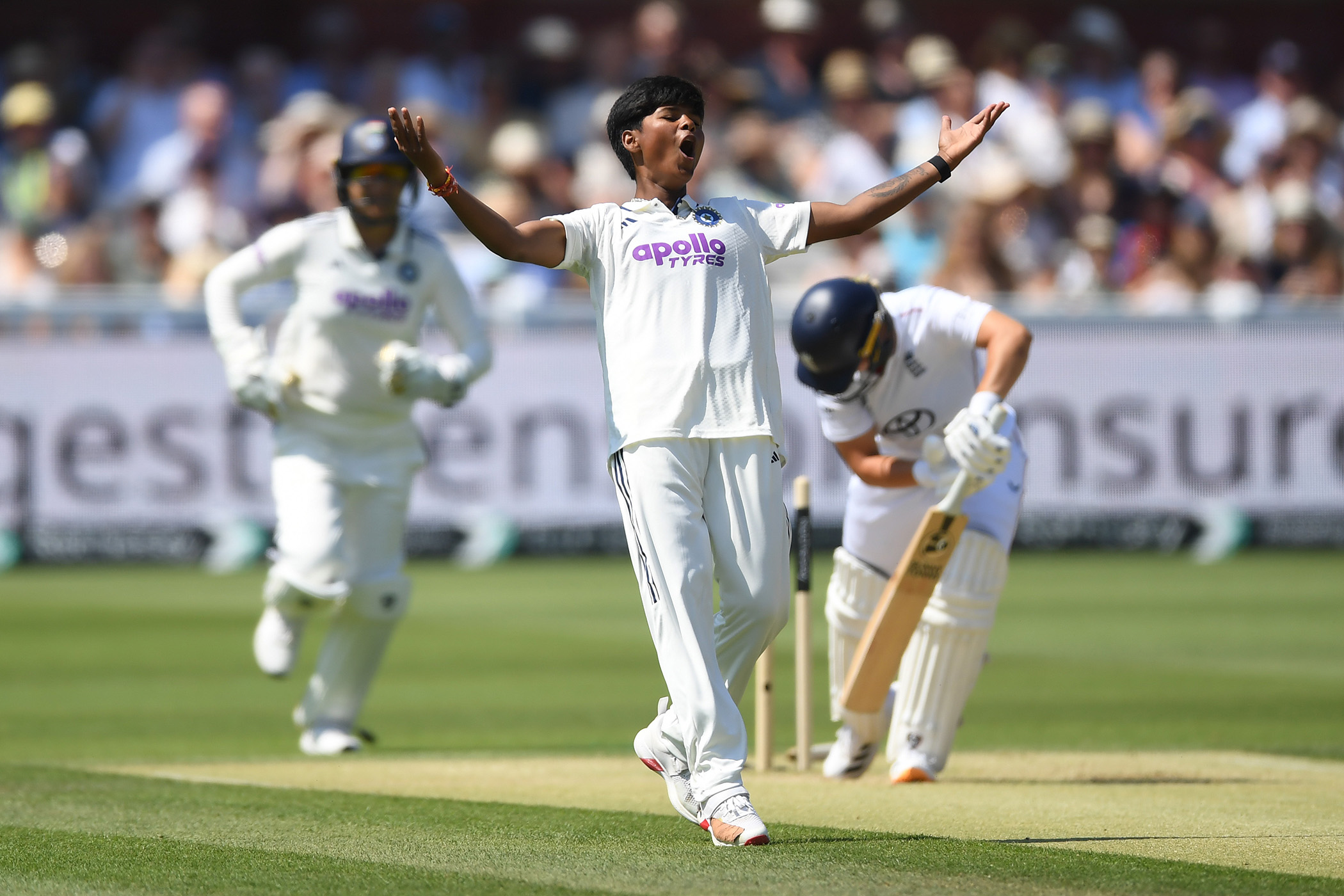
After an opening day in which England’s bowlers had allowed India to put up a far larger total than should have been expected, they contrived to lose three wickets within the first 33 minutes of play on Day two. In the second over after lunch, they lost their last recognised batter in captain Natalie-Sciver Brunt and were all out well before tea, still 115 runs behind India.
It was Kranti Gaud who had done much of the damage, becoming the first woman to get her name on the Test honours board as she took 5-37. It was another remarkable achievement for the 22-year-old, who had already tortured England last summer when she took a fifer in the decider of the ODI series. Her stratospheric rise has proven her mother was wise to sell her jewellery in order to buy one of Gaud’s first cricket kits. It is also the kind of success story for the Women’s Premier League in India that England would surely like to recreate with The Hundred. Gaud was just a net bowler for the Mumbai Indians until UP Warriorz bought her ahead of the 2025 season.
India looked far more comfortable with the bat and dangerous with the ball, but the erratic nature of women’s Test matches means it is impossible to make a serious assessment of anyone’s ability in them. India did not play a single Test between December 2014 and May 2021. Much of England’s Test prowess comes from the fact that they have to play one every two years or so as part of the multi-format Women’s Ashes. Girls are raised to play limited-overs cricket because that is the largest part of the women’s game.
It is a shame, because there is significant appetite to play the Test format from cricketers and crowds. It is rightly seen as the pinnacle of the sport with a prestige that remains the same whether you are a man or a woman. There was uproar when Greg Barclay, then Chair of the ICC, said four years ago that women’s Test cricket would not be “part of the landscape moving forward to any real extent”. This is the sixth Test England have played since he uttered those words. There might be a desire for it to be different, but there has been no change to make it so.
Despite being a slightly odd one-off, the match is a deserved moment for every woman who has dreamed of playing on this pitch, or of playing Test cricket at all. The proof as to whether it is more meaningful than simply correcting a historical disgrace will be how long it is until they play a second one.
Photograph by Philip Brown/Getty Images