
“It was so hot, I screamed at the officials that the floor on the transition from the swim to the bike was boiling. I blistered the bottom of my [bare] feet. The next day, the doctor said we need to remove all the skin and clean it. It was agony.”
If there is one person who knows just what can happen to elite sportspeople in uncomfortable heat, it is Lucy Charles-Barclay. The triathlete, fresh from a victory in Lanzarote in late May, where race temperatures reached mid-20 celsius, is perfectly placed to understand the physical impact footballers are experiencing across the World Cup.
Someone who is not attuned to punishing heat is your correspondent. So, as a man more accustomed to sitting in football stadiums in Leyton than running round them in Los Angeles, the opportunity to get a flavour of what players might experience in the next five weeks was one worth attempting.
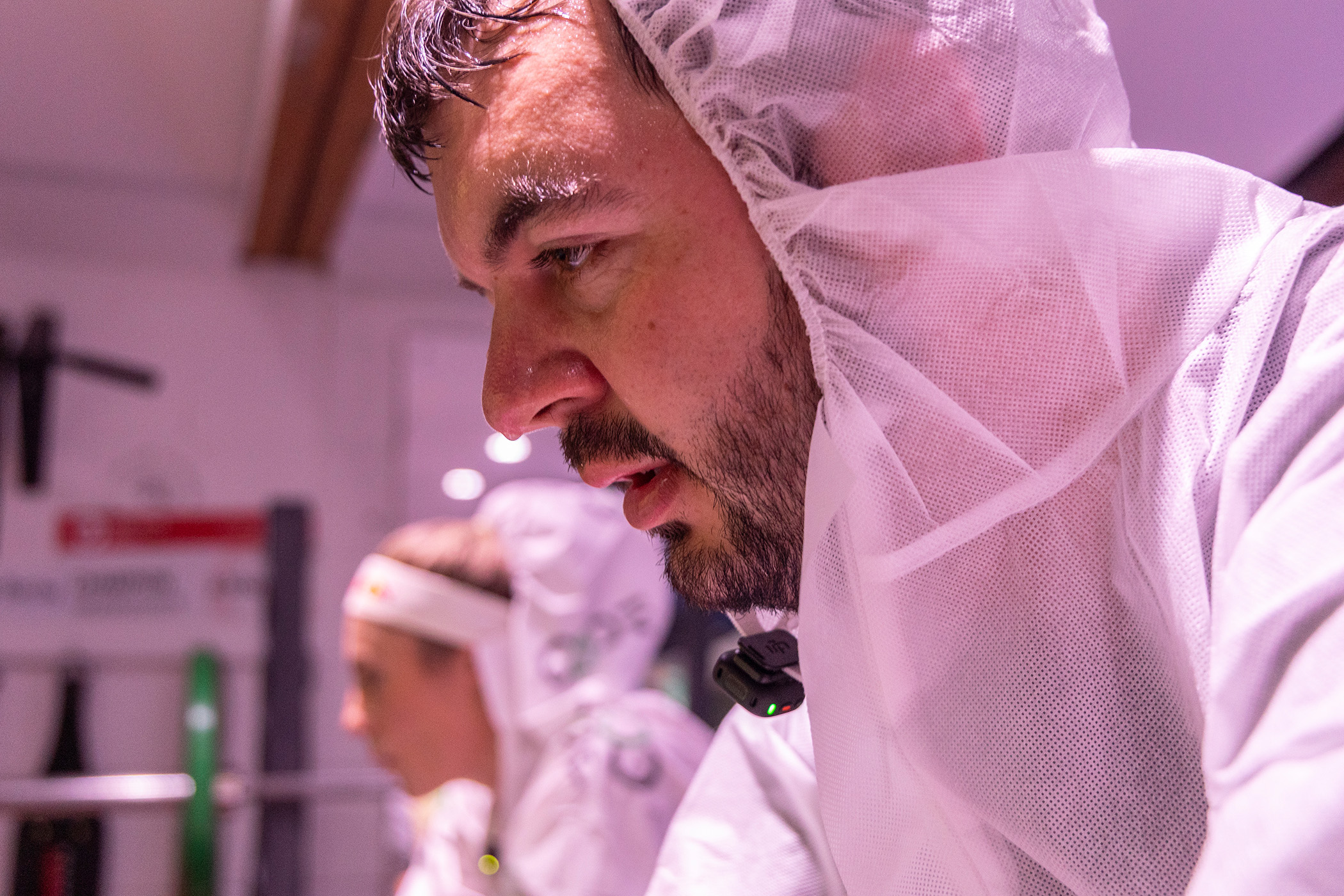
And so we go to Charles-Barclay’s gym; her “pain cave” as she calls it. With temperatures at 30c (Brazil’s opening game against Morocco on Saturday was played at 31c, while Uruguay vs Saudi Arabia topped 32c), I donned a Walter White-esque body suit to replicate high humidity conditions, and set to work on a static bike alongside the 2023 World Triathlon Champion.
That it is hot in the US and Mexico in June and July is not news; less discussed is how the heat physically impacts footballers playing in extreme heat. It might be easy to assume that players’ main concern would be muscular endurance, it is actually their cognitive functions that are at risk.
The science is as follows: in hot temperatures, blood flow is redirected to the skin in order for it to sweat and cool down, meaning blood flow to the brain is almost 20% lower compared with normal temperatures. A 2013 study in the Journal of Cerebral Blood Flow & Metabolism found that despite blood supply to the rest of the head increasing in high temperatures, blood to the brain still reduced by as much as 20%. The knock-on impact included reduced reaction times, short-term memory loss, and poorer decision-making.
“A reduction in inhibitory control might lead to riskier or inappropriate decisions on the pitch, or, for example, arguing with the referee,” said Dr Holly Bridge, Professor of Neuroscience at the University of Oxford. Bridge has spent years working on “football on the brain”, and the role of neuroscience on all aspects of playing football.
“Poor executive functioning can also affect decision-making because it requires generating possible options and selecting the most appropriate,” Bridge said.
But, she added, footballers’ “motor cortex” i.e. the brain’s movement control centre, are so well trained that the negative effects are likely to be less than that for a regular person.
Twenty minutes into our session, and it’s easy to appreciate this first hand. The cycling is, in fact, manageable – I am not short on breath, my heart rate is a little over two times its resting rate, but I am short on attention. Pertinently, this is all on a static bike – a “closed skill” sport – meaning a repetition of the same action. In “open skill” sports, like football, there is a higher cognitive load due to the game’s unpredictability and higher skills required in decision-making.
Newsletters
Choose the newsletters you want to receive
View more
For information about how The Observer protects your data, read our Privacy Policy
While we remain in the early stages of the World Cup, it may be too late for some to acclimatise. “The players are going to experience such a variety of conditions, altitudes, and they can do all of the pre-preparation for heat, but it’s really hard to sustain while they’re not playing,” Charles-Barclay said. As a solution, as counterintuitive as it may sound, she says she uses saunas and hot baths after heat training to retain the body’s acclimatisation.
“I find it takes about a fortnight to get fully heat activated somewhere else,” she added. “So when I go and race the World Championships, I’ll do about four to six weeks of this kind of preparation and then still get there about three weeks before to fully activate to the conditions.”
Hydration breaks have been much-criticised since their introduction into this tournament. The three-minute breaks, halfway through each half, have been described as a “scandal”, while the Netherlands’ Virgil van Dijk questioned their mandatory use, recommending they should be limited to games when a certain temperature is hit – a sensible suggestion given some matches are being played in air-conditioned arenas. Meanwhile, Brazil manager Carlo Ancelotti credited the breaks for being able to reset instructions to his players, minutes before Vinícius Jr scored their equaliser against Morocco. “You can explain a problem to the players… [and] make a tactical adjustment that can be very good,” he said. Dr Bridge suggests that the hydration breaks could be useful for remembering instructions as much as re-hydration, as short term memory is impacted by hot temperatures.
By 45 minutes, I’m finished. By this point, I’m out of breath, and most pertinently, my brain is increasingly scrambled. I self-impose my own mandate that this 45 minutes will not have any added time, and I step off the bike.
Photograph by Andy Hall for The Observer