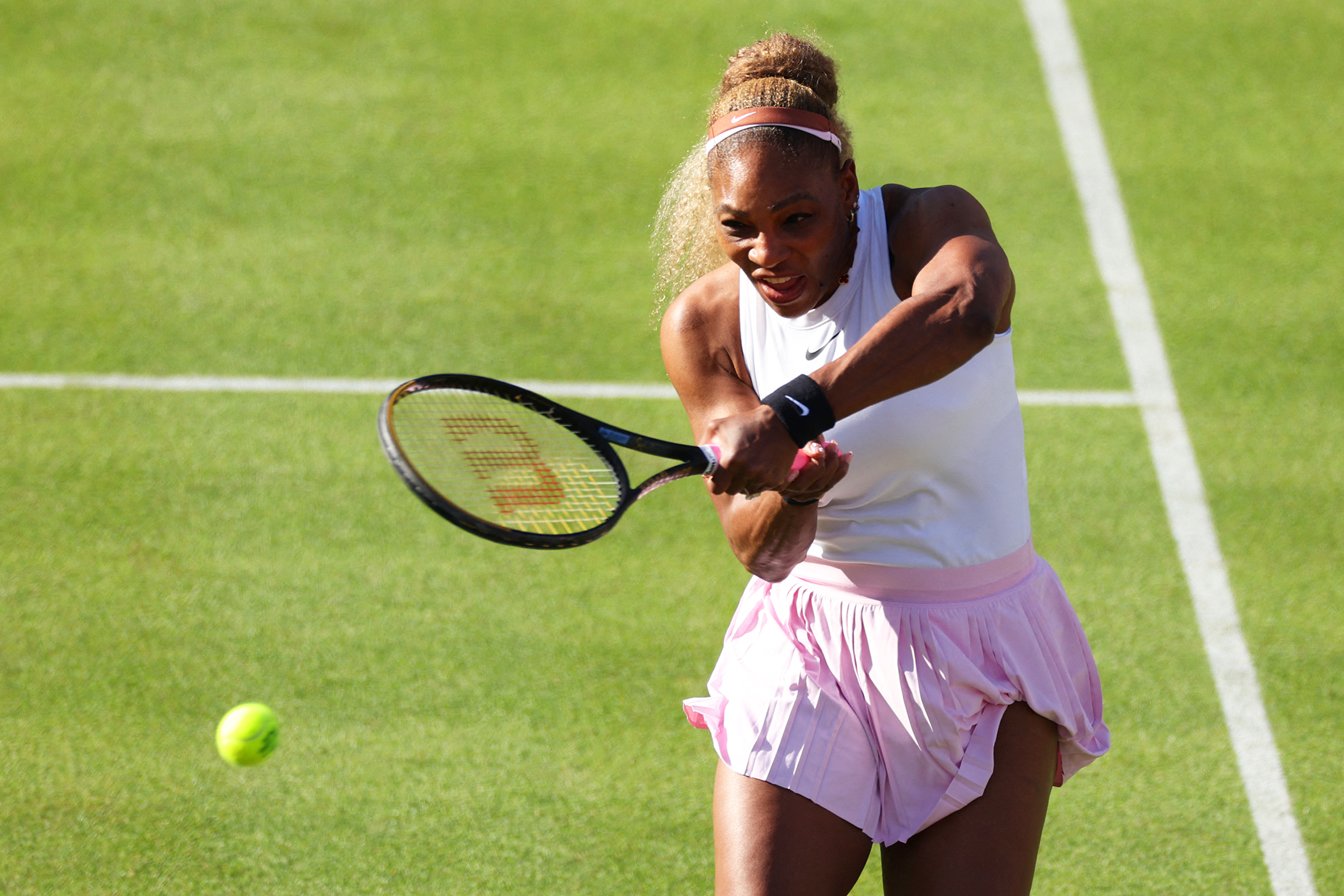
The noise around Queen’s was deafening as her name was announced. For the first time in 1,375 days, Serena Williams was walking onto a tennis court in front of a crowd. Not even the British duo of Katie Boulter and Emma Raducanu, playing doubles on Court 1, could persuade anyone to leave their seat on a packed-out Andy Murray Arena.
Her return had been the sport’s worst-kept secret. Ever since it was first reported in December that the 44-year-old had applied to be added back into the International Tennis Integrity Agency’s testing pool, it was just a question of when, where – and why.
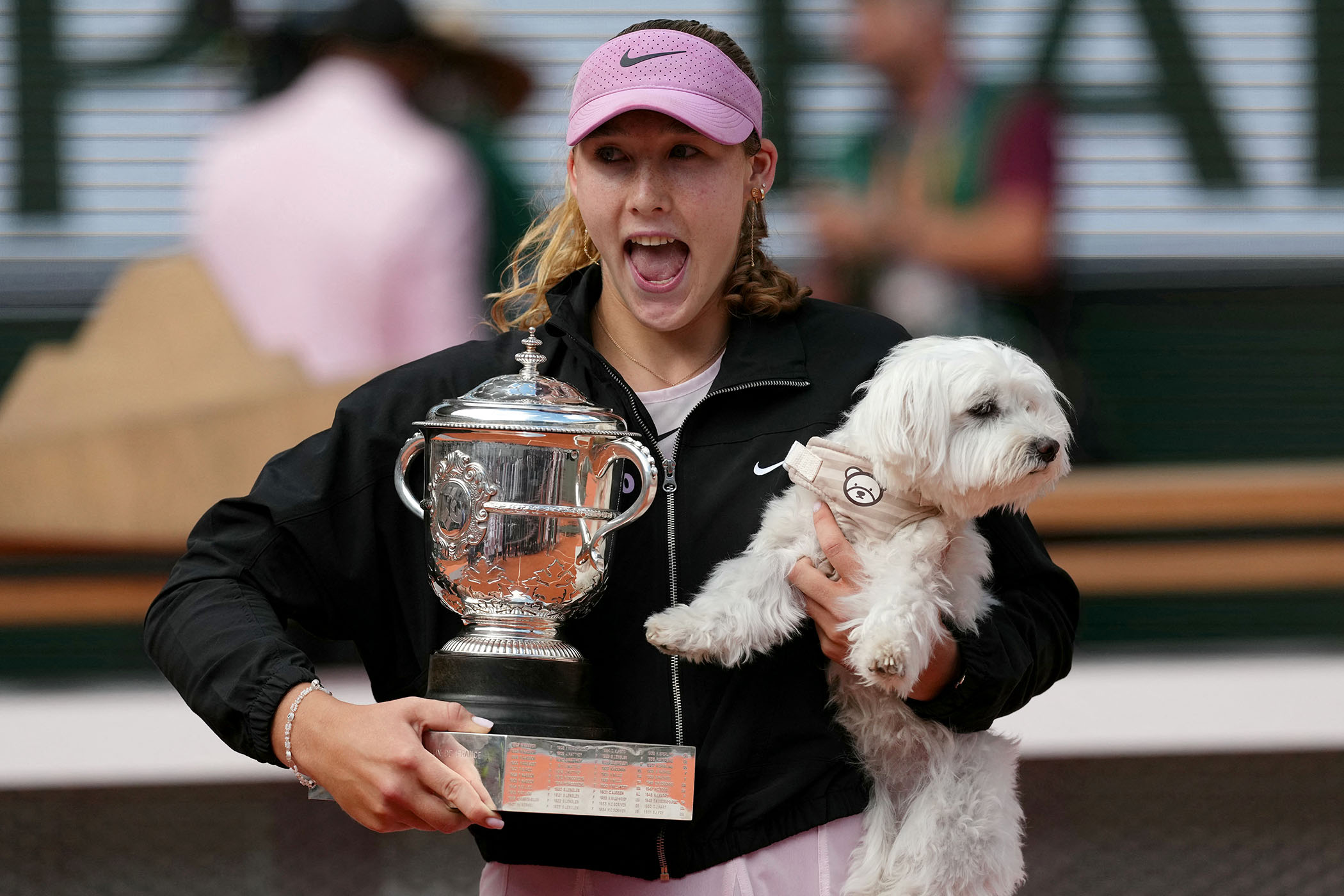
After much speculation, the cat was finally let out of the bag last week as it was announced that Williams would make her return to professional tennis at the Queen’s Club. The West Kensington tennis club reinstated their women’s competition last year, so Williams’ return was a debut of sorts, as she paired up with Canadian 19-year-old Victoria Mboko. Williams had already won seven Grand Slam singles titles by the time Mboko was born.
“Grass has given me some of the most meaningful moments of my career, and I’m excited to be back competing on one of the sport’s most iconic stages,” Williams said. A wildcard for Wimbledon, which begins in 19 days’ time, is in her sights.
Valerie Camillo, chair of the WTA, said: “[Serena’s] return is an expression of her passion for competition, and I cannot wait to see her face a new generation of players.”
There was plenty in Mboko and Williams’ straight sets win over Erin Routliffe and Nicole Melichar-Martinez to remind tennis fans of Williams’ greatness, in particular a 120mph serve that helped them to an important hold. She certainly did not look out of place on the court with all the reaction speed at the net and decisive shot-making further back that propelled her to 14 Grand Slam doubles titles.
Yet the complicating factor behind being the oldest former world number one ever to return to the sport, beating Martina Navratilova’s previous record of 43 years and 10 months, is whether it is just about “passion for competition”, or something more.
In the years since her retirement, Williams has been criticised for her decision to take and, in particular, to promote GLP-1 medications. Last August, she told People magazine that her use of GLP-1s had helped her lose 31lbs, following struggles with her weight after having children.
She namechecked Ro, a company that does direct-to-consumer weight loss treatment and became a celebrity ambassador, complete with a Super Bowl advert. There were plenty of questions about what it meant for Williams, viewed as a champion of atypical body image, to be advocating for weight loss in this way. But the most glaring element was the fact that her husband, Alexis Ohanian, was an investor in the company and sat on their board.
GLP-1s are not on the World Anti-Doping Agency (Wada) banned list so Williams’ endorsement and consumption of them have no impact on her return to tennis. They do, however, feature in the “monitoring” programme – meaning Wada do think there is a possibility that they may need to be banned in the future.
Newsletters
Choose the newsletters you want to receive
View more
For information about how The Observer protects your data, read our Privacy Policy
It is reasonable to suggest that without GLP-1s, we would not be seeing this return from her to the sport
It is reasonable to suggest that without GLP-1s, we would not be seeing this return from her to the sport
There is disagreement over the sporting impact of GLP-1s. As Williams herself said in her People interview, she “can do more”.
“My joints don’t hurt as much,” she said. “I just feel like something as simple as just getting down is a lot easier for me. And I do it a lot faster.”
But it is a misconception that there is an obvious correlation between weighing less and performing better in sport, in the same way that pronounced muscle definition is proof of fitness.
As Roger Federer’s so-called “dad bod” shows, there is more than one way to look as a tennis champion. Preconceptions around body image are something that Williams herself has fought throughout her career, as a muscular black woman. That is why some have seen her weight loss as a collapse of the values that she has fought for, but it might also be what allows her to return to the sport that she loves.
The conversation is taking place in a complicated time for an understanding of the societal role of GLP-1s. While there are concerns about what their widespread take-up will do for the “body positivity” movement, there are also health benefits to some people for losing weight, as well as the additional possibilities that GLP-1s are unlocking.
A report in the British Medical Journal this week argued that taking GLP-1s could drastically reduce the number of knee replacements required as the drug improved outcomes around knee arthritis. The conclusion suggested that this was not solely a result of the weight loss taking the drug prompted, but the drug itself.
The balance between giving birth and returning to professional sport is a complex one that clearly impacts some athletes more than others. The use of a permitted drug that enables someone to find a way back to their pre-partum form does not deserve dismissal out of hand.
The idea that Willams’ return might be premeditated on promoting a weight-loss drug minimises her own athletic drive. Her sister Venus’ run to the quarter-finals of the doubles tournament at last season’s US Open would have given Serena the belief that she could make a similar run at a Grand Slam. The opening up of the French Open draw a fortnight ago also may have bolstered her resolve, after only one of the top ten made the semi-finals.
If anything, the strongest criticism should be for the tennis establishment using a wildcard system that unequally rewards certain players based on their star power. Prior to Williams’ match, 38-year-old Tatjana Maria beat Maria Sakkari 6-3, 6-3. Maria had to come through qualifiers, despite winning Queen’s last year, again as a qualifier. The Lawn Tennis Association declined to give the champion the opportunity to defend her title through a wildcard spot, despite having no reservations about permitting Williams to return. “Nobody is entitled to a wildcard,” said Anne Keothavong, herself a beneficiary of numerous wildcards throughout her career by virtue of being British. It is hard to argue that anyone was more entitled than Maria to one.
From Williams’ discussion of how her weight-gain after childbirth affected her, it is reasonable to suggest that without GLP-1s, we would not be seeing this return from her to the sport. Watching her play at Queen’s made it hard to regret that it had enabled her to.
Photograph by Adrian Dennis/AFP via Getty Images