


In sport, you’re proverbially only as good as your last performance. So if your next performance does not come along smartly, that last one can linger. Such is the case for England. A match of 141 overs is not much, but the Perth Test left a long tail.
For a lot of that game, England were extremely competitive – at lunch on the second day, WinViz had them at 75%. The difference was two virtuoso individual efforts, from Mitchell Starc and Travis Head, and two friable collective responses, the visitors’ batting losses of five for 12 in the first innings and four for 11 in the second innings.
Being 1-0 down is a larger deficit than it sounds, especially with Australia holding the Ashes, and have lost only two home Tests in four years.
It is worth mentioning that on only three occasions have England prevailed in a series Down Under after conceding the first Test – in the original Ashes of 1882-83, and in the series of 1911-12 and 1954-55.
We have recently been blessed with an exceedingly comprehensive account of that last tour, via Richard Whitehead’s Victory in Australia, complementing Australia 55, by my Observer predecessor Alan Ross, and a classic wardrobe account, At the Heart of English Cricket, by team manager Geoffrey Howard. These repay reading because of the parallels and differences with the present tour, and also the salience of leadership.
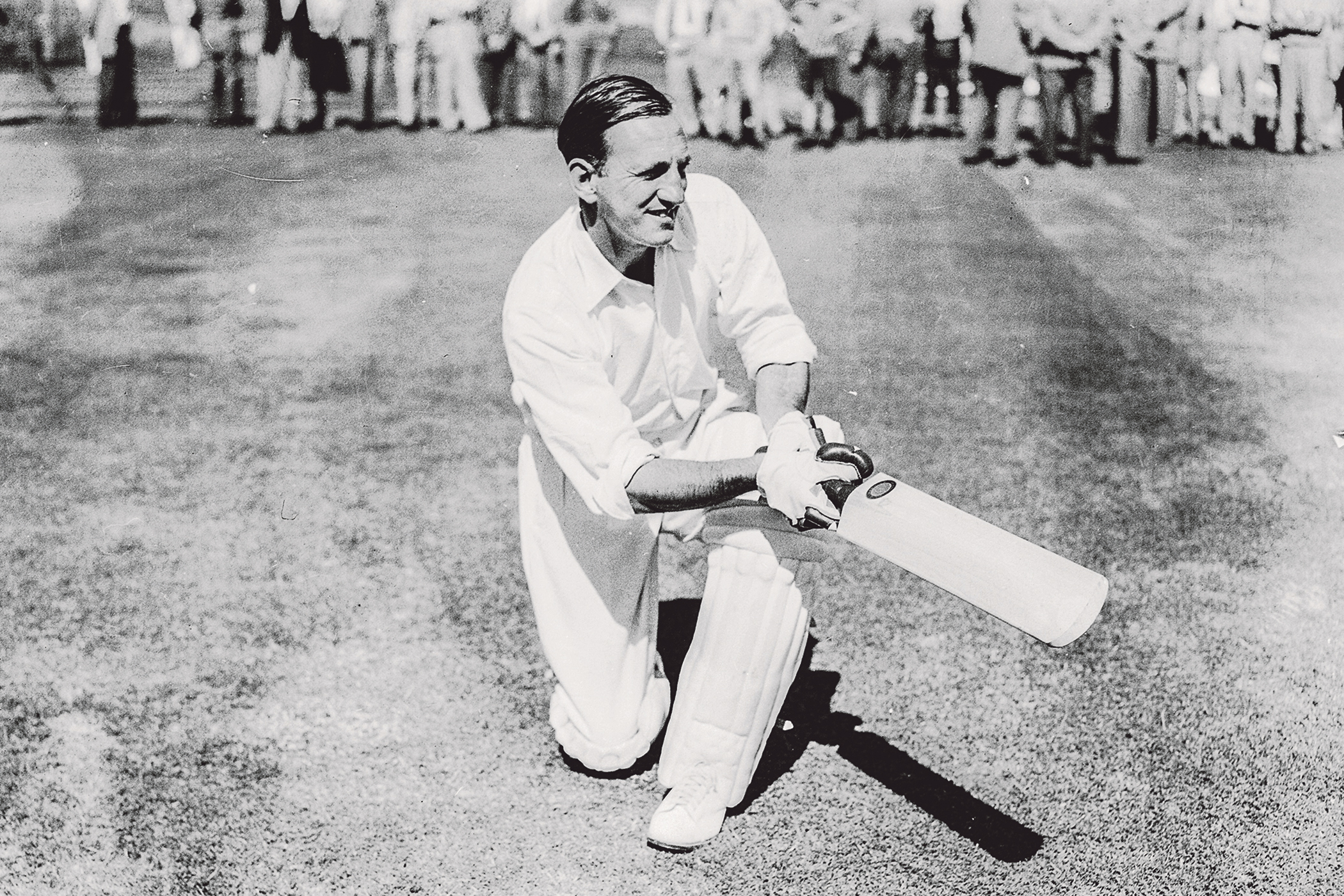
England went into the first Tests of 1954-55 and 2025-26 confident and with a battery of pace bowlers. Captain Len Hutton put the home team in at the Gabba, only to lose by an innings and 154 runs. By comparison, Ben Stokes had a runaway success in Perth.
Taciturn, introspective and given to oracular pronouncements, Hutton was a very different captain from Stokes. Few outsiders have described Australian cricket so frankly. “They have the utmost ability for producing that little extra; or instilling into the opposition an inferiority complex that can have a crushing effect,” he wrote. “Australians have no inhibitions.”
When England lost in Brisbane, Hutton felt first for his team’s faraway fans: “Back there in England, it’s cold and wet and miserable, and the least we could have done was something to cheer them up.”
Yet defeat also left him and his team remarkably unshaken. Hutton had an advantage Stokes does not enjoy: England held the Ashes, having won by the odd Test in 1953. He also sensed vulnerability in Australia – great players in decline, emergent ones yet to mature.
In his ranks, the broad-shouldered 24-year-old Frank Tyson was a rare talent. And it’s interesting, in light of recent debate, that England’s opportunities to regroup were provided by tour matches. England first played a two-day game against Queensland Country. Hutton absent-mindedly stated at their reception how pleased his team were to be in Townsville when they were actually 430 miles south in Rockhampton. He was serious enough, though, that he prevailed on the opposition captain to extend play in order that England might win. Winning is a good habit to get into.
Newsletters
Choose the newsletters you want to receive
View more
For information about how The Observer protects your data, read our Privacy Policy
England also played a one-day game against, yes, a Prime Minister’s XI in Canberra, then a four-day game against Victoria at the MCG. The latter gave Tyson an opportunity to experiment with a run-up shortened to six walking steps and 10 strides.
Now it’s possible Tyson could have made this change in the nets. But the fact that, having taken one for 160 at the Gabba, Tyson took six for 68 against quality opposition on a Test ground healthily reinforced Hutton’s belief in his strategy; likewise when Tyson hit Neil Harvey’s pad so hard the batter had to remove it in order to rub his leg. In the subsequent Test at the SCG, Tyson spurred England to victory by 38 runs with six for 85.
I know, I know: the sages insist that the world has changed. Yet it is surely still a wonder, in an age of what Stokes calls “jam-packed schedules”, that Zak Crawley was allowed to face the first ball of the series of his life having not had a competitive hit in 76 days.
Meanwhile, in 1954, victory in Sydney did not relieve pressure. With the series square, Hutton seems to have felt the burden acutely. In those days on tour, a captain was a de facto coach, practice organiser, media manager and head selector – in the last capacity Hutton was tormented by having to omit his friend Alec Bedser. The captain was criticised in terms Stokes would find familiar. “Hutton should tighten training and discipline all round,” stated the acerbic Crawford White. “Too many of our men have too much time on their hands, which can be dangerous.” The Daily Telegraph’s venerable EW Swanton wrote a prophetic Christmas column looking forward to the day when captains might be complemented by coaches.
All of which bore down on Hutton: he was plagued by fibrositis, troubled by a heavy cold, and even experienced a twinge of envy for his free-spirited senior players Denis Compton, Bill Edrich and Godfrey Evans.
Seeing the trio dressed for an evening on the town the night before the Melbourne Test, Whitehead tells us, Hutton was forlorn. “Look at those three,” he grumbled. “Their excuse will be that they’ve got to relax before a match. This is the time to be thinking about the match…”
Next morning, that same trio were called to the captain’s bedside with manager Howard and his assistant George Duckworth: Hutton, running a temperature, was adamant that he could not play. The group persuaded him to have breakfast, then to go to the ground, then to take his place. England won, with Tyson again irresistible, before retaining the Ashes in Adelaide.
More than 70 years on, England’s success on that tour has become such a landmark it almost seems preordained. Yet I have always been fascinated by the story of that morning, which for decades was kept under wraps by agreement: so admired and so close to the brink of history, Hutton still required the sympathetic suasion of his nearest followers.
Stokes enjoys similar pre-eminence in this England team; he, too, will need his leading players’ support. Hutton exited a champion. Over the next 40 days, Stokes’s team-mates will do much to decide how their skipper, and friend, goes into history.
Photograph by Fairfax Media/Getty Images