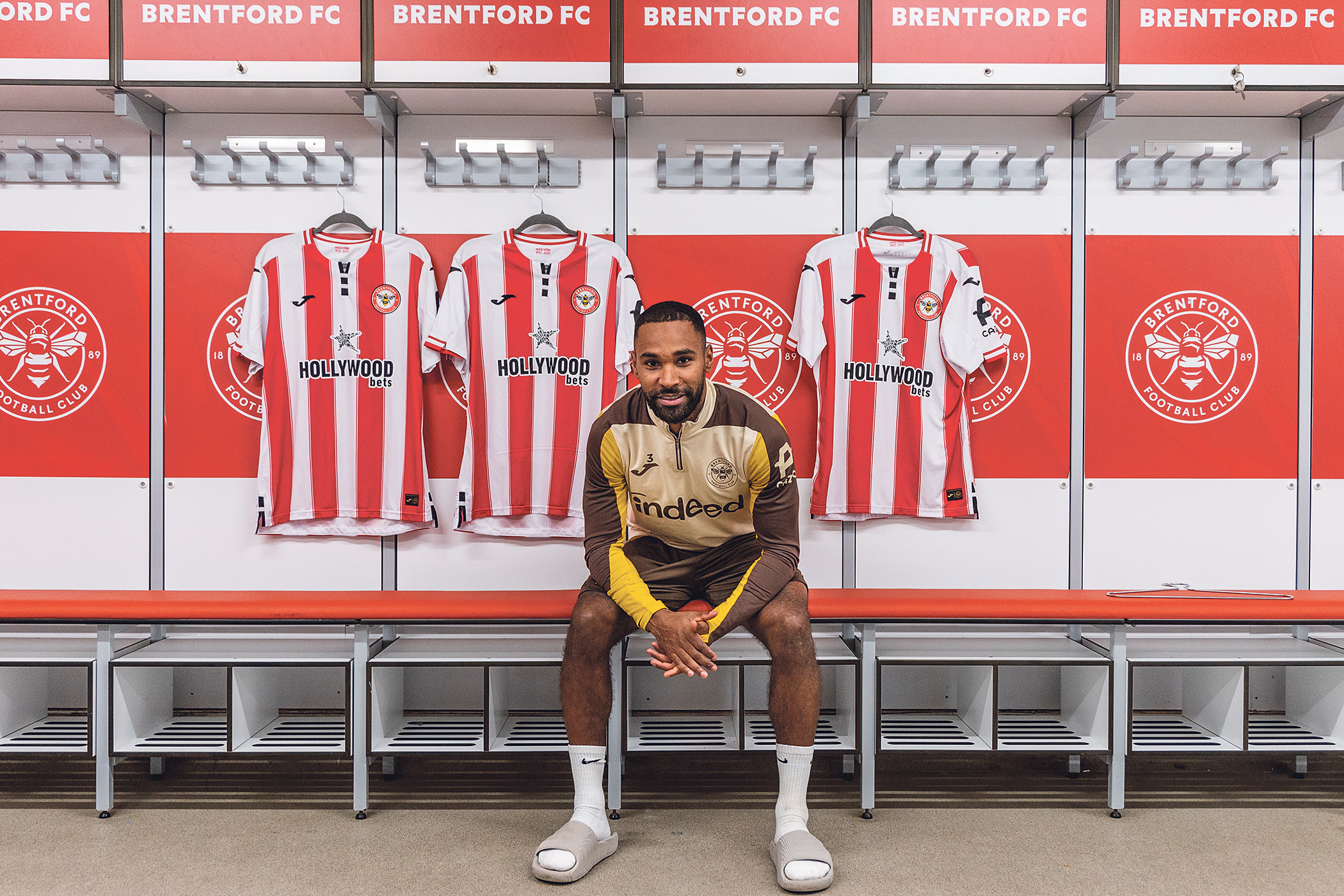



Until a flight comes in to land at Heathrow, first visiting Brentford’s Jersey Road training ground feels like wandering onto a utopian commune, all pristine greens and disconcerting friendliness.
Everyone, from security to executives, exudes this unrelenting, uncanny Truman Show positivity. No-one can stop telling you how much they enjoy working here, how different it is to anywhere else. It jars until you realise it’s genuine.
Seventh in the Premier League and two points behind Liverpool, sitting five places clear of Brighton despite an uninspired 2-0 defeat on Saturday, Brentford seem to have perfected a kind of footballing Fordism, each individual subsumed into service to a wider system and vision. In a season where numerous clubs are exposing quite how difficult surviving the Premier League can be, Brentford’s continued success is quietly one of the most impressive stories in elite sport.
Despite having the lowest wage budget and one of the lowest revenues in the top flight, they have not finished a weekend in the relegation zone since promotion in 2021.
“There’s no role greater than the other,” technical director Lee Dykes tells The Observer. “Everyone knows where they are.”
Dykes primarily works alongside head coach Keith Andrews, sporting director Phil Giles and performance director Ben Ryan. Recruitment and analysis are largely his speciality, although he and Giles have significant input on tactics and training.
Of the main group, only Andrews has a playing background. Giles is a maths and statistics graduate who was a quantitative analyst for owner Matthew Benham’s primary business, the analytics-led sports gambling company Smartodds, before joining Brentford in 2015.
If Brentford is the cult it can sometimes seem, then Benham is its omnipotent leader. This is an institution built in his image: understated, statistics-led but people-driven. The overarching tactical philosophy and prioritisation of set-pieces are his ideas – it feels as though no Premier League club is as effective at delegation and yet so dependent on one man. “The owner has a vision of what he believes drives success on the pitch,” Dykes explains. “Regardless of who the head coach is, we have a solid plan in that respect. We understand what we need to do to be successful at this level. The plan, the strategy, doesn’t change at Brentford.”
Related articles:
Andrews calls Benham “just very normal… an amazing person”, and says they speak regularly. Doing little to allay the cult vibe, Dykes explains “he financially backs us, but if you’re ever in his presence, you really feel his backing, and it’s a really good feeling. What makes him one of the best owners around is he trusts people to do their job.”
Yet perhaps Benham’s most obvious gift is his apparent lack of ego, or, at the very least, his rejection of attention or appreciation. An Oxford physics graduate who initially worked as a City trader, his only interview in the past decade was with the club’s Supporters Trust, in 2022. When he initially invested £500,000 to save the club in 2005, it was anonymous.
Newsletters
Choose the newsletters you want to receive
View more
For information about how The Observer protects your data, read our Privacy Policy
Few photos of him are publicly available, with the most recent set nearly three years old, celebrating the final match of the 2022-2023 season with Thomas Frank while wearing a Bryan Mbeumo Cameroon shirt. The traditional trappings of wealth largely appear to have passed him by – he looks like he asks his barber “for a haircut” and doesn’t feel the need to elaborate.
Finding someone as rich as Benham (recent estimates put his net worth comfortably north of £200m, and last summer’s minority investment valued the club around £400m) and seemingly well-balanced feels like the real miracle here. Both he and the club seem to thrive in this ego death.
As with Tony Bloom’s Jamestown Analytics (Benham once worked with Bloom, although they have never reconciled after a row almost 30 years ago), Benham’s Smartodds data has become mythical – Dykes calls it “the secret sauce” behind all recruitment and analysis, even tactics.
But Benham has always understood that even his extraordinary statistical model is limited without the right people operating and supporting it. An early opponent of the traditional manger-as-deity model of English football, he prefers working in a group and so hires people with values compatible to his pragmatic humility, or promotes those he has previously worked with.
Alongside Giles, chairman Cliff Crown is a former Smartodds CFO and board member Nity Raj a long-time Benham advisor at Smartodds. CEO Jon Varney was a season-ticket holder before joining in 2019. Frank was assistant coach before his promotion, just as Andrews was Frank’s set-piece coach.
This fosters a foundational consistency and stability that allows the wider philosophy to be executed, and means replacing parts is relatively simple.
What if those inside the club are right? What if this is only the beginning?
What if those inside the club are right? What if this is only the beginning?
And yet the prevailing opinion this summer was that Brentford had lost their manager and three key players – Bryan Mbeumo, Yoane Wissa and Christian Nørgaard – and were destined for regression and relegation. In reality, they were paid upwards of £7m for Frank and his coaching staff, £100m for the three players, and are on course for their highest post-war Premier League finish. It transpires no-one inside the club was particularly concerned. Dykes talks about there being both a right time for someone to join, and a right time for them to leave. Overperformance can breed overconfidence in certain players, or equally mean the team moves beyond them. If you want to leave Brentford, it tends to mean you’re in the wrong place.
“We looked at Keith as a bit of a no-brainer,” Dykes explains. “We have this young, humble, hungry, ambitious coach that we felt could slot into the way we work.” Frank’s unilateral failure at Tottenham means most of Brentford’s head coaches under Benham have either struggled instantly after leaving or failed to progress to an extent their success in west London had indicated. Before joining Brentford, Frank was not considered a particularly talented coach in Denmark.
And so it can be difficult to discern whether Andrews should be the frontrunner for manager of the season, or whether he is just a facilitating cog in a wider system. He is a seemingly ideal Brentford coach, but that seems to count for little once you escape the commune.
“We’re never sat there saying we found the next best head coach, right?” Dykes says. “We find a good person with the attributes that we feel would be really important to a head coach. Are they open-minded? Do we feel we could drop them into the role? It really is as simple as that: good, humble people that fit Brentford.”
In the earlier days of the Benham era, Mark Warburton – Brentford’s head coach from 2013-2015 – left despite having the highest win percentage of any Bees manager and reaching the play-offs. In part, this was because he did not share Benham’s enthusiasm for set pieces - something he has always viewed as a wasted opportunity – and vetoed a number of potential January signings. Fitting in requires a certain level of compliance.
Shortly after Warburton’s departure, Benham hired the club’s first set-piece coach, Gianni Vio, and has since appointed Nicolas Jover (now at Arsenal), Bernardo Cueva (now at Chelsea), Andreas Georgson (now at Spurs) and Andrews to the role. In the process he has learned to identify someone capable of providing their own ideas within an approved and established framework.
Andrews has not been hired to oversee a revolution. Soft-spoken and sincere to a fault, he can come off as painfully LinkedIn, but then that is increasingly a fundamental tenet of modern coaching.
Over Dykes’s shoulder in his office is a whiteboard reading “What is a Brentford player?” The club understands it cannot compete with most other Premier League clubs on wages or transfer fees, a reality it tries to combat with longer-term planning, factoring in adaptation time and even signing players carrying injuries they believe are not recurring.
Kevin Schade, Nathan Collins and Mikkel Damsgaard all struggled in their first seasons, but are now regular starters.
Recruited through Dykes’s seven-stage process to whittle down 86,500 players into a handful, players are assessed on how much they fit the tactical system as much as their abilities or potential.
For a club with a grand history of begging bowls and incompetent ownership, this stability is a brave new world.
Even after Benham’s early investments, in 2010 the sign outside Jersey Road read “ntford Football Club” and players trained in £10 sweatshirts made by Fruit of the Loom. Kitman Dave Carter voluntarily cooked sausage, eggs and beans for the players in a canteen that backed onto the gym, meaning both smelled simultaneously like stale sweat and fried pork.
Even after Brentford’s most recent promotion to the Championship in 2014-15, Jersey Road still only had two training pitches and changed in portable cabins. As full-back Rico Henry, the longest-serving player at the club having joined as a 19-year-old in 2016, tells The Observer: “It was rough times.”
There are now 11 pitches at Jersey Road, and I speak to Henry in a press room that replaced the old canteen. “When Thomas Frank left, and some big players, it was difficult to get the togetherness back,” he explains.
“A key difference [from the Frank era] is our culture, everyone fighting for each other. Before we were close, but now it’s really clicking. Everyone’s communicating all the time. Kristoffer Ajer plays a big role, always shouting at us. Everyone’s really got on board.” A group of players travelled together to watch Real Madrid beat Benfica on Tuesday and the club have always encouraged extra-curricular squad-bonding.
Brentford understand the value of human connection at all levels. The smallest fanbase in the Premier League by some distance – Bournemouth and Fulham have almost double their 400,000 or so followers on X – their following is both remarkably engaged and growing.
Most Premier League clubs sell a false equivalence that success requires ever-rising prices and exploitation, a fact Brentford disprove despite a much smaller revenue than their peers. Most football fans are scrabbling for authenticity and connection to a game they no longer control nor have any meaningful stake in.
One of four Premier League clubs still owned by a childhood fan, Brentford have only raised season ticket prices once since promotion; the cheapest adult season ticket is £460. U17 tickets for any away match are £10, alongside opening a family section. Rather than raise prices, Benham sought external investment. Last summer, philanthropist Gary Lubner and filmmaker Matthew Vaughn became minority investors – Vaughn and his wife Claudia Schiffer are known to attend games in Brentford shirts.
Those within the club believe this is the start of a new cycle in the playing group, the first season without the core of the Championship promotion squad. The same goes for Andrews, in his first season as a head coach. The obvious question is whether this is the ceiling, whether regularly breaching the top six is a dream worth dreaming.
A few years further ahead in their development, Brighton offer a reasonable indicator for Brentford’s future – occasional European qualification, some seasons better than others but largely falling into a comfortable mid-table existence.
Yet so long as they maintain something close to consistency, Brentford’s overachievement should never be undervalued or underappreciated. Beating the house in the Premier League is not supposed to be possible to this extent. Benham and Bloom might well be the defining geniuses of modern football, and Saturday’s defeat feels like a quietly seismic dynamic shift.
And for all it looks like this might be the mountaintop, the salad days, what if those inside the club are right? What if this is only the beginning?
Photography by Andy Hall for The Observer