To justify the £8.8bn cost to the public of the 2012 London Olympics it was claimed they would make us a nation of rowers, sailors and hammer throwers.
As it turned out, the National Audit Office found “the proportion of adults participating in sport declined in the three years following the 2012 London Olympic and Paralympic Games”. Fewer people played sport after the best in the world had shown them how.
An engrossing three-week party shouldn’t be mistaken for social engineering. Mostly it’s entertainment, escapism, spectacle. At the Winter Olympics, Britain’s contribution to an uber-photogenic snow carnival has fulfilled its showbiz brief. For TV viewers it’s brought a refreshing change of precipitation – from two months of rain here to the winter wonderland of Milano Cortina.
With drone shots, revolving camera angles and digital sorcery, screens have disgorged spectacles viewers barely understand but find thrilling. The summer Games obsess about attracting “Gen Z”. The winter Games have shown them how.
And somehow Britain has been in that mix, despite its own negligible infrastructure for winter sports.
In the Milano Cortina Winter Olympic funding awards, UK Sport doled out £25.5m (see table) across seven sports, with another £7m for two Paralympic sports. The three best funded were ski and snowboard (£7.27m), curling (£6.37m) and skeleton (£5.77m), with para-ski and snowboard getting £5.2m. A further £5m was granted to individual competitors through Athlete Performance Awards (APAs).
For the Los Angeles summer Games of 2028, UK Sport has fronted up £255m, with a further £80m in APAs. Top of the money tree is cycling with £30.1m. The 2028 Paralympic programme has a pot of £74.9m.
These are vast sums that are envied by other nations. They originate in the mortification of the 1996 Atlanta Olympics. There, Britain won one gold medal (15 medals in total) and finished behind North Korea in the medals table.
At London 2012, Team GB won 29 golds – 65 medals in total – to end up third behind USA and China.
The catalyst has been something Britain has otherwise become very bad at: public investment, in this case via the so-called “tax on the poor”, by which National Lottery money is transferred from mostly low-income lottery ticket buyers to aspiring Olympic champions.
Newsletters
Choose the newsletters you want to receive
View more
For information about how The Observer protects your data, read our Privacy Policy
Industrialised lottery funding for Olympic sports has become a national trait. To stop it would send Britain back to being an also-ran. Regression to the bad old days would invite fresh shame for a country that already feels nothing works, that the public realm has been abandoned. To give up on a winning Olympic formula, some say, would be damaging and counter intuitive.
For comparison, from 2023-26 the Arts Council gave £35.46m to English National Opera – £11.82m per year. Grassroots live music has received £2.5m each year for the last four years.
Among cultural beneficiaries of direct government spending are the National Poetry Centre in Leeds (£5m) and National Railway Museum in York (£15m).
Set alongside public funding for arts, cultural and heritage projects, the “financial doping”, as some rivals call it, of British Olympic sport starts to look less egregious. Some would call it value for money. The difference is that the English National Opera and Poetry Centre are always there. Olympic sports come round every four years and are gone in less than three weeks. They are transitory.
Britain isn’t the only country that financially targets medals. It’s one of the revelations of this month’s Games that “Snow Australia” exists in a country that had to wait until 2002 to win its first Winter Olympic gold. Australia first participated in 1936. With investment, it had won six gold medals by the time Milano Cortina commenced.
In 2012, it was possible to watch London’s closing ceremony and leave the house the next day to join a cycling, archery, athletics or sailing club. Try doing the same this week with bobsleigh, luge, curling, skiing or figure skating.
It’s said that about 1.5 million Brits go skiing or snowboarding each year. Snowsport England can direct you to centres in Welwyn Garden City, Aldershot, Southampton or Carlisle. It would be a stretch, however, to suggest snow sport facilities are a feature of British life.
Scotland’s natural ski resorts are in dire peril. Some climate change scientists have predicted that rising temperatures and declining snowfall will eradicate them by 2060.
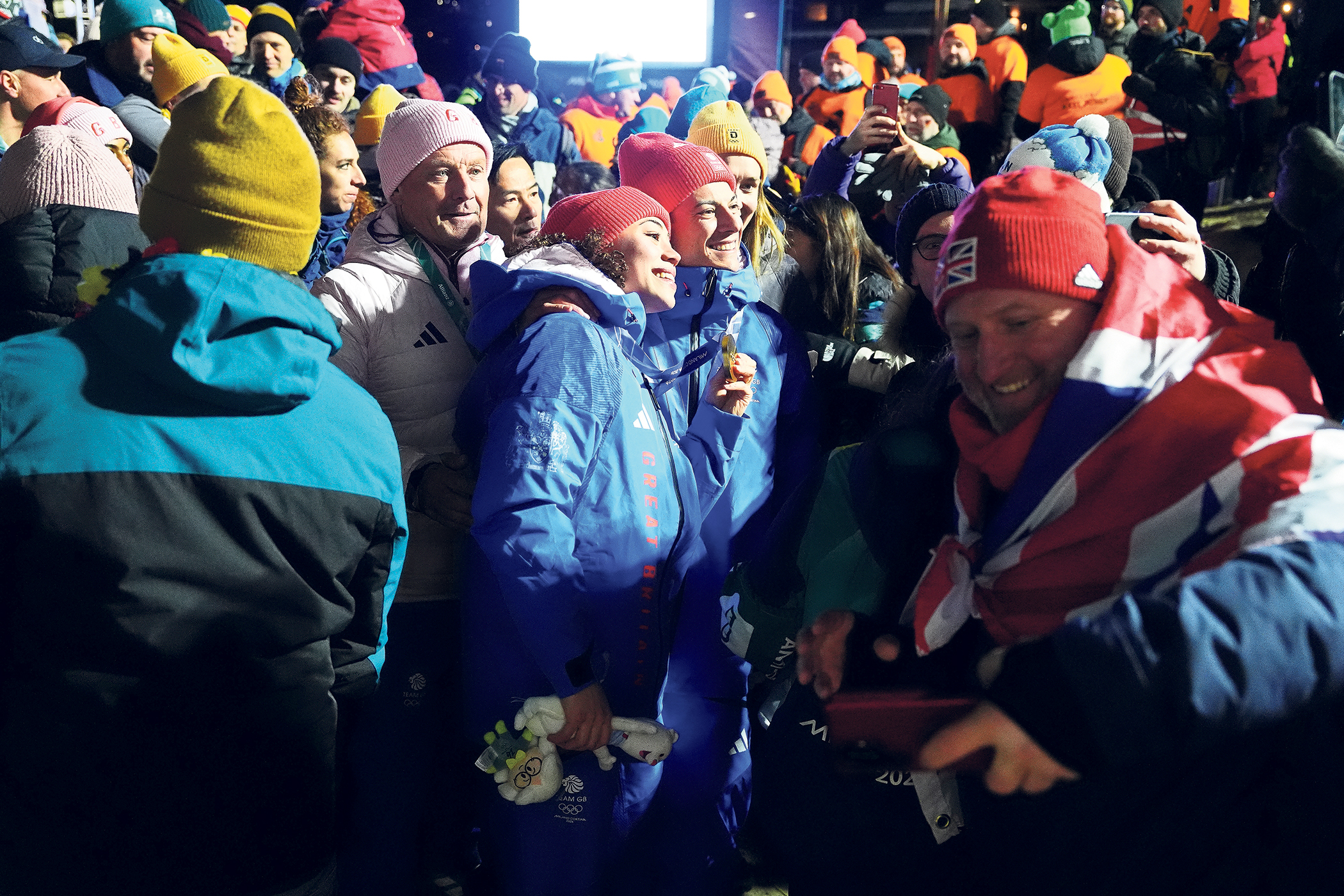
Yet, a country that had never won more than one gold at a single Games won three in 48 hours in Italy. Charlotte Bankes and Huw Nightingale became the first British athletes to win on snow; Matt Weston was the first individual men’s gold medallist since Robin Cousins in 1980; then Tabitha Stoecker and Weston held off Germany in the mixed team skeleton.
At the time of writing, Britain was 15th in the medals table. At that point each medal had cost UK Sport £10m (from a total investment and APA outlay).
On the streets of Britain, many will struggle to remember the champions’ names six months from now. Some will say that’s not the point.
Britain could choose to make up the numbers in Olympic sport or it can carry on splashing out on a medal-winning elite, however ephemeral its success. The story factory of Milano Cortina did its job. The beauty and athletic ingenuity were exhilarating.
To top it all off with a dose of honesty, British Olympic sport should avoid making inflated claims about “legacy”.
Photograph by Andrew Milligan/PA Wire