

Scotland expects. Oh, does Scotland expect. In living rooms, primary schools, pubs and supermarkets, in blanket coverage across social media, the happy collective madness is about to be unleashed.
Let us be honest. For the people of a wee, wet, cold, not-rich country on the far-flung fringes of northern Europe, there’s not always a lot to celebrate. Disappointment in life is baked in. But when the boys in blue, their boys in blue, playing their beloved national game, reach the greatest tournament in the world, the Scots explode with pride and passion.
They’ve waited 28 years since their last World Cup, France 1998. A whole generation of yearning, the weight of a nation’s optimism, is pinned on the slender shoulders of a squad of young men most of whom were in nappies or weren’t born the last time this euphoria swept the country.
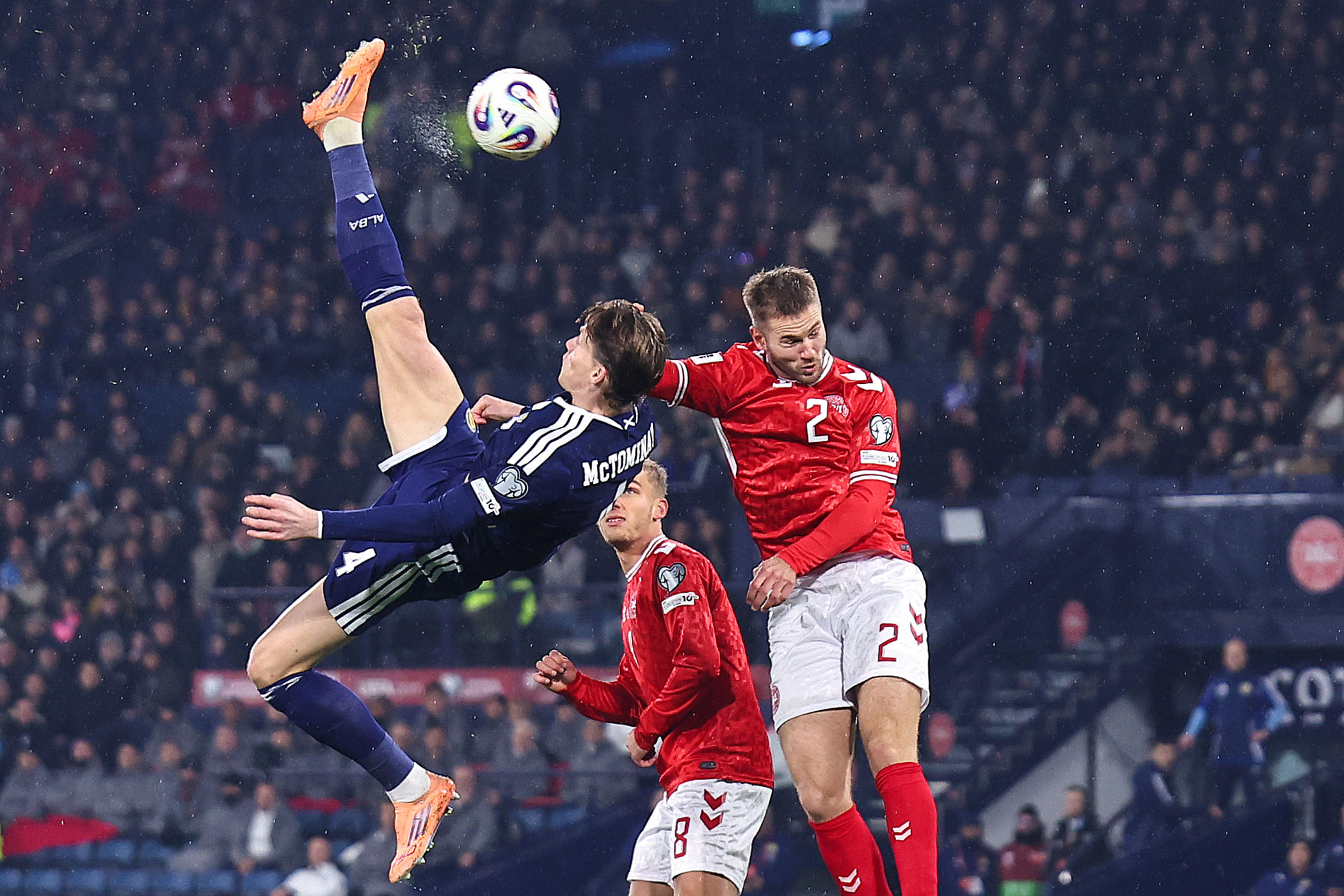
The delirium began when the team beat Denmark at Hampden to qualify last November. Not just a victory, but a stylish one. Grown men, through tears, declared it the best night of their lives as Scott McTominay climbed what seemed 12ft in the air to score with an overhead kick, an image which has since made its way on to Scottish £20 bank notes and a giant mural on a gable end in Glasgow.
As the war cry decrees, always in capitals, NO SCOTLAND NO PARTYYY. Determined to dream, battled-hardened to failure, the Scots have fun no matter what. The travelling support, the Tartan Army, trailing good-natured chaos, has its own legend to live up to. That line about it’s the hope that kills you? Nah, it’s the hangover, win, lose or draw.
Whatever unfolds, fans keep singing. This World Cup has inspired at least 10 songs, some condemned online as “pure shite” (whatever else they are, the Scots are succinct) - Irn-Bru’s kitsch Made in Scotland from Girders, with Susan Boyle AI’d breakdancing; and some deemed acceptably romantic – folk band Skerryvore’s soaring Never Stopped Dreaming.
JJ Bull’s Very Unofficial Scotland World Cup Song (bread and circuses), with a classy title and the clear-sighted chorus “I think we might lose but I will go there anyway”, bears a mention too.
In eight previous appearances at the World Cup, the team’s record can best be characterised as valiant but unlucky. And always heartbreaking. They have a terrible habit of losing to teams they should beat and then winning or drawing against the world’s best. So far they’ve never got beyond the group stages, three times squeezed out on goal difference, and there’s a dark statistic floating around that if they don’t do it this time, that will be a world record in itself. For failure.
But hush. Optimism is de rigueur. Scotland’s chances could be worse. In Group C, their first and most important game is against Haiti, who they’ve never played before. Haiti are minnows appearing in their first World Cup since 1974. Win it – bookies, at the time of writing, give Scotland odds-on 1-2 – and a route to the next round opens up.
They would have to draw with their old nemesis Morocco, after which they could lose to Brazil and still qualify. But nothing is ever easy. Haiti have a couple of dangerous players and impressed earlier this week, beating New Zealand 4-0 in a friendly. Morocco dismantled Scotland 3-0 in Scotland’s last World Cup game 28 years ago and are unbeaten in 2026.
Newsletters
Choose the newsletters you want to receive
View more
For information about how The Observer protects your data, read our Privacy Policy
In Steve Clarke, the Scots have their most successful and longest-serving manager (77 games). Laconic, unexcitable, with the world-weary air of a PE teacher looking forward to lunch, Clarke is loyal to his players and inspires commitment in return. He ended Scotland’s decades in the wilderness by steering them to two Euros and now the World Cup.
His team is one of the oldest in the tournament. Goalie Craig Gordon, with 84 caps, is 43. Many of the squad’s biggest names, in their 30s, know this could be their last chance at a World Cup.
McTominay stars for Napoli in Italy’s Serie A, although his club teammate, Billy Gilmour, is injured and has to be left behind. Aston Villa’s John McGinn is a Tartan Army talisman for his reliable goal-getting and the goggles gesture he makes after scoring – in support of his nephew, who must wear eye protectors when he plays.
The captain, Andy Robertson, is second only to Kenny Dalglish in Scotland’s record caps list. Opportunity awaits two talented 19-year-olds, Findlay Curtis and Tyler Fletcher, one of whom, on the basis that in a small country the players belong to everyone, is my carer’s second cousin’s son and lives in a nearby village, so I can brag he’s practically family if he scores a goal.
A nation, then, readies itself. Extended drinks licences have been granted. Fridges are stocked. An estimated 25,000 foot soldiers could travel to the tournament: some sold organs to acquire tickets for flights.
Perhaps the best way to understand the sweet madness is the beautiful little documentary, Scotland 78: A Love Story, which perfectly distils the everlasting Caledonian tragicomedy of hope, hype and disappointment. At that disastrous tournament in Argentina, Scotland had world-class players but lost 3-1 in the opener against Peru.
I have a memory of which I’m not proud: a warm summer night in Edinburgh, hanging out of a first-floor window with fellow students from England. We were singing, to the tune of Blondie’s Denis: “Peru, Peru, oh with your eyes so blue/ Peru, Peru, I’ve got a crush on you/ Peru, Peru, I’m so in love with you” to a group of disconsolate fans.
Outsiders then, we thought it funny to mock the hubris of a small, working-class nation. Decades humbler, I have learned that football enables a proud people, briefly, to escape tough lives, demonstrate love and dream of better things.
And so they begin again. The pain and the scars are forgotten. Fresh hope emerges. Scotland expects. Let the party get started.
Photograph by Robbie Jay Barratt, AMA via Getty Images