
As the historian Tom Holland has said, elite football is now the most popular pastime the world has ever known. The game has become not just a boom industry but a cultural form that consumes people from Manchester to Manila and London to Lima. Rory Smith On Football is a guide to that world, a way to cut through the deafening noise, the claim and counterclaim, to help understand what is happening on the pitch, off the pitch, and why all of it matters. Sign up here.
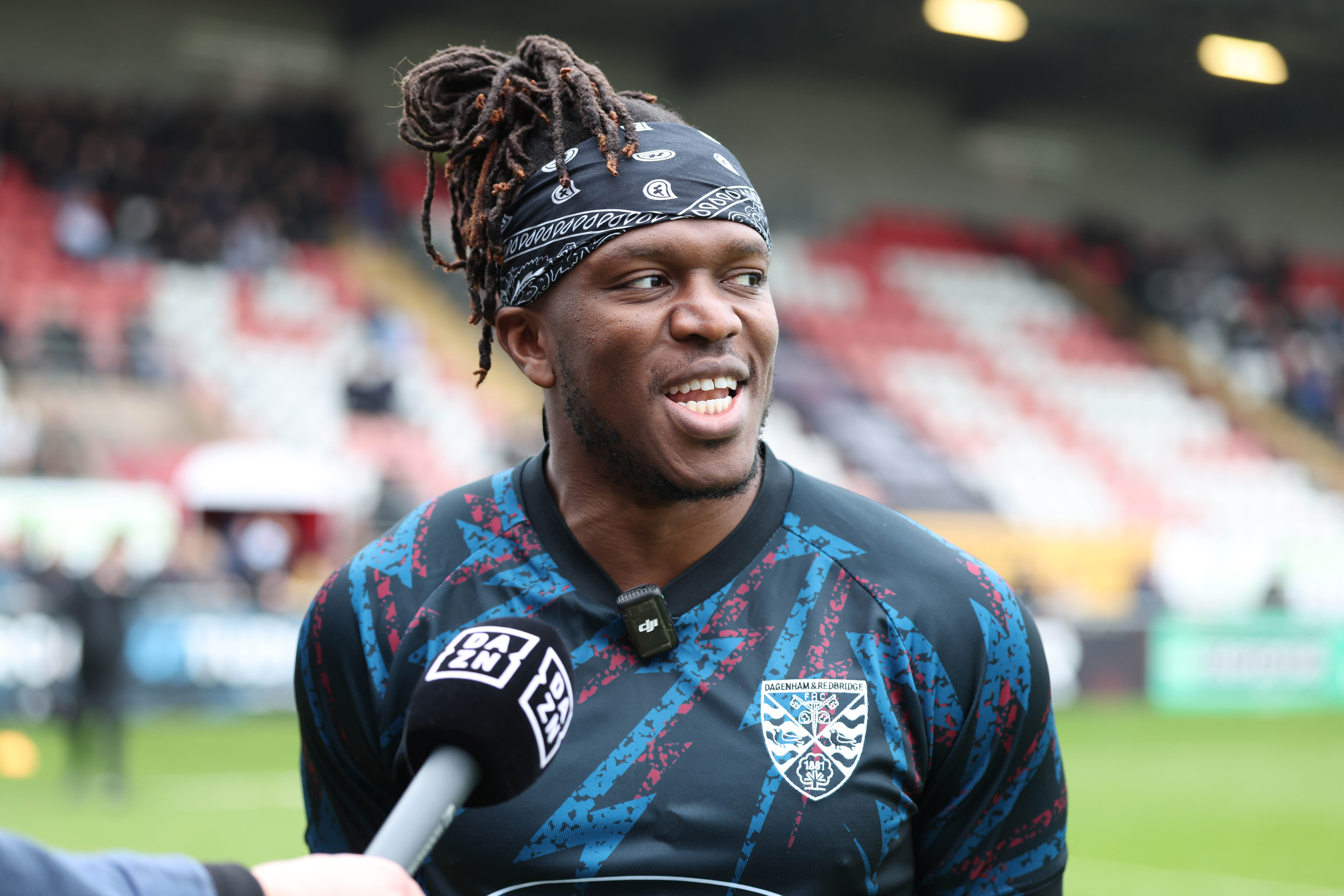
The fact that it took as long as three days counts as a surprise. Last Tuesday, Dagenham & Redbridge announced it had acquired a new investor. KSI can variously be described as a YouTuber, a content creator and an influencer; whatever he is, he is certainly one of the most famous people in the country, at least in the eyes of the younger age cohort.
The announcement that followed, on Friday, really could not have been more predictable. A documentary following his adventures in club ownership had already been commissioned; Race To The Top will start airing on KSI’s YouTube channel in the summer. “When KSI called me on a rainy Sunday morning last November and said he was buying a football club, I knew I had to be there to capture it,” Ben Doyle, of the film’s co-producers, After Party Studios, said.
Some of that is not quite right: KSI has not bought Dagenham; he holds a minority share. Some of it, though, is true in a very literal sense. Doyle – or someone, anyway – had to be there to film it, because the very point of KSI’s involvement is the documentary. Or, perhaps less cynically: his presence at Dagenham would not make much sense, for him or the club, if it did not involve the creation of content.
At times, after all, it does feel as though that has now become both the game’s primary engine and, increasingly, its sole purpose. By poetic coincidence, KSI took in his first match as an investor at Dagenham – a 1-0 win in the National League South against Dorking (who, incidentally, are also the subject of a YouTube channel, Bunch of Amateurs, with 210k subscribers) – a few hours before Wrexham hosted Chelsea in the FA Cup.
That, presumably, is roughly the blueprint he is hoping to follow. Wrexham’s rise from the National League to the cusp of the Premier League has effectively been the result of a self-charging circle, in which a documentary centered on celebrity owners attracts an audience, which draws investment, which inspires success, which compounds the audience.
It does, admittedly, come at a cost. Shots of Reynolds and Mac, sitting in the stands at the Stok Cae Ras for what will doubtless be a centrepiece of the next season of Welcome to Wrexham, appeared almost immediately after both of Wrexham’s goals on Saturday.
Everything that the club, and the town, have experienced under their stewardship is both genuine and meaningful for a fanbase and a region that has suffered for decades; it has also, though, been mediated through the reactions of the two famous people who are seen to have made it all possible. This is football as a content form, a culture reduced to serving as a backdrop for the real stars of the story.
It would be easy to be even more cynical about KSI’s plans for Dagenham. Not just because it is derivative – which it is, just like all of the other efforts that have followed Welcome to Wrexham – but because the chances of success seem much slimmer. Reynolds is a bona fide superstar. Mac is a wildly successful television actor and producer. The source of KSI’s fame, to anyone over the age of 35, would be rather more enigmatic.
That distinction, though, is false. It is tempting to write KSI and his peers off as being famous for nothing; he first rose to prominence filming himself playing computer games, after all, which feels like inarguable evidence of the ongoing decline of civilisation. He is better understood, though, as being famous for everything.
Newsletters
Choose the newsletters you want to receive
View more
For information about how The Observer protects your data, read our Privacy Policy
In the last decade and a half – he has been famous for a long time; at 32, for content creators, he is positively ancient – KSI has released several albums, been involved in a number of celebrity boxing bouts, staged a host of charity football matches, made a couple of documentaries, released an autobiography, invested in everything from a weirdly popular (for a while) drink to restaurant ventures and fashion brands, and become a judge on Britain’s Got Talent.
In that light, investing in a football club does not seem like such a stretch. The words that are used to describe him – YouTuber, content creator, influencer – are newfangled, often slightly derogatory, as though they are a lesser form of culture, an undeserving source of fame.
But they are also a little obfuscatory. KSI, like most YouTubers, makes television. Most of his content takes a fundamentally recognisable form: sketches or pranks, in the early days, or curated snippets of his real life. The medium has changed but the content has not.
Likewise, his ventures outside of YouTube are strikingly traditional. Writing a book and going on BGT is hardly revolutionary, and nor, frankly, is buying a football team. The game has always held that appeal, that power. What makes KSI different is that he is a standard-bearer not for an old industry, one that builds ships or brews drinks or allows people to gamble, but a thoroughly modern one: one that makes content.
And in that, he represents something very new. The Wrexham model has become the only one that any club outside of the cosseted few can hope to follow if they are to have their moment in the sun, their shot at glory. Football has always sold itself as a meritocracy, but its economics are now so skewed that it is, in effect, a lottery. The ultimate dream for most fans, now, is that someone should choose their club as the scene for their own story, that they should get to come along for the ride while they make someone else even more famous.
Photograph by Richard Pelham/Getty Images