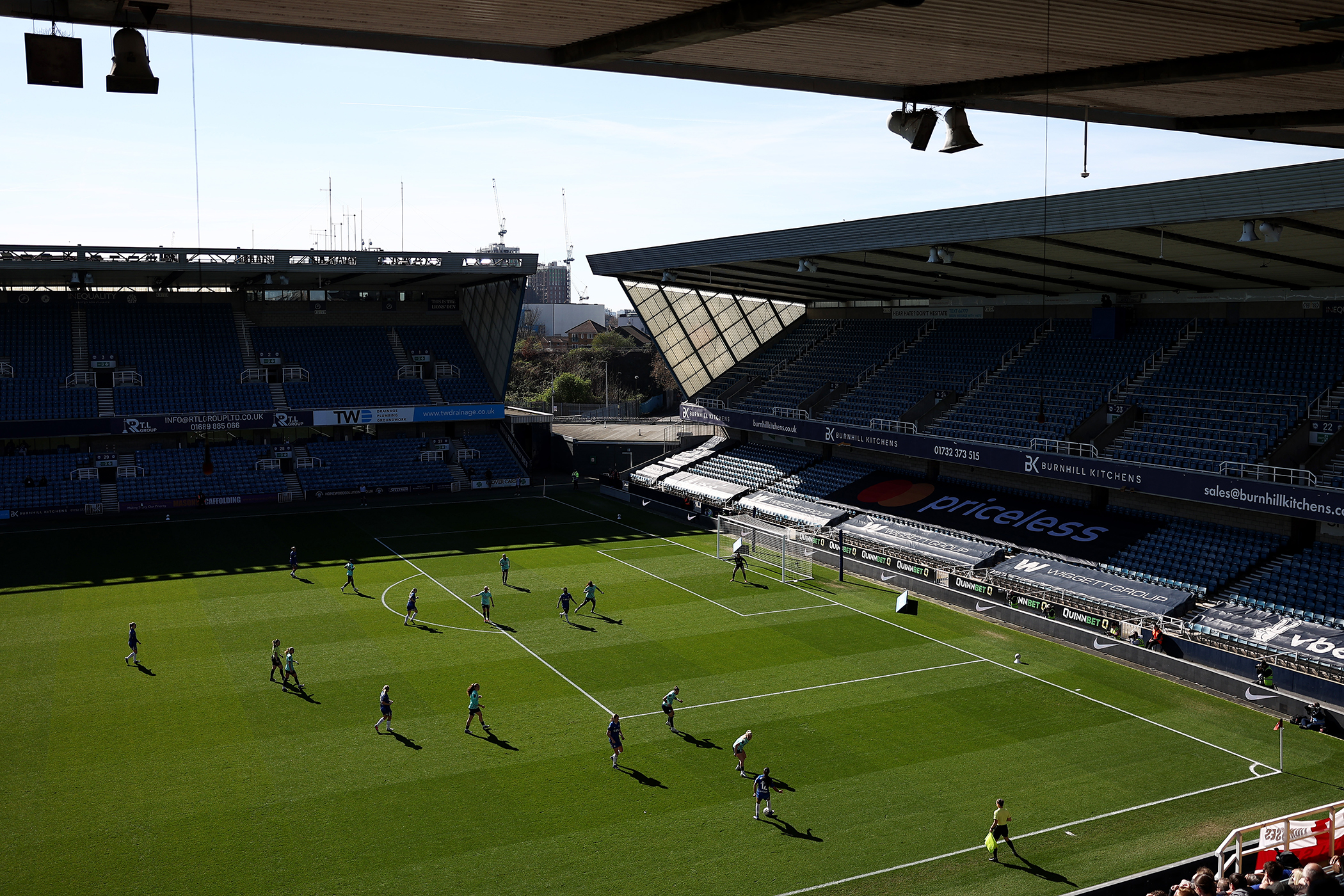



Across south-east London, post boxes rattled. Not only with campaign material for local council elections, but campaign material for a far more important cause – the fight for hearts, minds and bums on seats in the Women’s Super League. “WSL football in South East London” it proclaimed. The highest level of women’s football in the country was returning to The Den.
This was not a Millwall game, but London City Lionesses facing Chelsea. Part of Michele Kang’s Kynisca multi-club group which also owns Lyon (renamed to OL Lyonnes) and Washington Spirit, they boast being the only independent club in the WSL.
Being independent is not the same as being from nowhere. London City Lionesses were returning home themselves.
In 2019, Millwall Lionesses separated from the club, after being forced to crowdfund £17,500 to avoid going into administration. They took a WSL2 license and created a team separate from the club. Millwall restarted a women’s team in the Eastern Women’s Region League, the sixth tier of the women’s game.
Exactly who was to blame for that decision depends who you ask, but as a statement from the Millwall Supporters Club upon the announcement that London City Lionesses would be using The Den made clear, tensions still run high.
It read: “The breakaway nearly destroyed a team rooted in our community, a proud team, one of the first to be established back in 1972 and the first to be directly linked to a men’s club! We won the FA Cup (twice) and Women’s Premier League, while opening up football to girls and women from all backgrounds across our community.
“On the back of our proud history, they now play in the Women’s Super League from their own ground in Bromley. Well they can stay there... some things are more important and worth more than money!”
The decision to use The Den came from the requirement that every WSL team has a second ground available for use in case of fixture clashes. London City Lionesses’ home ground is at Hayes Lane where Bromley play. With this game having to be moved to Saturday because of Chelsea’s Champions League involvement, and with Bromley at home, the game ended up at Millwall.Millwall made an apology about the decision to agree to the groundshare.
“The club is fully aware of the history between the Millwall Lionesses and London City and understands the strength of feeling attached to it.
“We have agreed that as an immediate commitment, all net revenue generated by the club from this fixture will be reinvested back into Millwall Lionesses.”
Newsletters
Choose the newsletters you want to receive
View more
For information about how The Observer protects your data, read our Privacy Policy
The undertones from London City Lionesses is that any history of the club has nothing to do with them, given that there have been several ownership changes since then. Historical discontinuity has been a feature of Kang’s ownership globally as she unblinkingly changed the name of the most successful club in women’s football history from Lyon to OL Lyonnes, inspired by a lioness Kang once saw on safari.
It is a shoulder shrug that Chelsea themselves are familiar with. The same rationale is what has helped the club receive the financial equivalent of a slap on the wrist for secret payments made to sign players during the Roman Abramovich era. Football clubs are no longer constants formed out of a geography and fanbase, but instead financial assets passed from owner to owner.
London City Lionesses are happy to curate daytrippers as a fanbase. Match day therefore involves a brass band intermittently playing thirty seconds of a random selection of songs, killing any real atmosphere that might be generated by people cheering for the team.
They have also been frank that commercial considerations form a part of their decision-making when it comes to player recruitment. The rationale is that women’s football fans are as likely to follow players between clubs as they are to choose to support just one team.
That hasn’t stopped them building an impressive squad, thanks to the significant spending of Kang. Reports from France say the outlay for Grace Geyoro exceeded anything today’s opponents have spent on an individual player.
It was 23-year-old Izzy Goodwin who equalised for them against Chelsea, a more compelling success story than Geyoro, having worked her way through the leagues to be playing in the WSL.The 1-1 draw with Chelsea was no smash and grab, with Lionesses dominating the second half. It was the biggest result for the team this season and a sign of what they want to come. They have been unabashed in their declaration that they want to be in the Champions League as soon as possible as well as challenging for the WSL title. To that extent maybe this season has been something of a disappointment – the draw leaves them seventh, level on points with Everton.
Women’s football is particularly susceptible to the lure of money because it needs it. Chelsea are the ideal example of this, spending their way freely to success via investment from the men’s side of the club. But even then they were still tied to an identity and a history that existed for more than a hundred years. London City Lionesses can’t draw on that, but they don’t seem particularly interested in doing so if they could.
Photography by James Fearn/Getty Images