
Related articles:
The moment came and went so quickly that it may not have happened at all. In the couple of seconds that the camera lingered on Luis Enrique’s face, he seemed to shift through surprise, realisation, pleasure and pain almost instantly. But maybe seemed was the operative word. Maybe it was transference. Maybe that was just how it felt like he would feel.
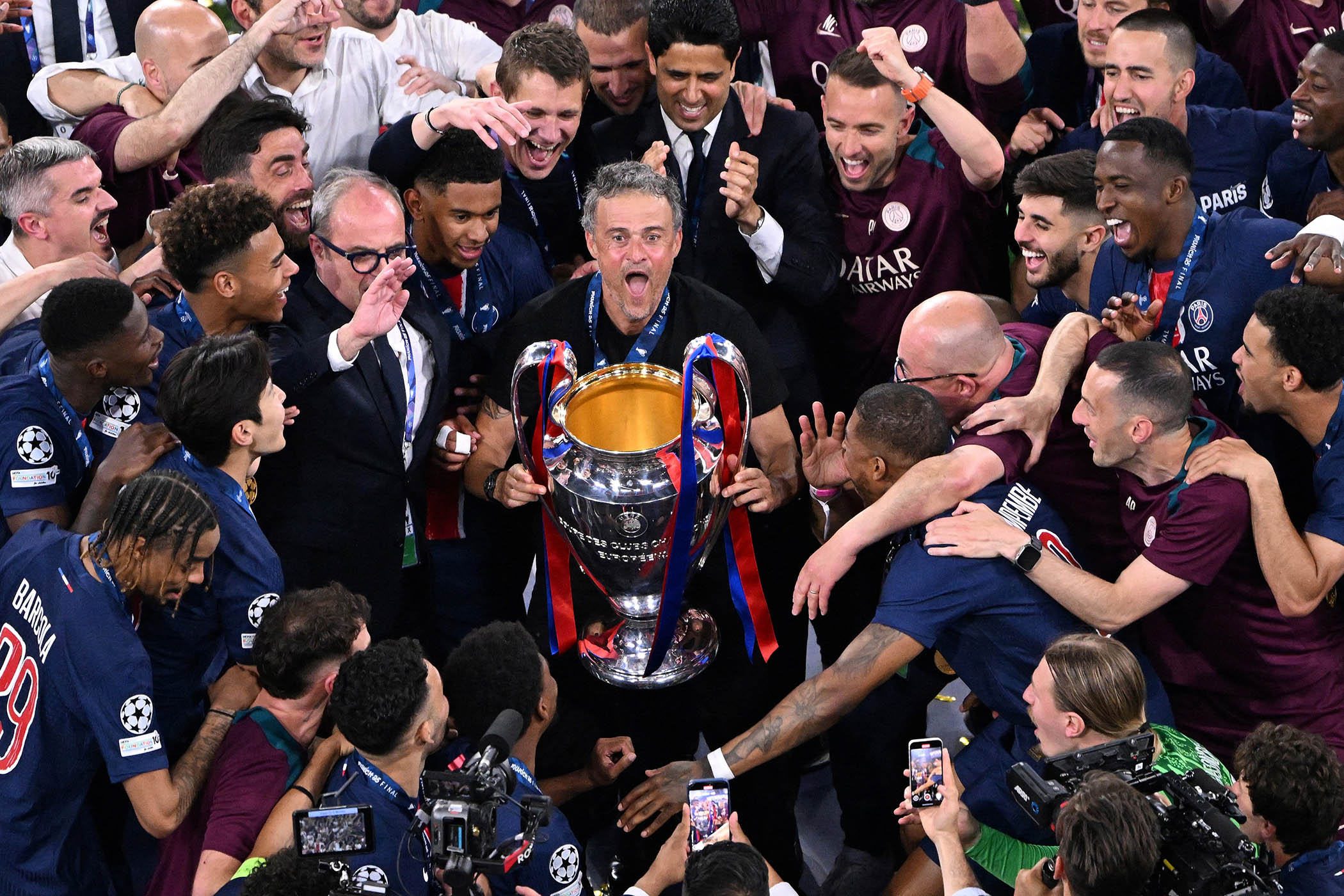
It came in the aftermath of the high point of his managerial career. Paris Saint-Germain team had just completed their obliteration of Inter Milan, following the most one-sided Champions League final in recent memory. A decade and a half after the club were recruited as a vessel for Qatar’s geopolitical ambitions, Luis Enrique had delivered their first European Cup. He was strolling around the pitch at the Allianz Arena, congratulating his players and staff, surrounded at all times by a shoal of photographers and cameramen. As he approached the end of the stadium that housed the bulk of PSG’s fans, he looked up at the stands just as the club’s ultras were unfurling a banner.
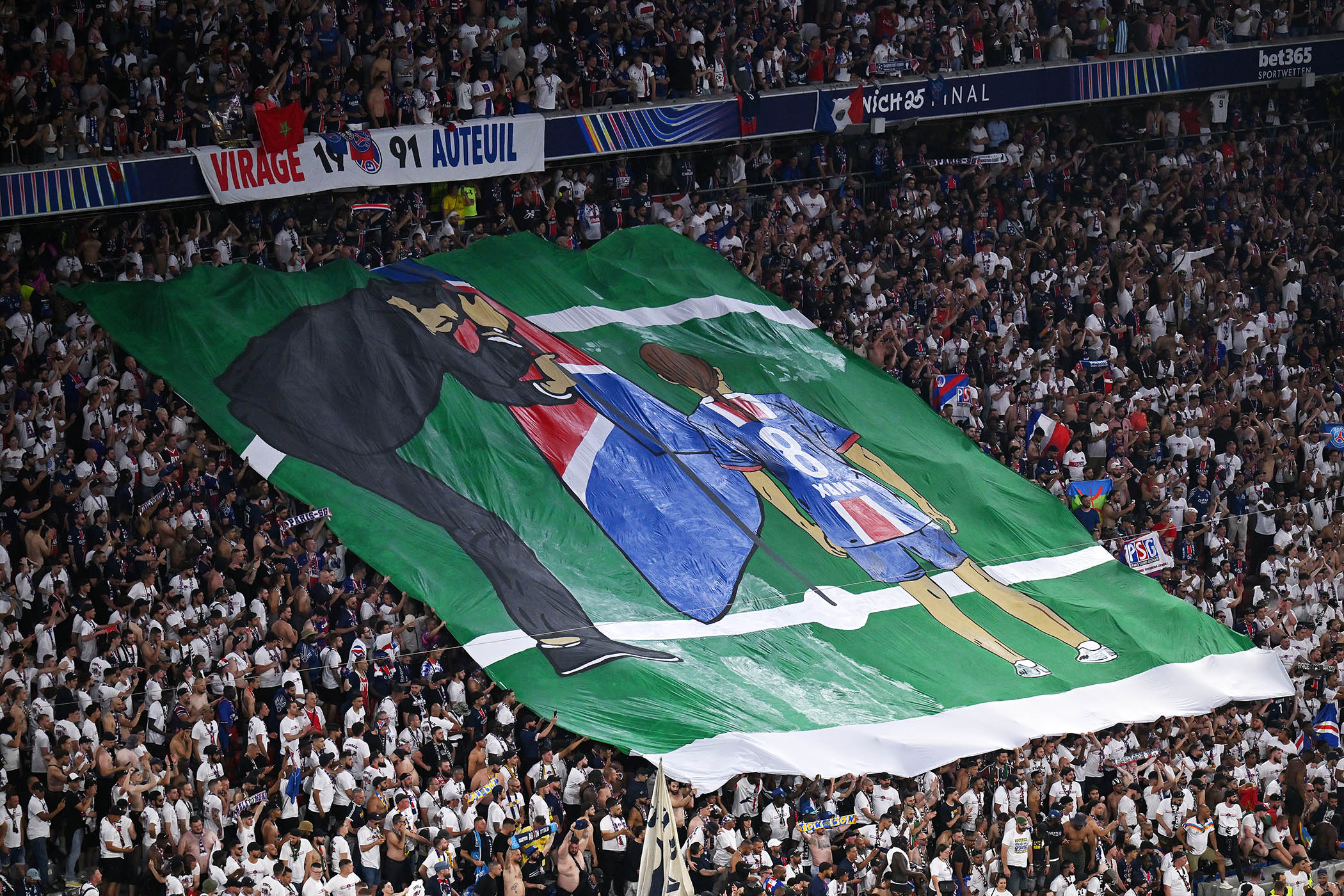
The image was of him planting a flag in the centre circle of a pitch. Depicted at his side was his younger daughter, Xana, who had died in 2019 after a five-month battle with osteosarcoma, a rare form of bone cancer. She was nine. Although she had died before her father joined PSG, she was depicted on the banner wearing a PSG shirt, bearing the No8 and her name.
Since Xana’s loss, her father has been unusually, admirably frank about his grief. In a 2024 documentary, he insisted he felt “lucky” that she had “come to live with us for nine years”. He described telling his mother that she should not be afraid to look at photos of her granddaughter. “She is with us,” he said. “Not in the physical plane, but in the spiritual.” The combination of candour and wild, blistering sorrow is difficult to watch. It is almost possible to see his broken heart.
Still, on the pitch in Munich, it was hard not to wonder if it was in some way intrusive. The gesture was designed to be sweet and heartfelt, made all the more powerful by the fact that it came from a group of people – PSG’s ultras – who might not often attract those sorts of adjectives.
But grief is personal, in its nature and its timescale; it is at the discretion of the individual when they choose to confront it, when they feel strong enough to look it in the eyes. The banner deprived Luis Enrique of that agency.
From the outside, his face seemed to convey that. There had been just the hint of a smile when he first saw it, clearly touched. But then it seemed like a cloud passed over him: he looked away, looked down, tried to move on, shouldering his way through the throng around him. Maybe it had caught him unaware, distracted and disarmed, sneaking through his defences.
Or maybe that was the transference, a reflection of how it felt like he should feel in that moment, rooted not in his experience of grief but in our expectations of it. As he walked away, it was possible to make out the image on his T-shirt. It was a sketch of him and Xana, his beloved daughter, planting a flag in the turf.
Related articles:
Convention dictates that we try to draw a throughline, nice and neat and easy to follow, between who a person used to be and who they have become. This is based on the underlying assumption that the past explains the present, that our lives and our characters follow a sort of basic narrative structure.
For example, in his tumultuous spell as a player at Real Madrid, Luis Enrique once recommended a book to Ángel Cappa, a well-respected and vastly experienced coach then working as an assistant to the club’s manager, Jorge Valdano. “It was about food and athletic performance,” Cappa told The Observer. “Advice like not mixing tomatoes and potatoes. It was quite good. I’m not sure it really changed my diet.”
Newsletters
Choose the newsletters you want to receive
View more
For information about how The Observer protects your data, read our Privacy Policy
It was typical of Enrique’s character. “He was a truly versatile player,” he said. “He could play on the left, the right, at full-back, as a striker. Those are all very different jobs, but he knew how to do them all. He had first-class technique, but he wasn’t a magician. He just knew how to play good football, wherever he was. If he had to dribble, he dribbled. If he had to pass, he passed.”
He was not, in his recollection, quite as gregarious as some of his team-mates. Fernando Redondo and Fernando Hierro would happily spend hours talking; Luis Enrique was a little more reserved, a little more intense. He did extra gym sessions. He loved the physical side of the game, the fitness, the conditioning, the parts that many players regard as necessary evils. That did not change after he moved, in unsurprisingly acrimonious circumstances, to Barcelona. “Dynamic, charismatic, a natural athlete,” said Juan Antonio Pizzi, a rangy Argentinian striker who played alongside him at Camp Nou.
The tendency, here, is to engage in a little more simple transference. Luis Enrique was a Swiss Army knife of a player, a winger and a striker and a full-back all in one. He was also a fitness obsessive, a runner and a gym rat, tireless and industrious. It does not require an especially active imagination to see those traits struck through the core of the PSG team he will lead into a second straight Champions League final next Saturday. The manager reflects the player. The outcome echoes the origin. This is how stories are supposed to work.
A few weeks ago, Luis Enrique was standing in front of a camera again, this time with a beaming smile. His PSG team had just beaten Bayern Munich 5-4, in what was by some distance the best game of the season. In the middle of his post-match interview with CBS Sports, the American broadcaster, he spotted his Bayern counterpart, Vincent Kompany.
The PSG manager broke off and walked over to the Belgian, clasping him by the hand and slapping him heartily on the shoulder. “Did you enjoy that?” he asked Kompany, with a raucous laugh. The two seemed gleeful, borderline giddy.
This is a new side to the Spaniard. During his managerial stint at Barcelona, he tended to be waspish, irascible, almost a little sneering during his public appearances. (Most managers hate journalists. They regard press conferences as an imposition and a bore. But most realise that fans consume those images and read those words, too, so they try to hide it.) His public image has softened considerably. Before and during the 2022 World Cup, while he was in charge of Spain, he launched his own channel on the streaming service Twitch, simultaneously offering fans an insight into his decision-making and cutting journalists out. At PSG, he has learned French and overcome his objections to answering questions in English.
That brings with it a temptation, one that not only risks being glib but conflating the life-alteringly serious and the inherently trivial: to suggest that at the root of that change is the loss of his daughter, to intimate that the scale of the tragedy – to use the chilling cliché – put everything into perspective.
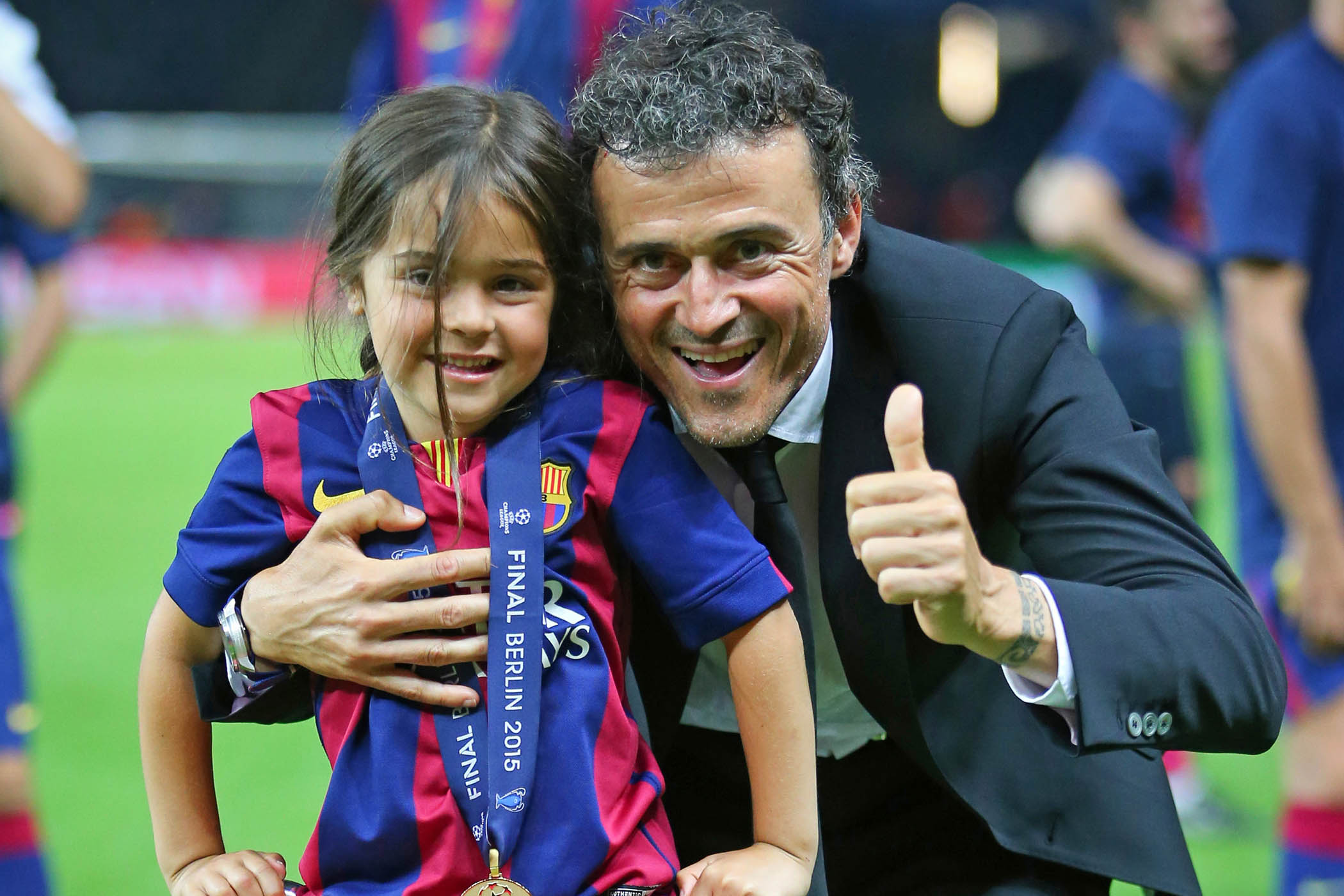
The rational response to this is: obviously. Obviously something so agonising would change the way you interact with the world. The searing pain of any loss, let alone the loss of a child, makes everything feel pointless, at least for a while, and how long that while lasts is not subject to strict limits.
And so, when Luis Enrique revealed on a Twitch stream in 2022 that he had become fascinated by Stoicism – reading the works of Epictetus, Seneca and the Meditations of Marcus Aurelius – it was interpreted as a sign that in his grief he had come to see the futility of material want. When he recommended Man’s Search For Meaning, Viktor Frankl’s account of life in a concentration camp, it was seen as proof that he was trying to turn his pain into purpose.
This all fits neatly, as long as you deliberately ignore the fact that people are not quite so simple, so linear, so narratively satisfying. After his playing career came to an end, Luis Enrique developed an obsession with extreme endurance events. He ran a couple of marathons, then did a few triathlons. They were his gateway drugs. Soon, he was doing Ironman competitions, ultra-marathons.
He was a millionaire who wanted to suffer, who needed to suffer
He was a millionaire who wanted to suffer, who needed to suffer
Víctor Gonzalo
In 2008, he did the Marathon des Sables, the world’s toughest race, held over six days across the Sahara desert. “He was tall, tanned and looked like a proper athlete,” said Tom Middlemiss, who ran the same year, beating Luis Enrique by three minutes. He later competed in Quebrantahuesos – The Boneshaker – a mountain bike race in the Pyrenees. He has done the Titan Desert race, back in Morocco.
His descriptions of all of them make them sound intensely unpleasant: “Sleeping on the ground, with stones digging into your body, enduring blizzards, having your tent collapse on top of you at night” during the Marathon des Sables was “an unforgettable memory”; throwing away his rations to reduce weight during the Titan Desert race was a chance to see “what the mind can achieve”.
His Stoicism, in other words, is nothing new. “He was a millionaire who wanted to suffer, who needed to suffer,” his early triathlon coach, Víctor Gonzalo, once said. He was sufficiently ascetic as a young man to recommend a nutrition guide to his coach. He has always been a fitness obsessive. Over the years, if anything, he has just become more and more himself.
He will have been changed, doubtless, by the loss of Xana, consciously and unconsciously. It is impossible he was not. It is the defining event of his life. But there is something reductive about imbuing it with explanatory power, placing it in a football context. He has always been clear on that. He does not, he has said, “need to win a match to think of my daughter”. She is with him in victory, and in defeat, and at all times in between.
Photographs by Kirill Kudryavtsev / AFP via Getty Images, Dan Mullan and Stefan Matzke / Getty Images