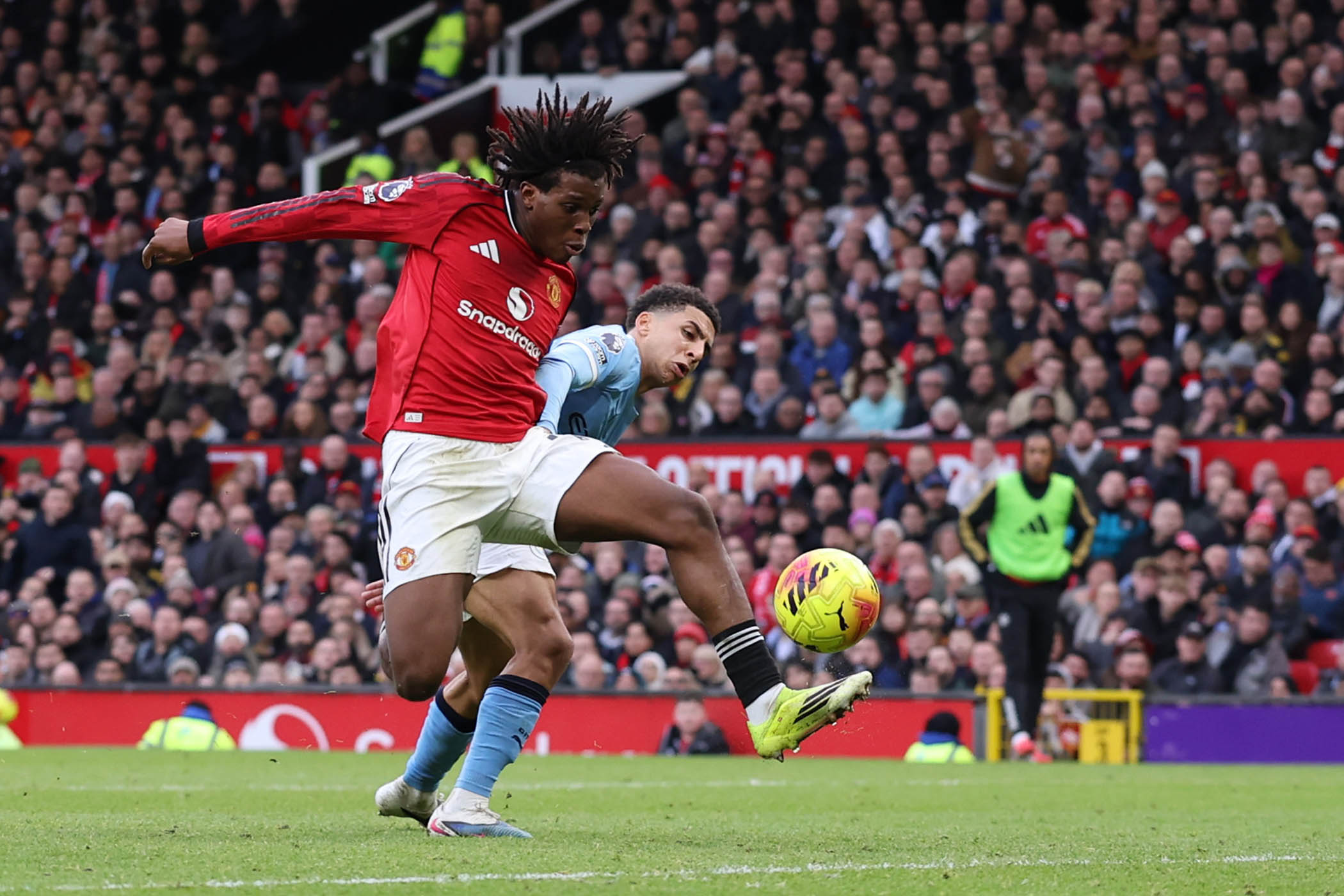

In those last few minutes, as Manchester United tore through Manchester City over and over again, as Old Trafford went from giddiness to glee and then into something approaching delirium, as the cameras picked out Sir Alex Ferguson beaming in the stands, it was hard – for a moment, at least – not to believe in magic.
Maybe the key to United’s future really does lie in the past. Maybe the appointment of a former player as interim manager was more than an opioid for their beleaguered fans, red meat for the base, a populist move that smacked of a lack of both imagination and strategy. Maybe it was a restoration of the club’s identity, a long-awaited reconnection to their DNA. Maybe Michael Carrick was the answer all along.
The contrast, certainly, was remarkable. Old Trafford has been a discontented sort of place for years; in the last days of Ruben Amorim’s tenure, it had become particularly truculent, dissatisfied, irascible. Even victory could feel like torture; as United trickled to a slender win against Newcastle on Boxing Day, the crowd audibly groaned at the prospect of seven minutes of injury time.
Not yet a month later, it was utterly transformed: defiant, raucous and jubilant. As he stood on the touchline, admirably and consciously impassive, Carrick’s name echoed around the Stretford End. The crowd cheered everything, up to and including the attendance. In the stands, it was possible to imagine there were parents whispering to disbelieving children that this is how it used to be, this is how it is supposed to feel.
And that, of course, is the problem. Manchester United know more than most that things that are bad for you are sometimes the things that make you feel good. They know that they have made this mistake before, allowing the heart to overrule the head, overlooking the rational in favour of the romantic.
That was precisely what happened, not all that long ago, with Ole Gunnar Solskjær, another beloved former player who returned as an emergency measure, a sedative for a restive fanbase, and who fulfilled his mission so successfully that he was handed a completely different one and, to nobody’s great surprise, failed.
Beneath the euphoria of the derby, of the dismantling of their city rivals, a 2-0 victory that did not remotely capture United’s superiority – Carrick’s team had a further three goals ruled out, and struck the bar and the post – that folk memory bubbled away, tacit but universal, a collective parable that teaches the benefits of temptation. It was just one game, one performance. It was a derby. It was a new manager bounce. It is not indicative. It is not evidence.
Obviously, logically, that is how United have to think. Carrick is here until the summer, when a long-term appointment with a more convincing résumé can be found. Thomas Tuchel, Oliver Glasner, Luis Enrique, Mauricio Pochettino. Football is a business for cool heads and sharp minds. It is no place for childish nostalgia, for flights of fancy.
The problem is that it is not quite as simple as that. Assuming all goes well when he undergoes his medical on today, Marc Guéhi will at some point this week become the 14th signing City have made in the last 12 months.
It is not hard to grasp why the club were willing to pay a premium for the Crystal Palace defender now, rather than wait until his contract at Selhurst Park expires in the summer: injuries to Joško Gvardiol and Rúben Dias meant that Guardiola started the derby with a defensive pairing of Abdukodir Khusanov and the recently recalled loanee Max Alleyne.
Newsletters
Choose the newsletters you want to receive
View more
For information about how The Observer protects your data, read our Privacy Policy
Still, Guéhi does not come cheap. Most estimates of City’s spending over the past year – the £20m cost of the England international will push it somewhere north of £414m – account for fees alone. Guéhi, though, came with a colossal agent’s commission, as well as what might politely be described as a competitive salary. The actual financial commitment for that single deal is way beyond £20m; it could, eventually, run as high as four times that.
City would point out that they are far from the only Premier League team capable of sanctioning eye-watering levels of spending, even if it does seem to come just a little easier to them than others (for reasons that were interrogated in the Old Trafford stands as the two sides of Manchester waited for kick-off).
Liverpool had a similar sort of outlay last summer, albeit one offset in part by sales; Arsenal have lavished £550m on their squad in three seasons; Chelsea much more than a billion in the four years of American ownership. And United themselves are hardly paupers, habitually committing £200m a year to new talent.
The difference, obviously, is the starting point. Thanks to a decade of muddled thinking, of complacency and stagnation, United have to spend money to try to catch up. But their rivals and their peers are not standing still; as City’s spending shows, United are trying to hit not just a moving target, but an accelerating one. Under Sir Jim Ratcliffe, United have tried to find shortcuts, largely by recruiting staff members directly or indirectly from City: half a dozen of their executives, including chief executive Omar Berrada and director of football Jason Wilcox, earned their reputations on the other side of Manchester. But that still requires time, patience, a willingness to suffer today in order to improve tomorrow.
That is, of course, what they should do. The idea of Manchester United’s DNA as a silver bullet, a simple solution to a complex problem, might be endlessly propagated by the many club alumni who populate the media, is an obvious placebo; the club’s hierarchy occasional tendency to indulge it is essentially an admission of defeat, an abrogation of responsibility.
Except that there is no guarantee the slow, painstaking approach will work, either. United cannot outspend their opponents. Nor is there any evidence they can out-think them, outflank them strategically. Everything and everyone moves too fast. In the circumstances, then, it is just about possible to ask: why not believe in magic?
Photograph by Copa/Getty Images