

“We’re trying to achieve a dream while living through a nightmare. I’m not sure how much more time we have left,” said Michael Anton Monsour, fighting back tears.
“If we don’t see this through, who will?”
It was the third time I’d spoken to Monsour, a film director and actor turned football club owner, whose background in senior living and memory care had shaped a vision for the game that fused technology, health and advocacy.
The last time he had been surrounded by boxes, sitting in his living room on the final day at his home, having lost it to foreclosure after pursuing a vision to end chronic traumatic encephalopathy (CTE) in football.
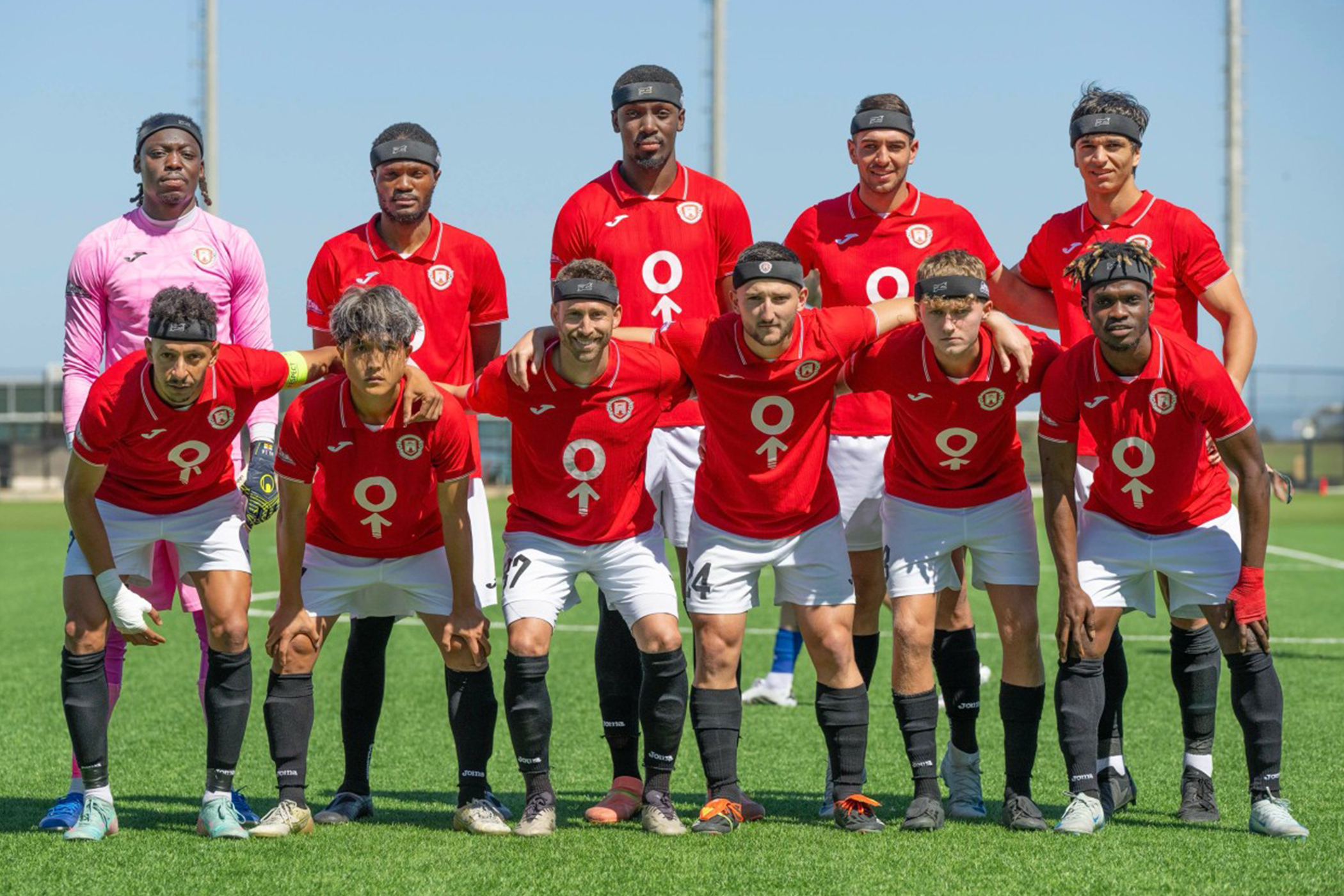
His club, Manchester 62, competes in the Gibraltar Football League and had once been known as Manchester United Football Club, until Gibraltar’s Uefa admission in 2013 prompted a rebrand. Founded in 1962 with the blessing of Sir Matt Busby, Manchester 62 wears the colours of their Premier League namesakes. The club have won the Gibraltar Premier Division seven times and lifted the Rock Cup on three occasions, though silverware has eluded them for 22 years. Gibraltar itself is a British Overseas Territory at the tip of the Iberian Peninsula, just 2.6 square miles and home to a little more than 40,000 people.
In a European football market awash with American capital, from multi-billion dollar private equity funds to Hollywood actors, Monsour is definitely an outlier.
He arrived in Gibraltar in 2022 with a radical mission: to make Manchester 62 a global beacon in the fight against CTE, the neurodegenerative disease linked to repeated head trauma in contact sports.
Sporting Kansas City defender Scott Vermillion died of drug and alcohol poisoning in 2020, and was posthumously diagnosed with CTE. His death had seen the focus on CTE arrive into football in the US, having already been the subject of scrutiny in the NFL – even the basis for the 2015 Will Smith movie, Concussion. Vermillion’s reported decline into substance abuse and erratic behaviour was emblematic of the crisis Monsour, then owner of Pittsburgh City United in the United Premier Soccer League, had hoped to address.
In January 2023, Manchester 62 became the first top-flight European club to give all 10 outfield players protective headgear, in partnership with the Concussion Legacy Foundation. The gear has evolved to be lighter and more advanced, and while not mandatory, few players have declined to wear it over the past two and a half years.
But the vision now hangs by a thread. A promised $20m investment announced last year from US investment vehicle Monstranamus fell short, with the club claiming to have received a fraction of that sum, and they now need $400,000 to survive past January. Players haven’t been paid in four months. A sit-down protest before last month’s match against Lincoln Red Imps led to a points deduction from the Gibraltar Football Association. Monsour, who arrived without deep pockets, lost his US home to foreclosure earlier this year.
Newsletters
Choose the newsletters you want to receive
View more
For information about how The Observer protects your data, read our Privacy Policy
He wrote to the GFA, requesting Uefa approval to mandate headgear as an employer seeking to protect his players. The request was denied, but Monsour believes the documentation could prove pivotal in future litigation.
“You can’t say you weren’t aware,” he said. “Uefa has it on file. Any lawyer could point to it and say, ‘Here’s an owner trying to protect his players.’”
Monsour believes the club were close to triggering broader adoption. “We’d be working with other clubs. We’d be in the 3D brain mapping stage, testing live brain data in-game. But we’re stuck in a spiral of low operating capital. The science is there. The will is there. But the funding isn’t.”
The players still wear the headgear. But how many will remain is uncertain.
Joseph Chipolina, a Gibraltar football legend and Manchester 62’s 37-year-old left-back, was the first Gibraltarian to score in the Uefa Champions League. He is the nation’s third most-capped player with 61. In October 2018 he scored the goal from the spot to hand Gibraltar their first ever competitive win as they defeated Armenia in the Nations League.
“We’re still doing it all, we’re training, playing, wearing the headgear,” said Chipolina. “But with no money coming in, it’s not easy. I’m OK as I’ve a job as a prison officer and have investments. But for some of the lads, football is their only income. I’ve paid rent for one player twice. Some have eviction notices. Their water’s been shut off.”
But he believes in the headgear’s potential. “It’s not the most comfortable, but it’s safe. I had a collision recently and it protected me. It doesn’t feel the same when heading the ball, but it could be scaled with the right tech. When I started, people mocked it. That stops. It could be something bigger. But right now, the lads are just trying to afford rent and food.”
Monsour remains stoic, despite the toll on his personal life. Some staff have refused pay until the crisis is resolved.
Melanie McKenzie, Manchester 62’s general manager for the past 18 months, has worked across Gibraltar’s football landscape, including stints at Mons Calpe SC, Boca Juniors Gibraltar, and Europa Point.
“I’d walked away from football,” she said. “But Michael called and asked me to join. I wouldn’t work for anyone else. We’ve worked so hard. We’ve reassured the GFA we can finish the season, even if players leave. That’s the only concern we don’t have.”
McKenzie, too, believes in the mission. “It’s incredibly stressful, but Michael hasn’t stopped fighting. That makes you fight too. I believe in what we’re building. I believe it can outlast our time here.”
Monsour knows this is the last chance. Some financial aid from medical industry contacts helped stem the bleeding. With few options left, he hopes a medical company will see the value in scaling the technology.
“My personal sacrifice has been terrible,” he said. “But it’s the weight of Mel’s sacrifice, the staff, the players, the believers. I was a man on an island for so long. You need advocates, those people willing to fall on their sword. Not just cheque-writers. Fighters.
“If we fail here, my fear is it won’t happen again. And more people will suffer from CTE, dementia, and worse. We’re doing this to save lives.”
The Observer approached Monstranamus CEO, Takeshi Cheng, for comment and received no response at time of publication.