

“After the news that a world record had been broken, and a great athletic landmark passed, there was pandemonium among the spectators.”
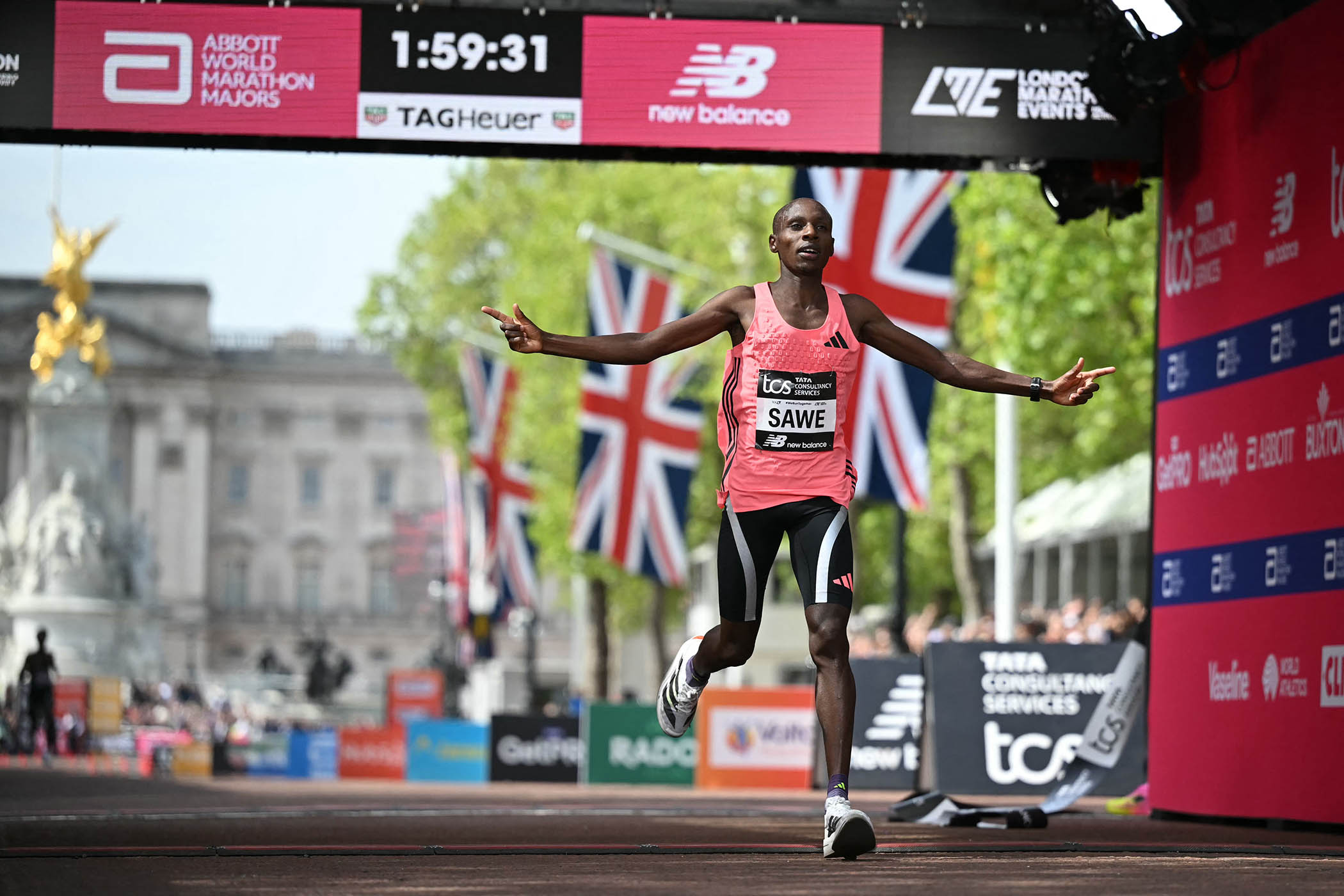
Those words, written in the Guardian on Friday 7 May 1954, could quite easily be applied to yesterday’s extraordinary feat by Sabastian Sawe, who became the first person to break the two-hour barrier in a marathon, marking a seismic moment in athletic performance.
On Thursday 6 May 1954, Roger Bannister became the first person to break the four-minute mile – it is not a stretch, nor recency bias, to suggest that yesterday’s achievement by Sawe will become as historically significant.
How fitting it is, then, that in one of those moments of glorious sporting predeterminations, the two are connected. One of Bannister’s pacemakers on that historic evening at Oxford’s Iffley Road track was Chris Brasher, the former athlete turned Observer journalist, who after visiting the New York Marathon helped launch the inaugural London Marathon in 1981, and whose son, Hugh, remains CEO of the event to this day.
And how fitting it is that, if you wanted to look to divine intervention to explain the unexplainable, that his name, Sabastian, just so happens to be the patron saint of athletes.
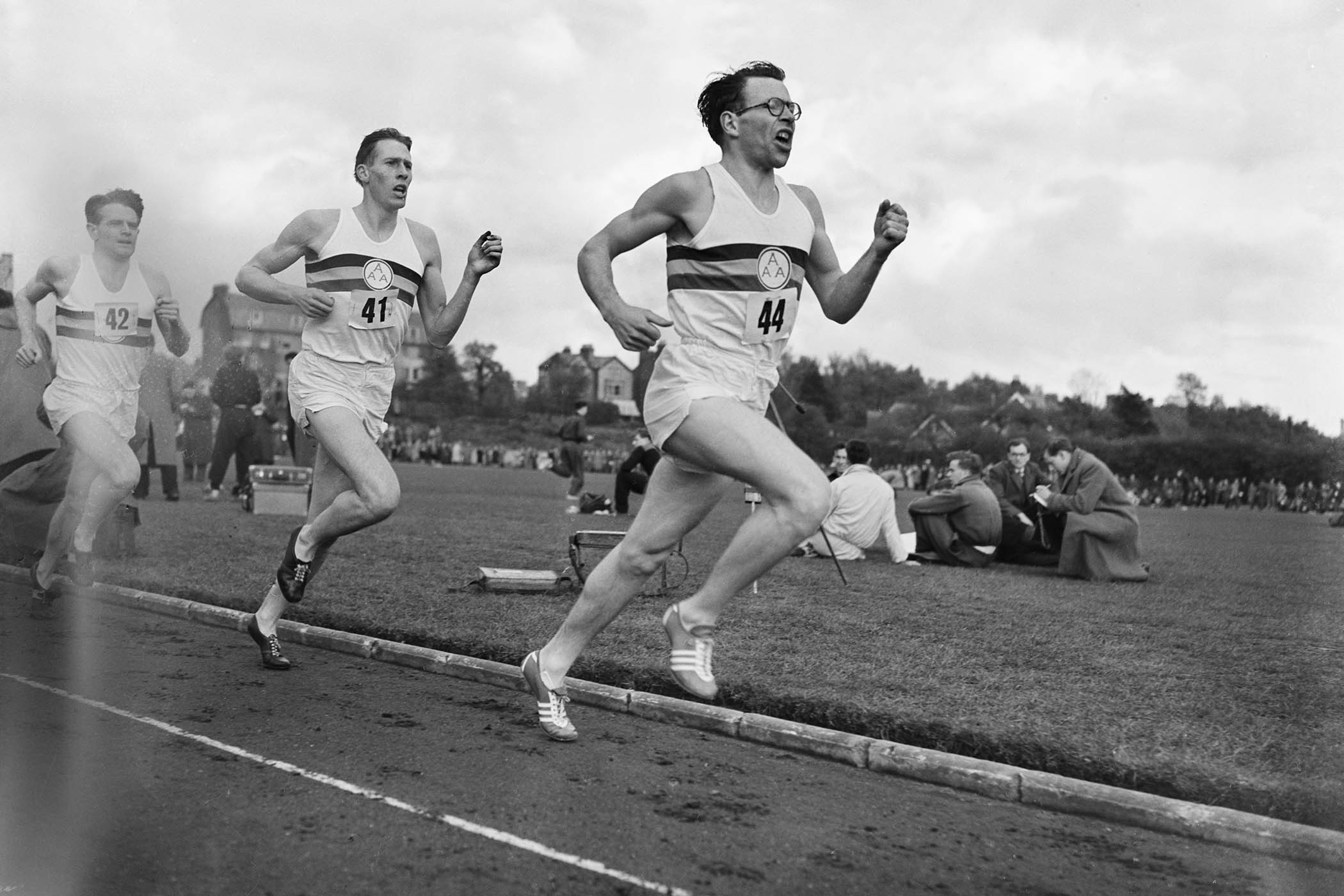
Chris Brasher (1928 - 2003) takes the lead, closely followed by Roger Bannister during a historic race at Iffley Road, Oxford. This was the event which saw Bannister break the world record by running a mile in 3 minutes, 59.4 seconds.
How fitting it is, too, that the old cliché about London buses was also present here. We’ve waited forever for someone to break the two-hour marathon mark, then two came along at once. Ethiopia’s Yomif Kejelcha became the second person to break the two-hour mark, crossing the line 11 seconds after Sawe in a time of 1:59.41. It would be unfair to cast Kejelcha as some sort of Buzz Aldrin figure, but one must hope that history will remember what an extraordinary effort his also was. A sidenote: if Kejelcha is Aldrin, spare a thought for the Michael Collins of this piece – third-placed Jacob Kiplimo, who clocked 2:00.28, a time which would have been a world record before today’s exploits.
One of the more intriguing elements of being there to see history in the making is that the majority of the million spectators lining the streets won’t have realised what they witnessed. At the 22-mile mark, the only point I was able to glimpse Sawe and Kejelcha – both a picture of unflustered calm, as if it were just another Sunday run – most spectators were understandably more interested in cheering on friends passing mile 14, on the other side of the road.
The beauty of elite sport is that it finds new ways of confounding prior reason and logic. Sawe’s achievement should not have happened in the London Marathon. It never happens in the London Marathon. Before yesterday, the men’s marathon world record had been set at the London Marathon once – as many times as in Port Talbot, where Brian Kilby ran 2:14.53 in 1963. Eight of the nine previous records have been set in Berlin, with the most recent set by the late Kelvin Kiptum in Chicago in 2023. It should be noted that the women’s world record is more amenable to the London Marathon, the scene of six of the last nine records. Tigst Assefa broke her own world record yesterday in London, a year after setting a new record on the same course – another extraordinary moment.
What is perhaps most remarkable, in this high-performance commercial age, is that Sawe’s achievement even managed to see a sports brand recognise a rival’s greatness. The modern-day supershoes battle between Nike and Adidas – which saw Nike spend millions of dollars trying, and failing, to break the two-hour mark in a much-publicised but unratified attempt by Eliud Kipchoge in 2017 – has undoubtedly helped athletes reach a new level. This includes Sawe, an Adidas athlete who wore their new Pro Evo 3 trainers.
Nike praised his performance with a congratulatory message on social media that said: “The clock has been reset. There is no finish line.” It wasn’t just records that were broken, it was commercial conventions too. To quote from Oasis’ comeback tour last year, the guns have fallen silent. The stars have aligned. The great wait is over. Nike has actually acknowledged Adidas’ achievement.
Where does the sport go from here? We now live in a one-hour something age, an era many thought was impossible. Kipchoge said breaking two hours would be tantamount to a man landing on the moon. Since Armstrong and Aldrin, 10 others have walked on the lunar surface.
The Observer reported on 29 May 1955 – a little over a year after Bannister’s triumph – that three athletes broke the four-minute mark in one race at White City. Some 2,300 athletes have since run a sub-four-minute mile. Sabastian Sawe has breached the two-hour dam. How many more will follow?
Photographs by Justin Tallis/AFP/Getty Images, Norman Potter/Central Press/Hulton Archive/Getty Images
Newsletters
Choose the newsletters you want to receive
View more
For information about how The Observer protects your data, read our Privacy Policy