

To say the Confederation of African Football (Caf) has had a public relations disaster of its own making around its flagship competition would be putting things politely.
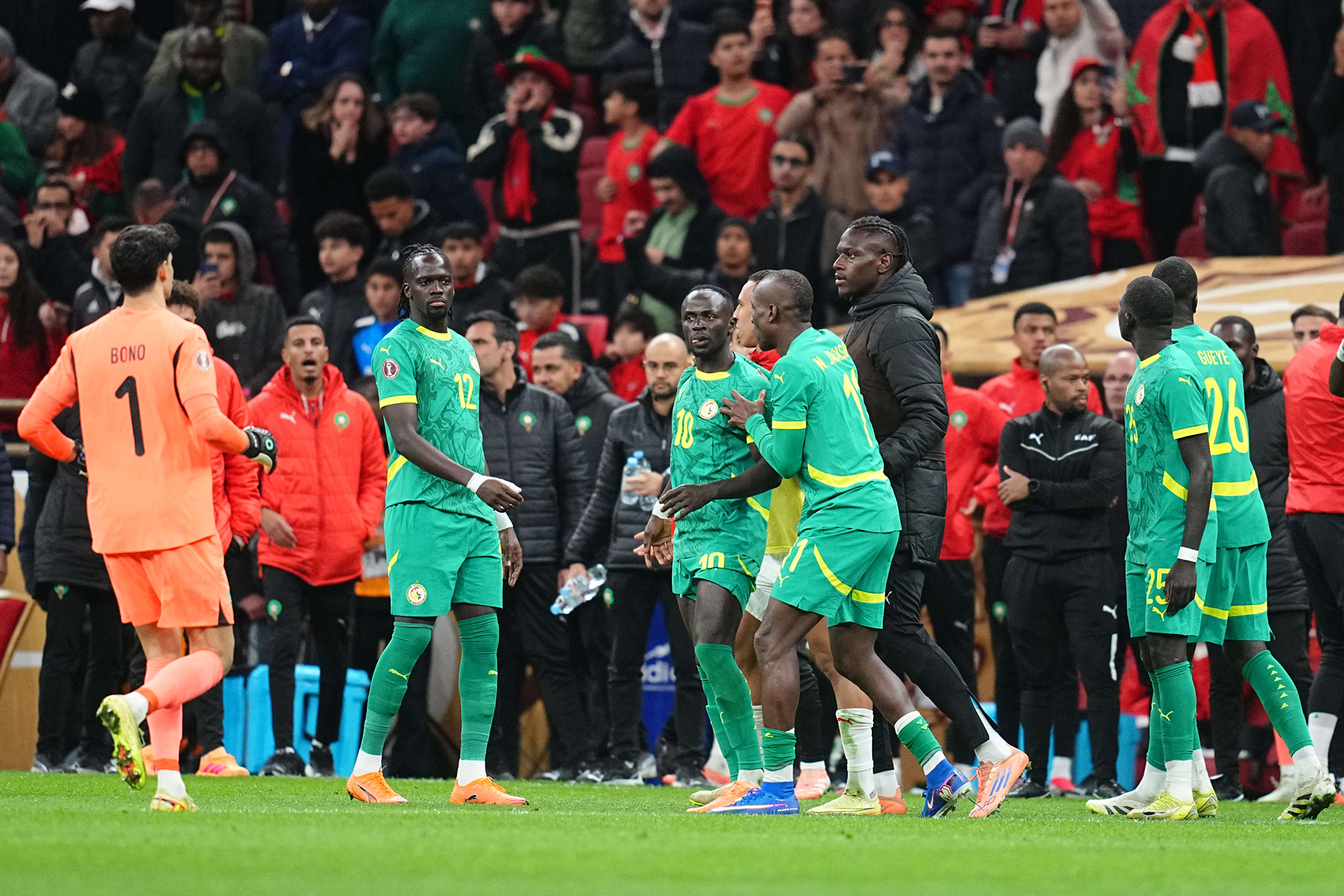
Congolese referee Jean-Jacques Ngambo Ndala mismanaged January’s final in the Africa Cup of Nations (Afcon) in Rabat, between hosts Morocco and eventual winners Senegal, after several Senegalese players walked off the field in extra time.
As a result, the Court of Arbitration for Sport (Cas) in Lausanne, rather than Ndala, will be the final arbiter of a game still being played in the courts when it had supposedly ended on the lush turf of the Prince Moulay Abdellah Stadium in Rabat over two months ago.
Samir Sobha, the Caf executive committee member from Mauritius, did not mince his words about the decision of Caf’s appeal board, on 17 March, to strip Senegal of the title they won on the pitch and award it to Morocco, on the grounds that the West Africans abandoned the game, based on Articles 82 and 84 of the Afcon tournament regulations.
“While these regulatory provisions are intended to address exceptional situations, their application must remain consistent with the spirit of the game,” Sobha told The Observer.
“A strictly administrative decision, however legally justified, cannot erase the harm felt by those involved nor convince those who uphold the principles of sporting fairness.
“It is also important to recall that at no point did the referee officially blow the final whistle while a portion of the Senegalese players had left the pitch. Likewise, no sanctions were imposed upon their return to resume the match, raising serious questions about how this situation was managed.”
Article 82 outlines the sanction to be imposed, on the field, for a team who refuse to show up or start a match – which is losing the game. Article 83 says a team not present at the ground on time for a match will also forfeit the game, while article 84 states the subsequent punishment that is to be imposed: “The team which contravenes the provisions of articles 82 and 83 shall be eliminated for good from the competition. This team will lose its match by 3-0 unless the opponent has scored a more advantageous result at the time when the match was interrupted.”
Can Article 84 apply unless the team are in breach of Article 83, in conjunction with Article 82?
Raymond Hack, chair of the disciplinary committee of South Africa’s Premier Soccer League, as well as being the past chairman of Caf’s disciplinary committee, who also lambasted the 17 March decision of the appeal board, is emphatic that it cannot.
Newsletters
Choose the newsletters you want to receive
View more
For information about how The Observer protects your data, read our Privacy Policy
“They [the Caf appeal board] based their decision on Article 82, which says that if a team goes off the field of play, without the authority of the referee, Article 84 comes into play. But they did not read Article 84 too well,” he said on a South African radio programme.
“Article 84 says that the team that contravenes the provisions of Articles 82 and 83 would be eliminated from the competition. It does not say the provisions of Article 82 or 83. Senegal did not do anything wrong, as far as Article 83 is concerned. But the point that they are all missing is the referee’s decision in terms of Article 6, of the Caf disciplinary code, is final. According to Rule 5.2 of the Ifab Laws of the Game the game is finished when the referee blows his whistle.”
‘How President Motsepe navigates the extreme turbulence of the moment will determine Caf’s future’
‘How President Motsepe navigates the extreme turbulence of the moment will determine Caf’s future’
At Sunday’s briefing at the Giza Palace Hotel in Cairo, after the Caf exco meeting, Patrice Motsepe, the Caf president, was clear that no further comments or actions would be taken by the organisation until the dispute is resolved in the Cas court in Lausanne.
Caf, however, has no choice but to confront the stark fact that the appeal board is bereft of credibility. Tunisian Football Federation president, Moez Nasri, was on the five-person 17 March appeal board, which could constitute a conflict of interest as rules require independence for its disciplinary committees.
“When I was informed that one of the people [among the appeal board judges] was a president of one of our football associations, I responded: ‘What is this? How did he end up there?’” Motsepe said in Cairo. “Of course, we must draw lessons from this kind of thing. He [Nasri] shouldn’t have been there. We need more rigour [in how Caf’s appeal boards are appointed].”
What is very clear, to insiders within Caf and African football, who can see the deep divisions the ongoing dispute has caused, is that Motsepe is facing the sternest test of his five-year leadership of the body. How he navigates the extreme turbulence of the moment will determine Caf’s immediate and long-term future.
Photograph by Ulrik Pedersen/NurPhoto via Getty Images