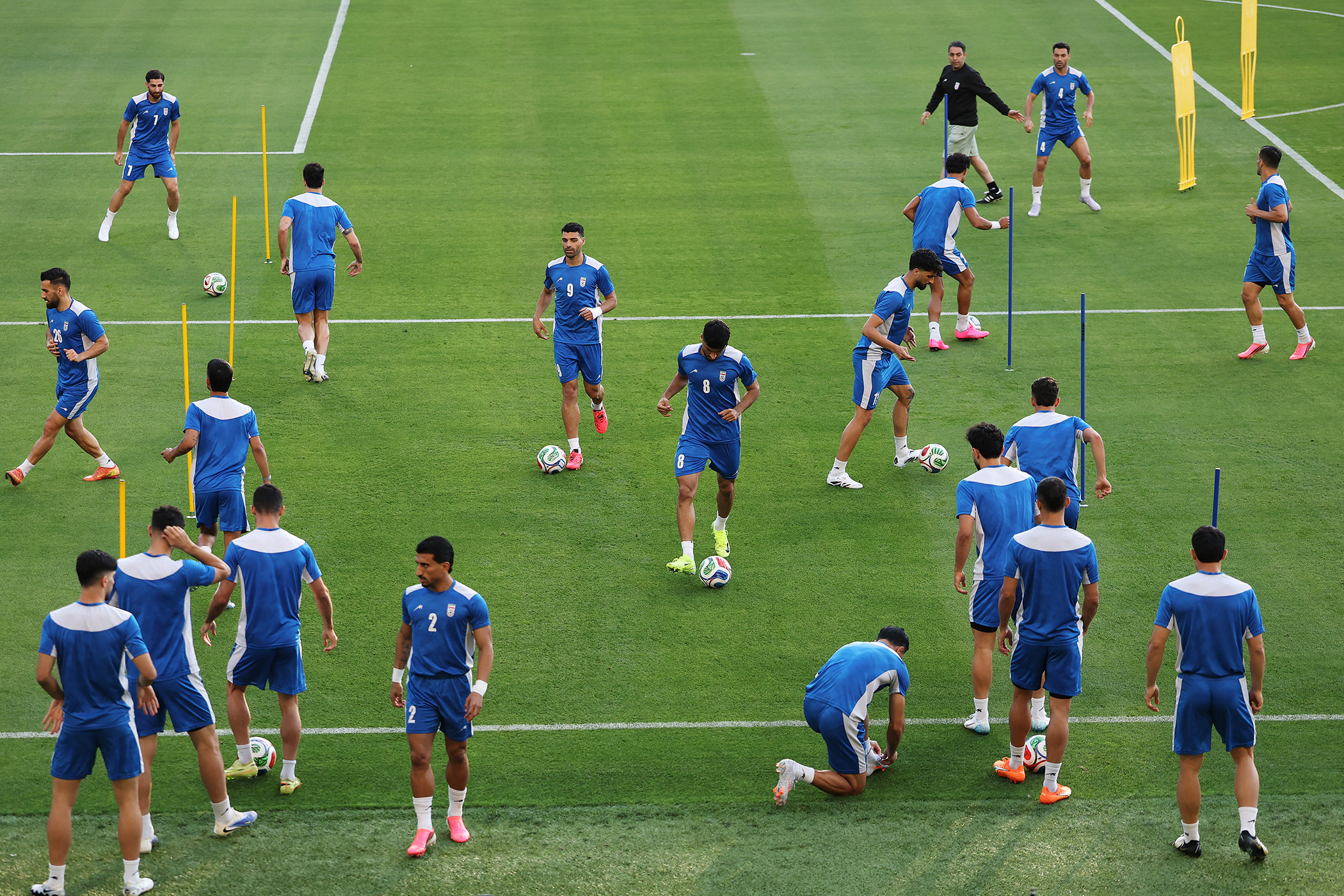

A member of the Fifa council has told The Observer that the restrictions placed on the Iranian national team at the ongoing World Cup are “not correct” and go against the sporting principles of the world football governing body.
Speaking on the condition of anonymity, he expressed anger over the restrictions that have been on their entry into the USA, which has forced the team to camp in Tijuana, Mexico.
“How can Iran be expected to compete under the conditions they have been given, in which they have to come from Mexico and have to leave the United States within hours of playing every match?” he said.
“Every team is supposed to compete under the same conditions. How can they prepare properly for the matches they have to play?
“This is not fair at all. There is no doubt about that.”
He was also unhappy with the inability of fans from several countries to travel to the USA to support their teams, like Senegal and Ivory Coast, now having to rely on their diasporan communities for in-stadium support during matches, because of the travel restrictions placed on several African countries by the US government.
At the pre-tournament press conference in Mexico City, Fifa president Gianni Infantino said – in response to criticism that it had not met its duty to many of the teams involved in the 48-team tournament – that his organisation has to respect the immigration laws of the host countries and are unable to interfere when they decide to deny anyone entry.
Following Iran’s 2-2 draw with New Zealand in Los Angeles on Monday, the Iranians were told that they had to leave the country within hours, as a result of US government restrictions.
“After the game, they said to us ‘You have to leave immediately’, whereas it’s very important for us to have recovery,” said head coach Amir Ghalenoei.
“They are making the situation more and more difficult… We were supposed to arrive two nights before the game but they didn’t permit [it]. Our team is the most oppressed one in the whole World Cup. Our federation is not here, our media is not here, our management isn’t here.”
Newsletters
Choose the newsletters you want to receive
View more
For information about how The Observer protects your data, read our Privacy Policy
“This situation is not acceptable,” the Fifa Council member said.
“We need to be stronger about these issues. But I understand the political environment in which this World Cup is being organised, which makes things very difficult to manage. It is very difficult to speak openly about these issues.”
The Council member also criticised the refusal of the US immigration authorities to allow Somali Omar Artan, African football’s top referee, into the United States, to officiate at the tournament.
“Omar was not treated fairly. To be detained for 11 hours on arrival, without any serious explanation? And not to be able to be at the World Cup? It is definitely not correct,” the Council member said.
Before the World Cup, one of Fifa’s most senior officials admitted to The Observer that “this tournament was going to be extremely difficult to manage” and that the senior members of the administration were leaving the political issues surrounding the tournament’s organisation to Gianni Infantino to manage directly with political leaders.
“I just want to stay very far from the politics and deal with football issues. It is for Gianni to handle those headaches,” the person said.
When The Observer asked the Fifa council member why there has been no public condemnation by senior football figures, he said that the “political sensitivities” made that difficult.
“I am a sports person and my concerns are about sports issues and events. But when political issues, matters concerning the actions of a government are involved, they are very sensitive, very difficult. One has to handle them carefully and be careful about what one says.”
Photograph by Harry How/Getty Images