
Forget Leicester City’s incredible run to the Premier League title in 2016. Had Poland’s Maja Chwalińska managed to claim French Open glory here on Saturday, it would surely have gone down as one of the biggest surprises in sporting history.
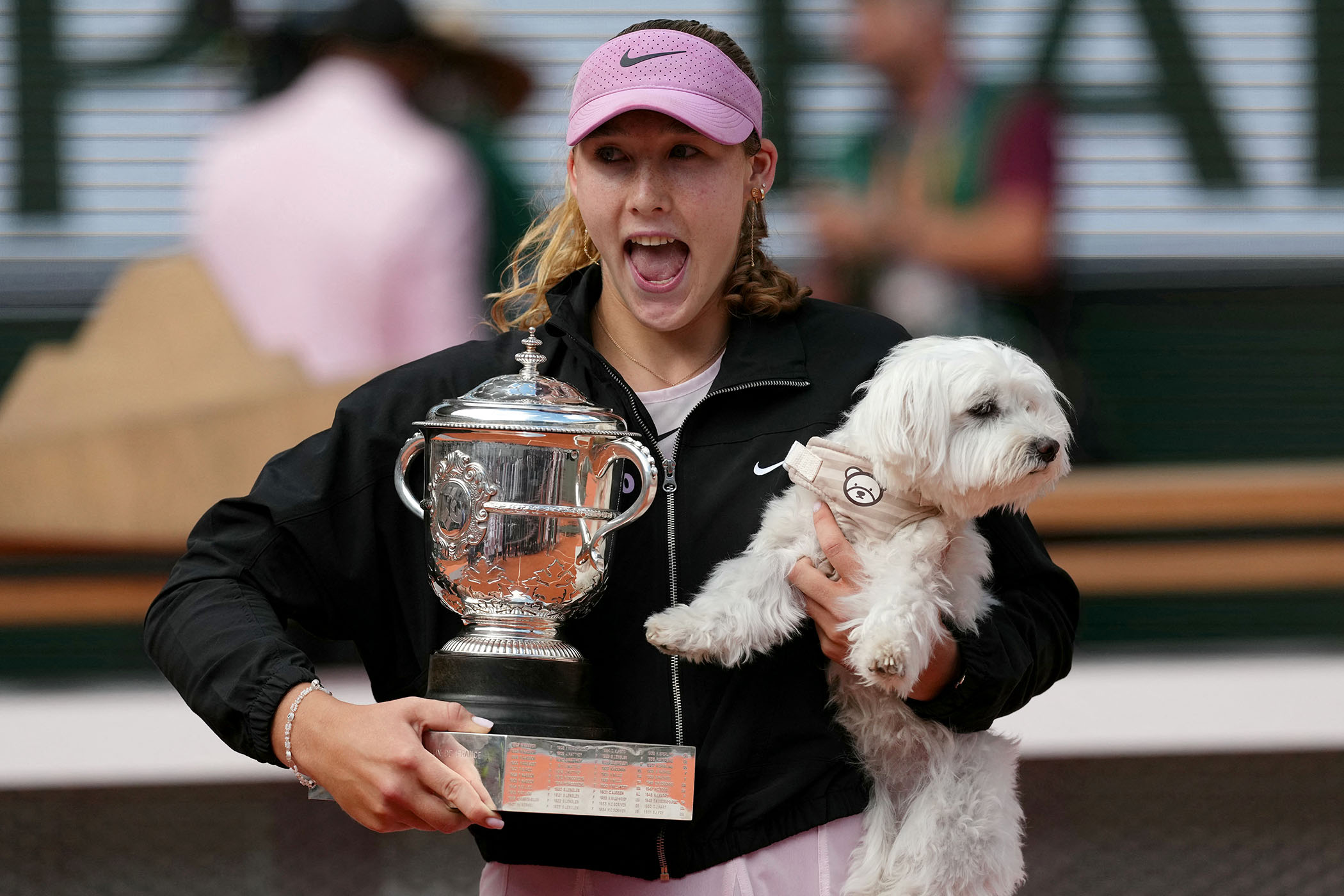
Not in the final itself; Mirra Andreeva was far too good on the day, a 6-3, 6-2 victory sealing a first Grand Slam title for the 19-year-old Russian, likely to be the first of many. But winning through qualifying and then outfoxing six more opponents with her throwback playing style was truly remarkable.
When the tournament began, only die-hard tennis fans would have known who Chwalińska was. This was just her third Grand Slam event and she’d won only one main-draw match coming in. But more than that, her path to this point is nothing short of incredible.
As a junior, she was a contemporary and friend of Iga Świątek, the four-time French Open winner and reigning Wimbledon champion. But five years ago, she quit tennis, revealing that she had been suffering from depression. It was so bad that at times, she couldn’t get out of bed. She associated tennis with crying and gave it up, trying other sports instead.
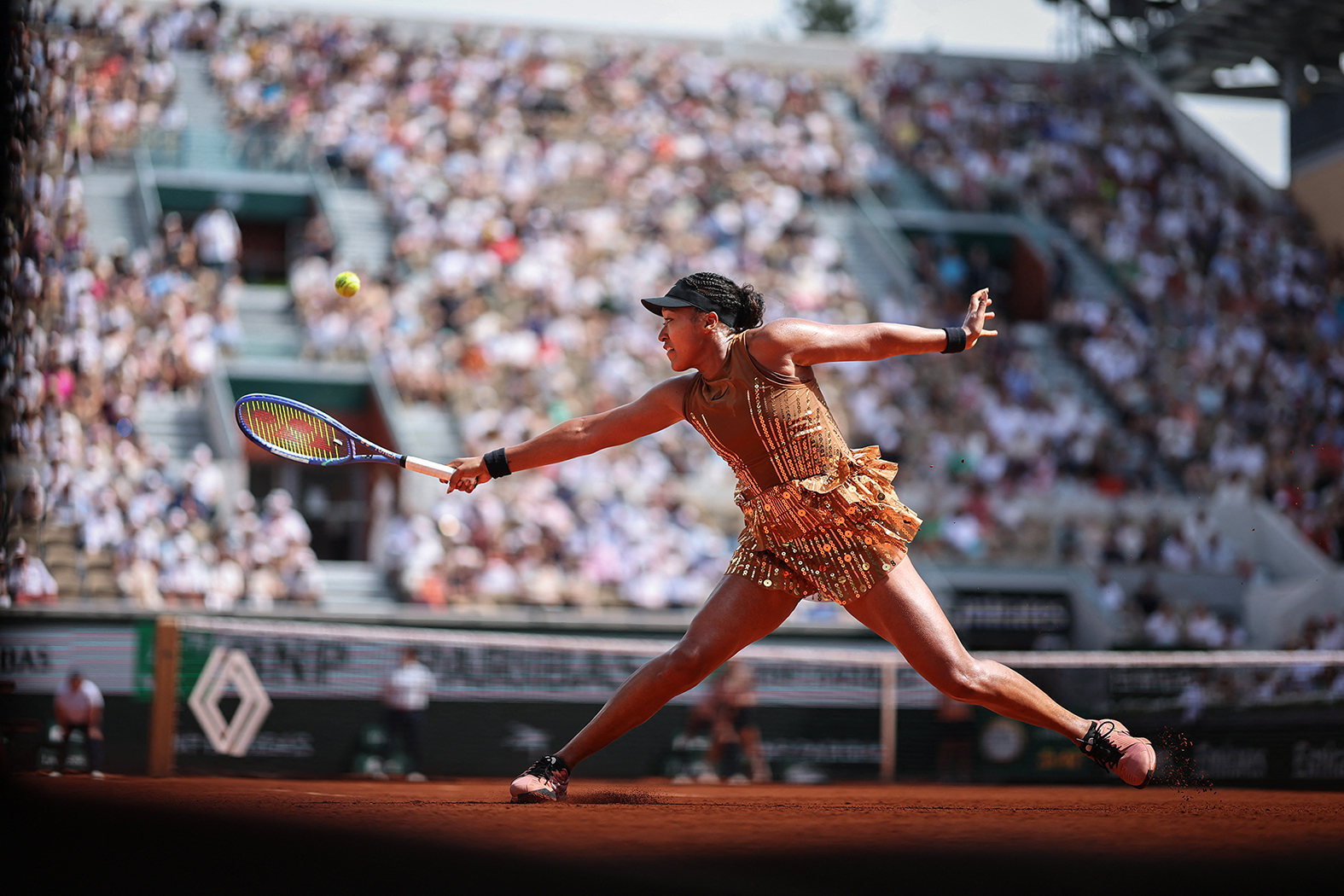
After some time away, during which she saw a specialist, Chwalińska began to recover. In particular, she recovered the joy of playing, a joy that was clear to see here. At 5ft 5, she lacks the natural power of the bigger hitters, but her court craft enables her to cope. Beautiful drop shots, lobs and lob-volleys pulled her opponents out of their comfort zones. Her athleticism was outstanding.
In an era when the power of Aryna Sabalenka, Świątek and Elena Rybakina has dominated, guile can still be a match for brute force. In the final, she ran out of steam against Andreeva, who had the patience and precision required. But if she can maintain the joy and freedom she exuded here these three weeks, she may be here to stay.
Her run didn’t just take her opponents by surprise, it also shocked her, not least in her hotel plans, where she needed a sponsor to step in to help her pay her extended bill. Having won £1.2m in prize money here, that won’t be a problem in the future, and her efforts here mean she will rise to No 21 in the world rankings. Ordinarily, that would put her directly into the main draw at Wimbledon and give her a seeding, but the cut-off for entries was three weeks ago, when Chwalińska was outside the top 100.
That means she’ll need a wildcard from Wimbledon to get into the draw and the All England Club may have a dilemma if, as expected, the returning Serena Williams asks for one too. Chwalińska surely deserves one, but the majority of wildcards usually go to Britons.
Andreeva, meanwhile, showed the kind of maturity that suggests she will go on to win more Slam titles. The 19-year-old has struggled with her temperament at times in her young career, but has been working with Alexis Castorri, the sports psychologist who famously worked with Andy Murray, helping to get him over the line in Grand Slams.
The work showed as she kept her nerve when Chwalińska threw in moon balls, asking her to create her own pace. One final backhand winner sealed the deal and she fell to the clay in joy. She will head to Wimbledon high on confidence. With a fair wind, Chwalińska will join her and get the chance to show what she can do on a grass court.
Newsletters
Choose the newsletters you want to receive
View more
For information about how The Observer protects your data, read our Privacy Policy
Can Zverev seize his chance?
There must have been times in his career that Alexander Zverev thought he was cursed. First he was shut out by the brilliance of Roger Federer, Rafael Nadal and Novak Djokovic; then, as they retired and aged, along came Carlos Alcaraz and Jannik Sinner.
Between them, Alcaraz and Sinner have won the past nine Grand Slam titles, their dominance the new normal. But there has been nothing normal about this year’s men’s event at Roland Garros. Alcaraz’s absence opened the door slightly, but the loss of Jannik Sinner in the second round and then Djokovic in round three blew it wide open.
And so today, in his fourth Grand Slam final, Zverev has his best chance of success that many expected from him when he burst onto the scene as a 16-year-old in 2014. The second-seeded German is a big favourite to beat Flavio Cobolli, an Italian ranked No 14 appearing in his first major final.
Zverev’s biggest problem could be that everyone expects him to win. In his first major final, at the US Open in 2020, he led Dominic Thiem by two sets to love, served for the match and was two points from the title, only to blink and end up losing in five. Losses to Alcaraz in Paris in 2024 and Sinner in Melbourne in 2025 were crushing blows, but this fortnight, while everyone else has struggled, he has stayed calm, saving his energy with quick wins in the blistering heat of week one.
Tenth seed Cobolli has the benefit of extra rest, thanks to the late withdrawal of another Italian, Matteo Arnaldi, before their scheduled semi-final. Zverev leads 3-1 in their head-to-heads but Cobolli did beat him in Munich this year on clay. This year has shown that predictions are futile, but Zverev knows that he may never get a better chance.
Photograph by Dimitar Dilkoff / AFP via Getty Images