
Welsh rugby's endless horror story added another ignominious chapter on a sobering Sunday afternoon in Cardiff that had an inevitability written all over it.
It was an experience that did not disappoint those who had feared the worst, with France's 54-12 Six Nations victory coming only eight days after Wales subsided 48-7 against England.
This was Wales' national sport showcased in all its gory – more than 16,000 empty seats at the Principality Stadium, a damage-limitation exercise from the start and an ordeal for loyal, but horribly disillusioned, fans upset at their team's painful demise, with all of it overshadowed by the Ospreys facing probable extinction.
There were gaps in many parts of the ground, leaving Welsh Rugby Union number-crunchers to reflect on Wales' lowest attendance, 57,744, for a home game (outside of Covid restrictions) in Six Nations history, worse than the 58,349 that greeted Italy in 2002. What was once the hottest ticket in town could be purchased after a hearty match-day brunch with no rush or stress. Many match-day stewards were even offered them for free by the WRU.
Clubs like Swansea, Llandaff and Machen had tickets for sale on their social media channels, with much of the same expected for remaining home games against Scotland and Italy – more than 30,000 tickets are currently available across those two matches – as fans vote with their feet. The overall loss in terms of revenue to the WRU will be a likely seven-figure sum.
Wales' most successful professional team, meanwhile, look set to be discontinued by mid-2027. Ospreys owners Y11 Sport and Media are the WRU's preferred bidders for Cardiff, acquired by the Union last year after entering administration, and should a deal be done it would potentially solve the controversial conundrum of how four regional sides become three as a central cog in the governing body's wide-ranging plan to overhaul professional rugby.
All roads lead to there being no fully professional rugby team operating either side of a 58-mile M4 stretch between Llanelli and Cardiff after next season, and an overwhelming majority of impacted supporters have had enough. They are in no mood for forgiveness or forgetting.
Welsh rugby's city centre shop window was once again splendidly dressed for the occasion with all its match-day colour, but one talking point dominated in the bars and coffee shops, and none of it revolved around how Wales might stop Antoine Dupont.
Many diehard followers wonder whether the sport will ever thrive again, and the forecast appears bleak, given the unseemly lurching from one crisis to another during the past three years. As a brand, rugby in Wales is reeling and considerable repair works are required on and off the pitch.
In a letter to WRU member clubs published on Thursday former Cardiff non-executive director and GoCompare founder Hayley Parsons tore into the WRU and its embattled chair Richard Collier-Keywood. "The three-region solution might be the best answer to solve the ongoing funding and pathway issues. But the way the WRU has gone about brokering this deal is truly appalling," she wrote, while also supporting moves for an extraordinary general meeting driven by Central Glamorgan RU. "The lack of transparency with staff, players, clubs, fans and other affected regions is, in my opinion, a joke."
Wales had not played in Cardiff since the proverbial hit the fan, and senior WRU figures such as Collier-Keywood and chief executive Abi Tierney have resembled sitting ducks. Rightly or wrongly, many blame them – along with WRU performance director Dave Reddin – for what has become a toxic timebomb, and there was no hiding place.
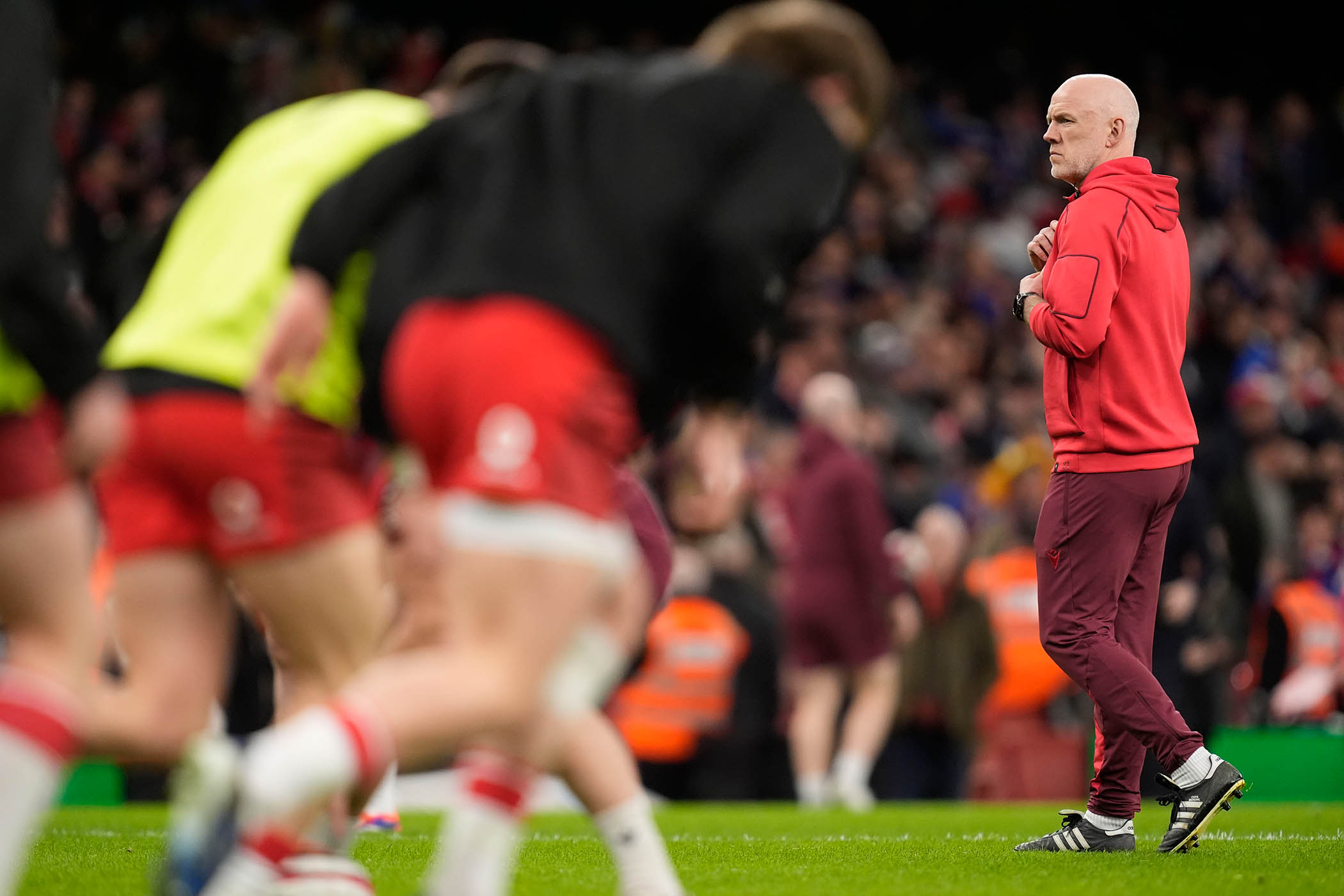
Statistically, it was another nightmare on Westgate Street for new head coach Steve Tandy, with 302 points and 42 tries now conceded during his six games in charge. Since beating 2023 World Cup opponents Georgia, Wales' Test match success-rate is a pitiful 8% across 25 fixtures. It also felt like a home game for France – 32 flights will leave Cardiff packed with fans on Monday – and "Allez Les Bleus" rang out even before the visitors went ahead after just 90 seconds during France's new record Six Nations win on Welsh soil.
Leading sport finance and economics expert Professor Rob Wilson, Dean at the University Campus of Football Business who has also worked with business-restructuring specialists Leonard Curtis in reporting on and assessing the financial health of England's Gallagher Prem clubs, believes Welsh rugby politics can be factored in to the current malaise.
"Sporting performance has a direct relationship with off-field engagement, and it is fair to say that the performances of the Welsh national team are now having a material impact on the number of Welsh fans that are going to watch the game," he said. "It is similar with Manchester United and their commercial activity. Because they've had such a decline in on-field performance, they are now starting to feel the impact of that on their balance sheet.
"And the challenges on a domestic level, the leakage of players to other parts of the world and general politics and governance around Welsh rugby, rightly or wrongly, will also be having an impact in the psyche of people deciding whether or not to attend matches. Some people will be thinking 'crikey, how on earth has it got to this point'?
"Professional sport historically works in cycles. Wales have had some incredible success in my spectating lifetime, and they have also had some really big lows. They have come back from those and won Six Nations titles and competed well at World Cups, so you get that cyclical nature.
"The Six Nations in many ways is like F1. You can't have F1 without Ferrari, Mercedes and Red Bull, and it is exactly the same in the Six Nations. You need competitive games right across the board to ensure you maintain the value and interest in the competition. The less we know about the outcome of a game before the game, the more likely we are to watch it."
Those Wales supporters who did peek through their fingers could only stare in wonderment at the rugby riches on display, all of them clad in blue as Dupont piled on the misery along with fellow master craftsmen like Louis Bielle-Biarrey, Matthieu Jalibert and Thomas Ramos. One team is on a Grand Slam mission, the other trying to avoid a third successive Six Nations wooden spoon.
Wales have now suffered 13 Six Nations defeats on the bounce, but such a demoralising figure was almost greeted by a Gallic-style shrug of the shoulders The numbers really don't matter when Welsh rugby is in danger of losing its soul.
Writing in the match programme, WRU president Terry Cobner said: "We may not be Grand Slam contenders this season, but the good times can return, and we believe they will when our plans to improve things off the pitch come to fruition."
There are many, though, who seriously doubt his optimism, with Wales looking more like a rugby nation on a fast-track to oblivion than regaining lost pride any time soon.
Photograph by Andrew Matthews/PA
Newsletters
Choose the newsletters you want to receive
View more
For information about how The Observer protects your data, read our Privacy Policy